WEN Track Saw Review: Budget Cutting or False Economy?
What's inside
- Short answer: a good budget choice, with a rail-compatibility caveat
- What matters for cabinet-grade plywood
- WEN track saw and rail: what to verify
- Comparison: the questions that change the buying decision
- Choose by situation
- A practical plywood check before relying on it
- Ownership costs and common failure points
- Verdict
- Related Guides
- Short answer: a good budget choice, with a rail-compatibility caveat
- What matters for cabinet-grade plywood
- WEN track saw and rail: what to verify
- Comparison: the questions that change the buying decision
- Choose by situation
- A practical plywood check before relying on it
- Ownership costs and common failure points
- Verdict
- Related Guides
As an Amazon Associate I earn from qualifying purchases. This post may contain affiliate links at no extra cost to you.
Contents
- Short answer: a good budget choice, with a rail-compatibility caveat
- What matters for cabinet-grade plywood
- WEN track saw and rail: what to verify
- Comparison: the questions that change the buying decision
- Choose by situation
- A practical plywood check before relying on it
- Ownership costs and common failure points
- Verdict
- Related Guides
Short answer: a good budget choice, with a rail-compatibility caveat
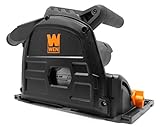
The WEN track saw can make sense for occasional sheet-goods work if its lower price matters more than a proven upgrade path—but don’t assume its rail will fit Makita or Festool tracks just because the profiles look alike. The key buying question is whether you can verify rail fit and cut quality for your particular saw, blade, and plywood before committing to a rail system.
There’s an important limitation: without documented, model-specific test results, it would be misleading to claim measured cut accuracy or blade deflection on cabinet-grade plywood. Those depend on the exact saw and track, blade condition, setup, and feed technique. The checks below give you a practical way to assess them rather than treating an unverified compatibility claim as fact.
As an Amazon Associate we earn from qualifying purchases at no extra cost to you.


What matters for cabinet-grade plywood
For clean, repeatable panels, three things work together: the rail must stay put, the saw must run without excessive play, and the blade must remain square under load. A track saw is not automatically accurate just because it follows a track. Poorly supported sheet goods, a dull or unsuitable blade, or a rushed feed can all produce tear-out or a cut that wanders.
- Accuracy: Check the cut against a reliable square and measure at both ends. A rail that shifts or a saw that rocks can cause an out-of-square edge.
- Deflection: Watch for the blade drifting or the cut face changing angle as the saw advances. A sharp, appropriate blade and steady feed help; they cannot correct a saw or rail that flexes excessively.
- Edge quality: Use a fine-tooth plywood or laminate blade suited to the saw’s arbor and speed. Test on scrap from the same sheet, since veneer and core quality vary.
- Repeatability: Make several cuts at the same setting. One clean cut is less useful than cuts that land consistently on dimension.
WEN track saw and rail: what to verify
Rail compatibility is a mechanical fit question, not a brand-name shorthand. Similar-looking guide rails can differ in the shape of their guide rib, the saw’s engagement surfaces, anti-tip features, connector design, and strip position. A saw may appear to sit on another brand’s track yet have too much side play, bind, or fail to engage its anti-tip feature correctly.
Before buying a second rail or planning a future switch to Makita or Festool, confirm compatibility for the exact WEN saw model and rail revision. Look for manufacturer documentation or a reliable physical fit check. If you can inspect a sample, test the full length of the rail: the saw should slide smoothly, resist side-to-side rocking, and remain securely engaged. Then make a scrap cut and verify the result. Do not force a poor fit or rely on a third-party connector without checking alignment.
Comparison: the questions that change the buying decision
| Decision point | WEN system | Makita or Festool system | What to do |
|---|---|---|---|
| Rail fit | Verify against the exact saw and rail; don’t infer it from appearance | Use the brand’s specified rail and accessories as the known reference | Check documentation or test the actual pairing before buying extra rails |
| Cut accuracy | Depends on setup, blade, rail condition, and the individual saw | Still depends on setup and blade; a premium rail does not remove technique errors | Make repeat cuts on scrap and measure both ends |
| Upgrade path | May be limited if compatibility is unconfirmed | More straightforward when staying within the same documented system | Price the saw, rail, connectors, and replacement splinter strips together |
| Best fit | Budget-conscious, occasional use, willing to verify the setup | Frequent use or a shop already invested in that rail ecosystem | Choose by total ownership cost and workflow, not saw price alone |
The table intentionally avoids unsupported measurements such as cut depth, weight, or accuracy tolerances: those should be checked against the exact model’s current manual and specifications, not guessed from the brand name.
Choose by situation
| Your situation | Likely choice | Why |
|---|---|---|
| One or two sheet projects a year; tight budget | Consider WEN, after a scrap-cut and rail-fit check | The lower entry cost may outweigh ecosystem flexibility if the saw meets your accuracy needs |
| New to track saws; limited shop space | Either system, prioritizing easy setup and secure sheet support | Storage and safe handling of long rails and full sheets can matter more than brand |
| Cabinet work every week; tight, repeatable tolerances | Favor a system with documented rail compatibility and available accessories | Downtime, replacement parts, and repeatability become more important with frequent use |
| Already own Makita or Festool rails | Buy WEN only if exact compatibility is confirmed | An assumed fit can erase the savings if you need a separate rail system |
A practical plywood check before relying on it
- Support the sheet fully. Use a flat work surface or sacrificial foam so the panel cannot sag, pinch the blade, or shift during the cut.
- Inspect the blade and rail. Clean resin and dust from the blade and track. Confirm the blade is sharp and that the rail’s splinter strip is intact and aligned.
- Set the saw carefully. Check the bevel at zero with a reliable square. Set cut depth just beyond the workpiece and backing layer, following the saw manual.
- Make a test cut. Use offcut material from the same plywood, with the same blade and rail setup intended for the final panels.
- Measure and inspect. Check the cut width at both ends, verify squareness, and examine the face and underside for tear-out. Repeat the cut to see whether the result is consistent.
- Check for drift or binding. If the saw rocks, wanders, or feels tight on the rail, stop and diagnose the fit, adjustment, and work support before cutting cabinet parts.
Ownership costs and common failure points
The saw price is only part of the system. A rail, clamps, a suitable plywood blade, replacement splinter strips, and possibly rail connectors all contribute to the cost. Compare general market prices for the complete setup rather than comparing a bare saw with a fully equipped alternative. If an incompatible rail forces you to buy a second system, the original savings may shrink quickly.
Splinter strips are consumables: they wear, get nicked, and lose usefulness after repeated or misaligned cuts. Keep the track’s running surfaces clean, avoid dragging it over grit, and replace damaged strips when they stop supporting a clean edge. Blade dullness is another common cause of worsening cut quality; forcing a dull blade can increase heat, tear-out, and the temptation to feed too aggressively. Follow the manufacturer’s safety and maintenance instructions, and unplug the saw before adjustments or cleaning.
Verdict
The WEN track saw is a reasonable budget candidate for occasional sheet cutting if a test setup produces accurate, repeatable results and you are comfortable with its rail ecosystem. It is a less compelling buy for a shop that already owns Makita or Festool tracks unless exact compatibility is confirmed in advance. Treat cut accuracy and blade deflection as things to verify on your own plywood—not as guaranteed results—and include rails, blades, and replacement strips in the total cost. If the rail fit remains uncertain, buying within the system you already use is the safer long-term choice.