Best Table Saws for Cutting Solid-Wood Panels Without Binding
What's inside
As an Amazon Associate I earn from qualifying purchases. This post may contain affiliate links at no extra cost to you.
Solid-wood panels are harder on a table saw than plywood or MDF. They can be wide, heavy, slightly bowed, and under changing internal stress. A panel that was flat on the workbench may close against the blade after the cut starts, pinching the blade and kicking the workpiece backward. The saw matters, but setup and stock preparation matter just as much.
For this work, prioritize a rigid table, a reliable rip fence, enough motor torque, and a riving knife that stays aligned with the blade. A cabinet saw is the best choice for frequent panel work, while a good contractor saw can handle occasional furniture parts if you support the stock properly. A small benchtop saw is the cheapest option, but it has the least margin for error with wide, heavy boards.
Contents
What Causes Solid Wood to Bind
Binding usually happens because the kerf closes behind the blade. Internal growth stress can cause a board to move as soon as it is ripped, especially in wide stock, reaction wood, or boards that have not acclimated to the shop. A bowed board can also pivot into the blade when the operator forces it against the fence.
Other common causes include a fence that is not parallel to the miter slot, a riving knife that is misaligned, a dull or inappropriate blade, and insufficient outfeed support. Binding is not always dramatic. You may first notice a hot blade, burn marks, a stalled motor, or a cut that gets progressively harder to push. Stop when that happens rather than pushing through it.
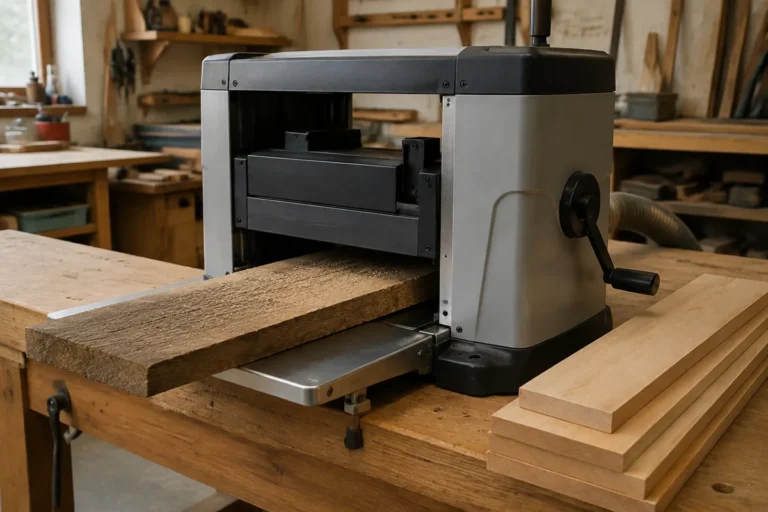
Before ripping a solid panel, let the wood acclimate, inspect both faces, and check it with winding sticks or a straightedge. If it is badly bowed, cup it flat at the jointer or use a sled and planing operation before making a narrow rip. Do not assume the saw can safely flatten a warped panel against the fence.
Best Saw Types for Solid-Wood Panels
| Saw type | Best use | Binding resistance and control | Main trade-off |
|---|---|---|---|
| Cabinet saw | Frequent furniture work and large panels | Excellent; rigid fence, heavy table, strong dust collection | High cost, weight, and permanent floor space |
| Contractor saw | Occasional panel work and small shops | Good when equipped with a solid fence and outfeed support | Less mass and usually less convenient dust control |
| Benchtop saw | Small parts and limited budgets | Acceptable only with careful stock preparation | Short tables, lighter fences, limited support for wide panels |
| Sliding table saw | Crosscutting wide panels and repeatable furniture parts | Very good for supported crosscuts; not a substitute for safe ripping | Expensive and usually requires more shop space |
Cabinet Saws for Regular Use
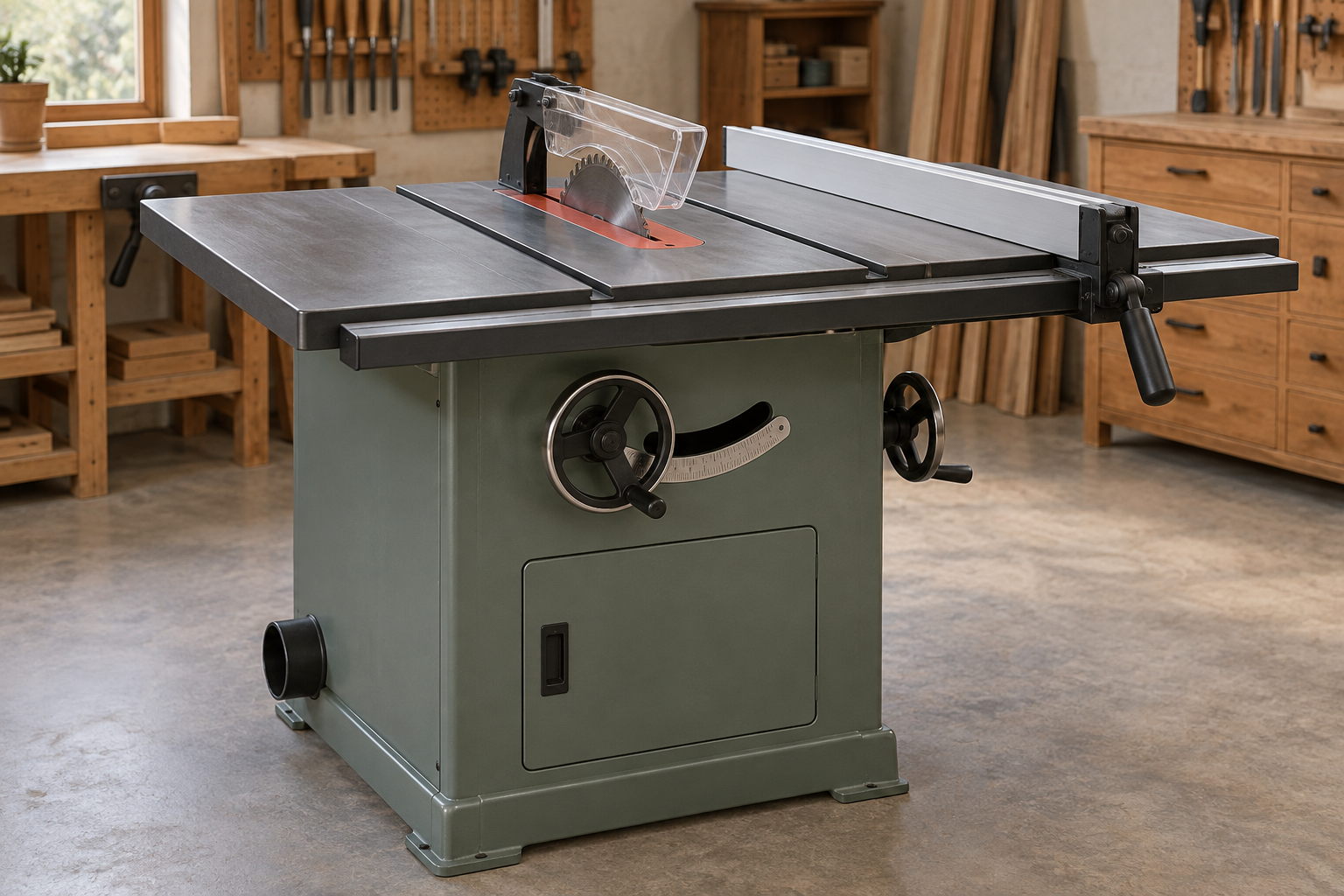
A cabinet saw is the strongest choice if you routinely rip panels 24 to 36 inches wide or work with thick hardwood. Its cast-iron top and enclosed base resist movement, and the heavier arbor assembly keeps the blade running steadily when the cut gets difficult. A 3-hp cabinet saw is a practical target for frequent hardwood work, although a sharp blade and proper feed rate matter more than horsepower alone.
Look for a fence that locks firmly at both ends and stays parallel without repeated adjustment. A 30-inch rip capacity is enough for many furniture projects; 50 inches is useful for cabinet parts but demands more outfeed and side support. A riving knife that follows the blade height and tilt is preferable to an older fixed splitter because it stays close to the cut.
If you need this level of control, compare 3-hp cabinet table saws with riving knives. The cheaper option is fine if you only cut narrow, already-flat parts, but a cabinet saw earns its cost through stability, fence quality, and reduced setup frustration rather than raw cutting speed.
Contractor Saws for Smaller Shops
A modern contractor saw is often the sensible choice for a one-person shop. It can rip solid wood accurately when fitted with a dependable fence and placed on a rigid stand. Look for at least a 1-3/4-hp motor, a riving knife, a table extension, and a stand that does not flex when a heavy panel bears against it.
The weak point is usually support, not the motor. A 20-inch-wide oak panel can weigh enough to pull the work away from the fence as it passes the blade. Build or buy an outfeed table at least as high as the saw table, then add side support for wide stock. A roller stand can help, but a large panel may shift on a roller; a flat, low-friction support surface is often easier to control.
For many home workshops, contractor table saws with riving knives offer the best balance of price and capability. They are not a downgrade if your panels are prepared flat and you do not need production-level throughput.
Blade and Fence Setup
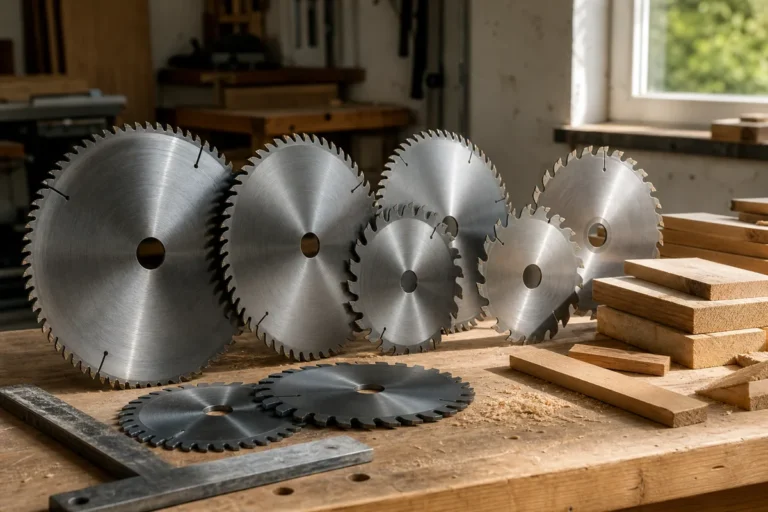
Use a sharp ripping blade with a kerf appropriate for the saw. A 24-tooth rip blade removes material quickly in thick solid wood; a combination blade in the 40-tooth range is more versatile for general work. Avoid forcing a dull blade. Burning and increased feed pressure are early signs that it needs sharpening or replacement.
Set the blade only slightly higher than the panel, generally with the gullets just above the top surface. A high blade exposes more carbide and can increase the severity of a kickback. Check that the riving knife is centered in the kerf and sits close behind the blade without touching it.
For ripping, keep the fence parallel to the blade. Many woodworkers set the rear of the fence a fraction farther from the blade than the front—roughly 0.1 to 0.2 mm—to reduce the chance of the cut closing onto it. This must not be excessive, or the work can wander and produce an inaccurate edge.
A Safer Panel-Cutting Method
For a wide panel, make a straight reference edge first. If the board is too wide for a jointer, use a straightedge-guided circular saw cut, a track saw, or a jointing sled. Then place that reference edge against the table-saw fence. Do not use the fence and a bowed edge to create the first straight edge.
Stand slightly to the side of the blade, keep both hands in front of the blade, and use push blocks once the stock is narrow enough to require them. Never reach over the blade to retrieve an offcut. If the offcut can pinch the blade, use a splitter or riving knife and support it until the cut is complete.
When the cut starts binding, shut off the saw and wait for the blade to stop before backing out. A relief cut or a change in cutting sequence may be needed. For especially stressed panels, rough-rip the stock oversize by 3 to 6 mm, let it rest, then joint or plane the new edge before the final cut.
For occasional small panels, a portable table saw with a folding stand can be perfectly adequate. For repeated wide rips, however, spend the money on a better fence, larger support surfaces, and a stable machine before chasing extra horsepower.