
What's inside
- What matters when cutting turning blanks
- Compare the main options
- Choose capacity before features
- Blade, motor and frame
- Where to spend—and where not to
- Cutting safely and cleanly
- The Shortlist Compared on the Numbers That Matter
- Blank-Sizing Checklist Before You Buy
- Blade-Buying and Setup Checklist
- Who Should Skip Each Class
- Common Mistakes When Roughing Blanks
- More Picks Worth Considering
- Buyer Questions
As an Amazon Associate I earn from qualifying purchases. This post may contain affiliate links at no extra cost to you.
Contents
- What matters when cutting turning blanks
- Compare the main options
- Choose capacity before features
- Blade, motor and frame
- Where to spend—and where not to
- Cutting safely and cleanly
- The Shortlist Compared on the Numbers That Matter
- Blank-Sizing Checklist Before You Buy
- Blade-Buying and Setup Checklist
- Who Should Skip Each Class
- Common Mistakes When Roughing Blanks
- More Picks Worth Considering
- Buyer Questions
Our Top Picks
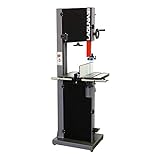
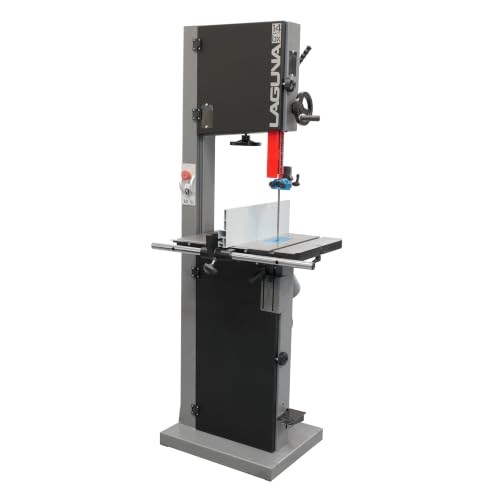 Laguna Tools 220v 2.5hp Bandsaw with 13" Resaw220 volt22.5 x 17.5 x 70.25 inches260 poundsCheck on Amazon
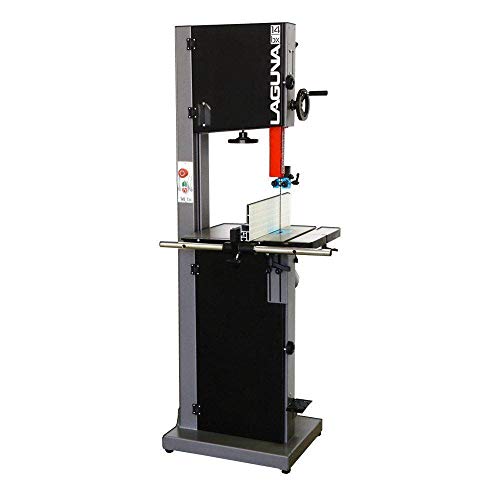 Laguna Tools 110v 1.75hp Bandsaw with 13" Resaw110 volt22.5 x 17.5 x 70.25 inches260 poundsCheck on Amazon
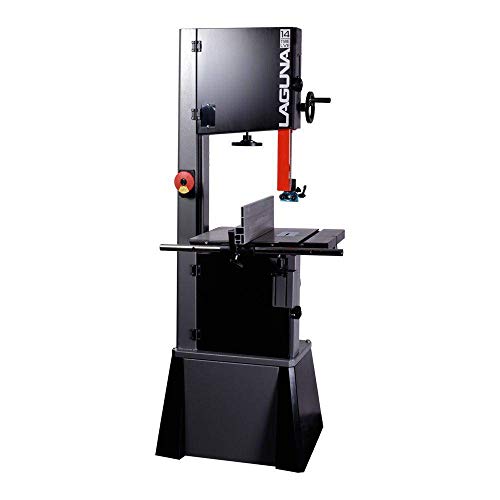


What matters when cutting turning blanks
A large hardwood turning blank is heavy, uneven and often wet. The band saw’s job is to reduce it to a manageable shape—not to produce a finished bowl or spindle profile. For this work, prioritize throat depth, resaw capacity, frame stiffness, blade choice and safe support for awkward stock. A bigger motor alone does not guarantee clean cuts; a narrow blade, poor tension or a blank that rocks on the table can make a powerful saw miserable to use.
Measure the blanks you actually expect to cut. Throat depth limits the distance from blade to frame, so it determines the maximum radius you can cut from a centered blank. Resaw capacity is the maximum stock height under the upper guides. A saw with 12 inches of resaw capacity cannot cut a 14-inch-tall blank in one pass, even if its throat is deep enough. For bowl blanks, capacity to handle the blank’s diameter and a stable way to support its weight matter most.
As an Amazon Associate we earn from qualifying purchases at no extra cost to you.

Compare the main options
| Type | Typical use | Trade-off |
|---|---|---|
| 14-inch floor-standing saw | Moderate blanks and general shop work | Often good value, but may need a riser block or upgraded fence and blade for tall stock |
| 18-inch saw | Frequent cutting of larger, heavier blanks | More capacity and usually more frame, but costs more and takes more floor space |
| Small benchtop saw | Thin stock, small blanks and occasional light work | Limited capacity and support; a poor match for large, heavy hardwood blanks |
These are broad categories, not guarantees: check the manufacturer’s stated resaw capacity and the saw’s minimum and maximum blade widths. A riser block can increase capacity on some 14-inch saws, but it does not improve the frame or make a marginal saw suitable for regular heavy resawing.
Choose capacity before features
For occasional blanks under roughly 10–12 inches in diameter, a well-built 14-inch floor model may be enough. If you routinely cut blanks around 14–16 inches across, an 18-inch saw is a more comfortable starting point, provided its throat and table support suit the work. Larger blanks may require a specialty saw or a different roughing method. Verify the capacity on the exact saw rather than relying on the size in its name.
Large blanks can weigh dozens of pounds. The table must be level and large enough to keep the work from tipping as you rotate it. Add a sturdy auxiliary table or roller support only if it cannot snag the blank or interfere with the cut. A helper can support a heavy piece, but should not pull it through the blade or reach near the cutting line.
Blade, motor and frame
For rough curves in green or irregular wood, a 1/2-inch blade with about 3 teeth per inch is a useful starting point. The wider blade resists twisting, while coarse teeth clear wet chips better than a fine-tooth blade. For a tight curve, use a narrower blade; trying to force a wide blade around a small radius can bind, wander or crack the blade. Keep a dedicated rough-cutting blade for dirty or bark-covered stock, since grit and debris dull teeth quickly.
Motor ratings vary, and advertised horsepower may not describe what the saw can sustain under load. A larger motor helps when resawing thick, dense hardwood, but blade tension, sharpness, alignment and feed rate matter just as much. If the blade slows, the cut curves or the motor labors, reduce feed pressure or stop and check the setup. For frequent heavy work, look for a rigid frame and a tensioning system rated for the blade width you plan to use. A saw that cannot tension a wide blade properly will not track reliably.
Where to spend—and where not to
If you are buying mainly to rough out turning stock, compare 18-inch woodworking band saws with 14-inch floor models before paying extra for digital readouts or elaborate fences. Capacity and a stable table are more useful here than resaw accessories you may never use.
A 14-inch floor-standing band saw is a reasonable lower-cost choice if your blanks fit its stated capacity and the work is occasional. Budget for a sharp, appropriate blade and check whether the saw needs a riser block, better guides or a larger table. A benchtop model can suit small blanks, but it is not a bargain if you soon outgrow its capacity.
For stock near the saw’s limit, buy based on actual dimensions rather than a hoped-for upgrade. Also account for blade availability, replacement cost, dust collection and service support. A basic saw with adequate capacity and a good blade is often a better buy than a feature-heavy saw that struggles with the blank.
Cutting safely and cleanly
Inspect the blank for nails, stones, wire and embedded grit before cutting; a metal detector is worthwhile for salvaged wood. Remove loose bark where it could catch, and trim a flat reference surface if the blank rocks. Mark the cut clearly and make sure the piece can rotate without hitting the frame or fence. Set the upper guide close to the work—typically about 1/4 inch above it—so the exposed blade length stays short.
Feed steadily without twisting the blank or forcing it through a curve. If the blade pinches in a closing kerf, stop the saw and let it come to a complete halt before backing the work out. Never reverse a moving blade or reach behind the stock to clear chips. Wear eye and hearing protection, use dust collection where practical, and keep hands away from the blade path. Wet hardwood can still produce airborne dust and slippery debris.
For repeated bowl blanks, a simple cradle or fixture can keep round stock from rolling, but it must be secure and must not trap the blade if the cut closes. When a blank is too heavy or awkward to control safely, rough it down with a chainsaw or another suitable method before bringing it to the band saw. Capacity is useful only when the work can be supported and controlled.
The Shortlist Compared on the Numbers That Matter
The main guide above explains capacity in principle. This table puts the two most relevant alternatives beside the Laguna floor models it already covers, using the figures that decide blank work: resaw height, throat, motor and blade length.
| Saw | Resaw capacity | Throat | Motor | Blade length | Notes for blank work |
|---|---|---|---|---|---|
| Laguna 14BX (110V) | 13 in | About 13.6 in | 1.75 HP | 115 in | Covered in the main guide; runs on a standard circuit |
| RIKON 10-326 | 13 in | 13.6 in | 1.75 HP | 111 in | Tool-less guides and a tall fence suit repeated resawing |
| JET JWBS-14SFX | Over 13 in | About 13.5 in | 1.75 HP | 116 in | Blade sold separately; budget for one before first use |
Blank-Sizing Checklist Before You Buy
Work through these five checks against the blanks you actually cut, not the blanks you hope to cut one day. First, measure the diameter of your largest typical blank and compare it with throat depth, remembering you need clearance to rotate the piece, not just to fit it. Second, measure the blank’s height standing on the table and compare it with resaw capacity under the guides. Third, weigh a representative blank; heavy green hardwood needs a large, rigid table and outfeed support. Fourth, check your shop circuit: several of these saws can run on either voltage, and wiring for the higher voltage lets the motor start under load more happily. Fifth, confirm the blade you intend to use is made in the saw’s exact blade length, because an inch of difference makes a blade unusable.
Blade-Buying and Setup Checklist
Order the blade with the saw, not after it. For roughing green blanks, a half-inch blade with about three teeth per inch in a skip or hook pattern clears wet chips without packing the gullets. Keep a second, dedicated blade for bark-covered or salvaged stock so grit does not dull your good blade. When the saw arrives, set it up in this order: seat and tension the blade to the maker’s indicator, track it so it rides centred on the upper wheel, set the guide bearings so they only touch when cutting pressure is applied, set the thrust bearing just behind the blade, and check the table is square to the blade with a reliable square. Make one test resaw in scrap pine and one in scrap hardwood before touching a real blank. If the cut drifts consistently to one side, correct it with fence alignment rather than feed pressure.
Who Should Skip Each Class
Skip every 14-inch saw in this guide if your regular work is blanks above about 16 inches across or deep resawing of wide, dry hardwood boards all day; that work belongs to an 18-inch or larger saw with a heavier frame and a stronger motor. Skip the small 10-inch class entirely for large blanks, however attractive the price, because throat, table size and motor all run out at once. Skip a used bargain of any size if the seller cannot demonstrate it tracking a wide blade under tension, since wheel and bearing problems are the expensive kind.
Common Mistakes When Roughing Blanks
The first is feeding a rocking blank. A blank that can rock will twist in the cut, pinch the blade and can kick; trim a flat spot or use a cradle first. The second is leaving the upper guide post high above the work, which exposes blade and lets it flex. The third is forcing the feed when the motor note drops; a slowing blade is asking for a slower feed, a sharper blade or a shallower bite, and pushing through is how blades wander and break. The fourth is cutting salvaged wood without checking for metal, which destroys a blade in a second.
More Picks Worth Considering
RIKON Power Tools 10-326 14-Inch Deluxe Bandsaw

The 10-326 is the strongest direct alternative to the Laguna floor models in the main guide. It offers 13 inches of resaw capacity and a 13.6-inch throat, a 1.75 HP motor with two blade speeds, spring-loaded tool-less blade guides, a quick-adjust fence with drift correction and an extra-tall rip fence that supports a blank or board standing on edge. It suits turners who rough out bowl blanks regularly and want fast blade changes between a roughing blade and a finer one. It does not suit anyone whose blanks routinely exceed its capacity, buyers without the floor space or circuit for a full-size floor saw, or bargain hunters, because it is priced as a serious hobbyist machine. Note that its blade length differs from the Laguna’s, so blades are not interchangeable between the two.
JET JWBS-14SFX 14-Inch Woodworking Bandsaw

The JWBS-14SFX is the pick for buyers who prioritise table support and warranty backing. Its cast iron table offers a large work surface for controlling heavy blanks, resaw capacity runs over 13 inches, the frame is heavy tubular steel, dual dust ports keep up with green-wood waste, and the maker backs it with a five-year warranty for home-shop use. It suits turners setting up a permanent shop who expect to keep the saw for many years. It does not suit buyers who want to cut on delivery day, because the blade is sold separately and the right roughing blade must be ordered alongside, or anyone who needs to move the saw often, since it is a heavy floor-standing machine. Confirm current stock on the listing before planning a purchase around it.
Buyer Questions
Can I rough out a blank that is slightly over the throat size? Sometimes, by trimming corners with a chainsaw first or cutting in stages, but plan purchases around your regular blank size, not around workarounds.
Why does my blade keep drifting in green wood? Usually a dull or fine-toothed blade packing with wet chips, or guides set too loosely. Fit a coarse blade, slow the feed and re-check the guide setup before blaming the saw.
Is a riser block a good substitute for a bigger saw? It adds height on some cast-frame saws but adds flex too. For occasional taller stock it can work; for routine large blanks, buy the capacity in the frame.
Related guides
More from Amazon
Programs that pair well with the guide above. Offers and eligibility are set by Amazon and may change.
A free business account with business pricing and bulk-buying tools for work, shop or home office.
Create a business accountFree shipping on eligible items, Prime Video and more. Eligible new members can start with a free trial.
Start a Prime free trialAudiobooks and podcasts to listen to on the go. Eligible new members can start with a free trial.
Try Audible freeAd-free music streaming. Eligible new subscribers can start with a free trial.
Try Music Unlimited freeAs an Amazon Associate we earn from qualifying purchases.

Write Your Review
No reviews yet. Be the first to share your experience!