How to Choose a Table Saw Blade for Cutting Melamine Panels
What's inside
As an Amazon Associate I earn from qualifying purchases. This post may contain affiliate links at no extra cost to you.
Contents
The short answer
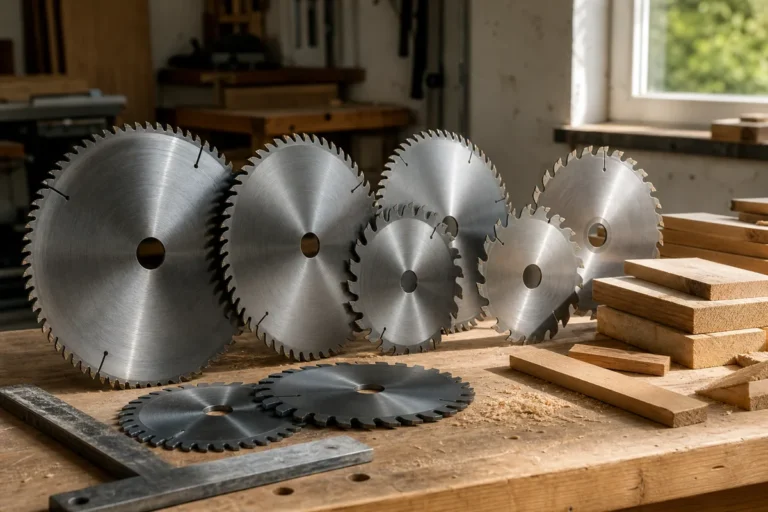
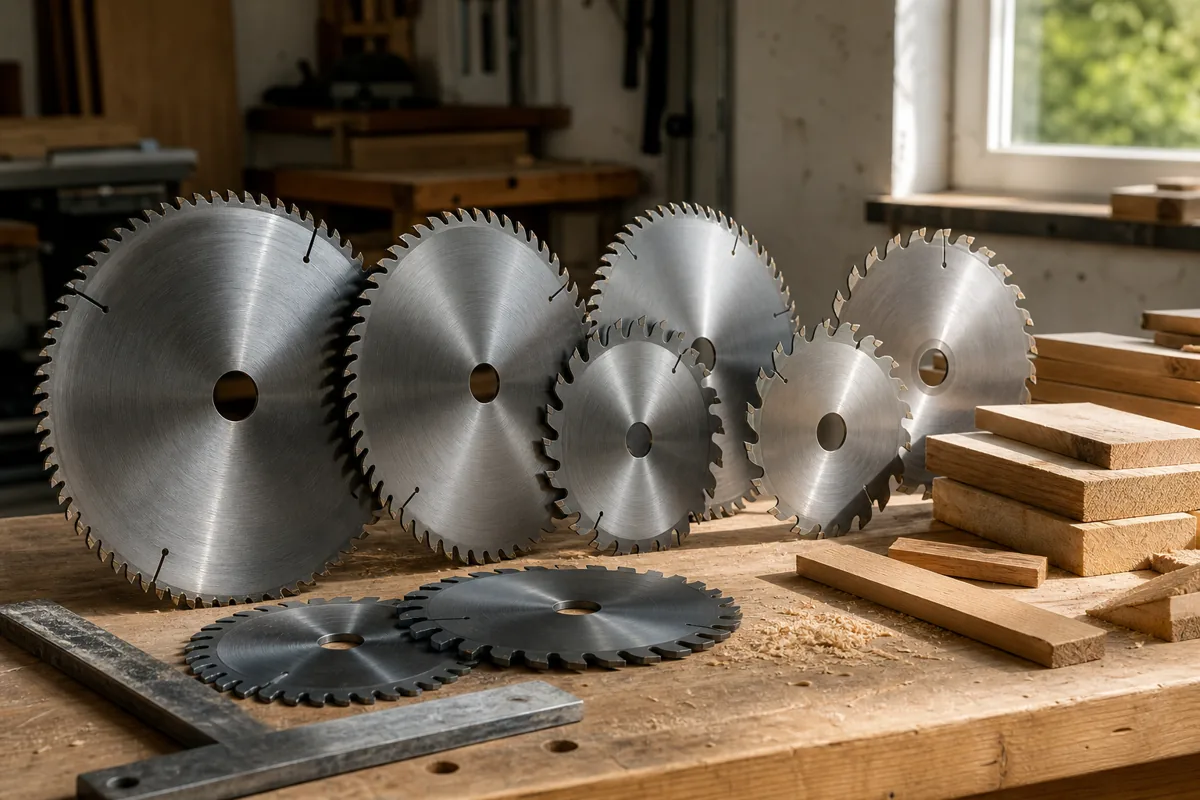
For clean cuts in melamine-faced particleboard or MDF, look for a sharp, carbide-tipped blade with a high tooth count and a grind suited to laminate. On a typical 10-inch table saw, a 60- to 80-tooth blade is a practical starting point. If you cut panels often, a dedicated triple-chip-grind (TCG) blade is usually the better choice. If you only need a few cuts, a sharp 60-tooth combination or crosscut blade can be good enough.
Blade choice helps, but it cannot compensate for a loose fence, poor support, a dull blade, or feeding the panel too quickly. Melamine chips easily at the top and bottom face, so setup and cut technique matter just as much.
What to look for in a blade
Check the blade diameter and arbor hole first. Most full-size jobsite and cabinet saws use a 10-inch blade with a 5/8-inch arbor, but confirm your saw’s manual before buying. The blade must also be rated for the saw’s maximum speed, and its kerf must suit the saw’s riving knife or splitter. A full-kerf blade is commonly about 1/8 inch wide; thin-kerf versions are often around 3/32 inch. Do not use a thin-kerf blade with a riving knife that is too thick for it.
Tooth count affects cut finish and feed rate, but more teeth are not automatically better. A high tooth count leaves smaller bites and can reduce visible chipping, yet it also needs a steady, controlled feed. Pushing too slowly can cause heat and burn marks; forcing the cut can make the saw bog down or tear the coating. Keep the blade sharp: dull carbide tends to crush and chip the brittle melamine instead of slicing it cleanly.
For repeated panel work, consider a 10-inch TCG melamine blade. TCG blades alternate a flat-top tooth with a beveled tooth. That tooth shape is durable on abrasive man-made panels and is commonly used for laminate-faced sheet goods. A dedicated blade may leave a cleaner edge, but it costs more and is less versatile than a general-purpose blade.
Blade options compared
| Blade type | Typical use | Trade-off |
|---|---|---|
| 40-tooth combination | Occasional cuts when one blade must handle mixed work | Convenient and often less expensive, but may chip melamine more than a dedicated high-tooth-count blade |
| 60- to 80-tooth ATB or laminate blade | Cleaner finish on melamine and other sheet goods | Good general choice for finish cuts; can feed more slowly and is less suited to fast ripping of thick stock |
| TCG blade | Frequent cutting of melamine, particleboard, or laminate | Durable and designed for abrasive panels, but a specialized blade may be unnecessary for a small project |
| Scoring blade on a sliding saw | Production cutting with a compatible scoring setup | Can produce very clean edges, but requires a saw designed for scoring blades and careful setup |
Tooth geometry matters alongside tooth count. An alternate-top-bevel (ATB) blade has alternating angled teeth that score the surface fibers; it can give a clean finish on many sheet goods. TCG is a sensible pick for frequent melamine cuts, especially when the panel’s abrasive core wears ordinary blades quickly. Some blades are marketed specifically for melamine or laminate; check the actual tooth grind, diameter, kerf, and intended material rather than relying on the label alone.
When a cheaper blade is fine
If this is a one-off project with only a few cuts, a sharp 60-tooth ATB blade you already own may be a reasonable choice. Avoid using a rough 24-tooth ripping blade for a visible finished edge: its fast, aggressive cut is more likely to chip the face. A serviceable combination blade can also work if you test it on scrap first and accept that the edge may need light cleanup or edge banding.
Do not buy an expensive specialty blade solely because it promises “chip-free” cuts. Even a good blade can chip if it is dull, dirty, misaligned, or used with inadequate support. If the blade has already cut a lot of particleboard, inspect it for packed-on resin and dull or damaged carbide. Cleaning may help a dirty blade, but it will not restore worn teeth.
Set up the saw to limit chipping
Support the full panel as it enters and leaves the saw. Melamine sheets are heavy and awkward; if the panel tips, binds, or shifts, the cut can wander and the face can splinter. Use an outfeed table or a helper who can support the sheet without pulling it sideways. Keep the fence parallel to the blade and use the riving knife. Never reach over or behind a moving blade to catch an offcut.
Set the blade height so the gullets clear the top surface and roughly 1/8 to 1/4 inch of tooth is exposed above the panel. The exact setting depends on the blade and saw, but an excessively high blade increases the exposed cutting area and can worsen tear-out. Use a steady feed that lets the motor maintain speed. If the saw slows noticeably, reduce the feed pressure rather than forcing the panel through.
For a visible edge, test the setup on an offcut from the same panel. Mark which face chips and adjust your approach. A table saw’s standard blade rotation tends to chip more on the top face, while the bottom face can chip from the upward-moving teeth. A zero-clearance insert can support the material around the blade and reduce bottom-face tear-out. It does not fix poor alignment or a dull blade, and it must be suitable for the blade’s tilt and height range.
For critical panels, a sacrificial sheet or a scoring cut can improve the result. A shallow first pass—about 1/16 inch deep—can score the top coating; raise the blade and make the full-depth cut using the same fence setting. This takes two passes and careful handling, but can help when the top face is chipping. Do not improvise a scoring blade on a saw that is not designed for one. If both faces must be nearly flawless and your saw cannot deliver that reliably, a track saw with a suitable blade or a shop panel saw may be the more practical option.
Buying checklist
Before ordering, confirm the blade diameter, arbor size, kerf, maximum RPM, and compatibility with your riving knife. For occasional work, buy a reputable 60-tooth blade in the correct size and test it on scrap. For regular cabinet or furniture work, a dedicated high-tooth-count melamine blade is easier to justify. In either case, keep the blade clean and sharp, support the panel properly, and make a test cut before committing a finished piece.