How to Choose a Table Saw Motor for Frequent Hardwood Ripping
What's inside
As an Amazon Associate I earn from qualifying purchases. This post may contain affiliate links at no extra cost to you.
Contents
Start with the cut, not the horsepower label
Frequent hardwood ripping asks more of a table saw than occasional crosscuts in construction lumber. Long cuts through dense stock can keep the motor loaded for minutes, especially with a dull blade, a tight fence setup, or a wide board. The right motor is one that sustains the cut without bogging down, tripping protection, or forcing you to feed so slowly that the work becomes awkward.
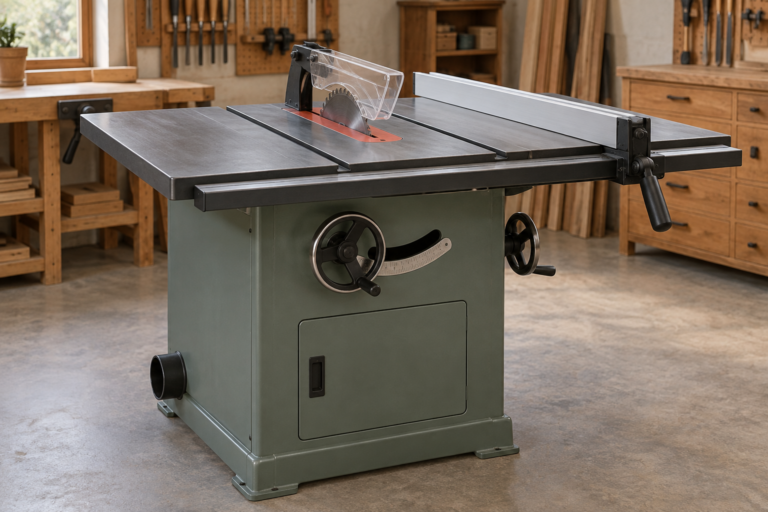
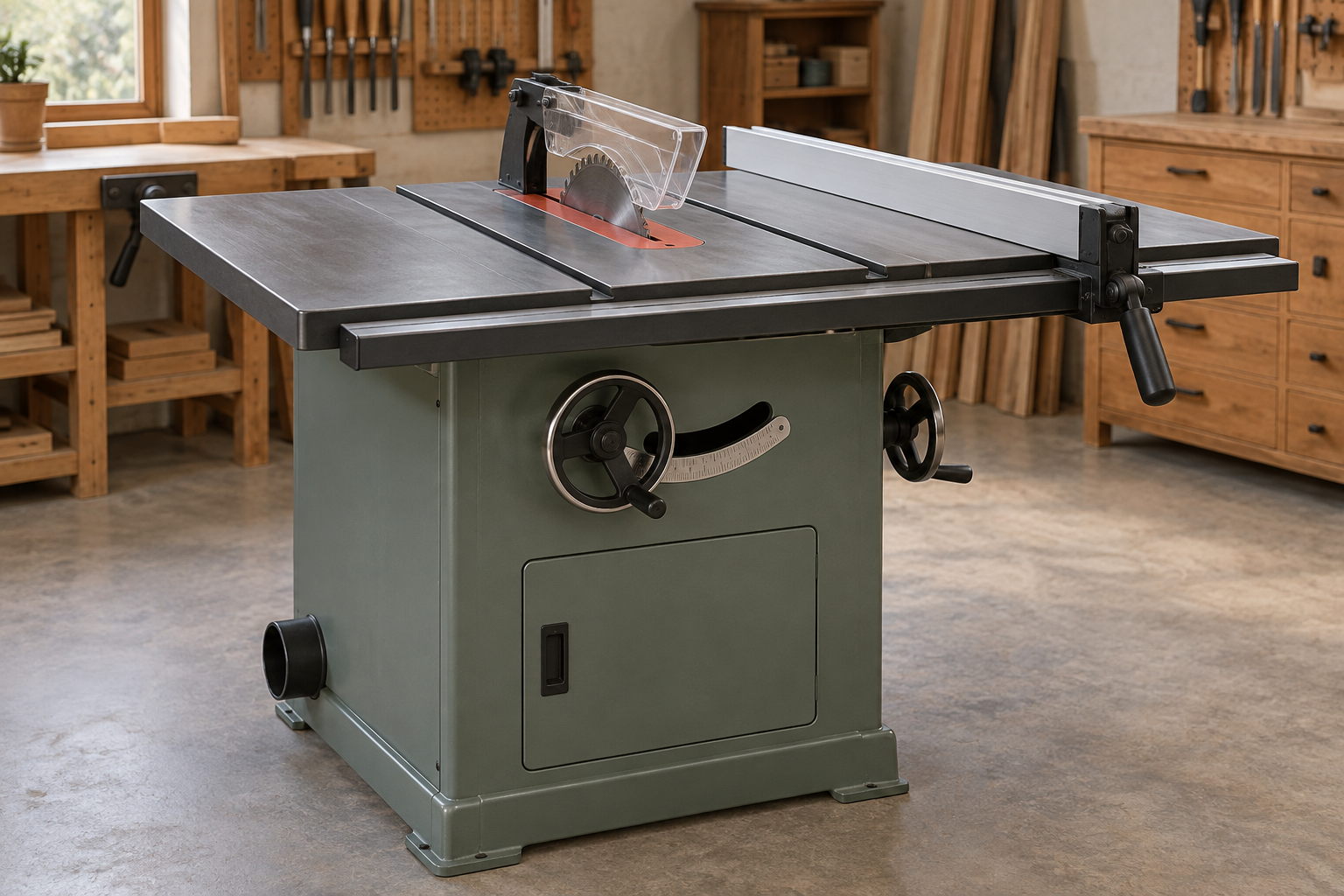
For a home shop, a well-built 1.75-horsepower saw is often enough for ordinary hardwood boards when paired with a sharp, suitable blade and a 120-volt circuit. A 3-horsepower saw is a better fit for regular thick-stock ripping or production work, but it usually needs 240 volts. A larger number on the motor plate does not compensate for poor blade alignment, a weak fence, or an undersized circuit.
Understand horsepower and voltage
Horsepower describes mechanical output, but the number alone does not tell you how the saw behaves under sustained load. Motor design, cooling, drive system, and the quality of the electrical supply matter too. Check the saw’s rated voltage and amperage, not just the advertised horsepower. A 120-volt motor drawing near the limit of a household circuit may be more prone to nuisance trips than a 240-volt setup with an appropriately sized circuit.
Many motors can be wired for either 120 or 240 volts, but this is not universal. Some are fixed-voltage, and conversion requires following the manufacturer’s wiring diagram. Changing the voltage does not increase the motor’s rated horsepower; it generally reduces current draw for the same output. Have a qualified electrician size and install the circuit. Do not assume a standard outlet, extension cord, or breaker can safely support a saw because the plug fits.
Match motor size to your work
| Motor and supply | Good fit | Main trade-off |
|---|---|---|
| About 1.5 hp, 120 V | Occasional ripping of moderate-thickness boards and general shop work | Least expensive, but has less reserve in thick or dense stock |
| About 1.75 hp, 120 V | Regular hobby-shop ripping with a sharp blade and controlled feed | Convenient on a suitable 120 V circuit; still easy to overload in demanding cuts |
| About 3 hp, 240 V | Frequent thick hardwood ripping, wide stock, or long sessions | Higher purchase and electrical-installation cost; needs 240 V service |
These are practical categories, not guarantees: saw design and the material being cut change the result. For a small shop where most rips are in 4/4 or 5/4 hardwood, a 1.75-horsepower 120-volt table saw may be the sensible compromise. If you routinely rip 8/4 stock, cut full-length boards in dense species, or run the saw for extended production sessions, consider a 3-horsepower 240-volt table saw.
The cheaper, lower-powered saw is fine when cuts are occasional and you can use a moderate feed rate. Do not buy the larger machine just to avoid basic setup and maintenance. Conversely, if a 1.75-horsepower saw repeatedly slows or trips while ripping stock you commonly use, upgrading may be cheaper than accepting a frustrating, unreliable workflow.
Look beyond the motor
Ask whether the motor is induction or universal. Many cabinet and contractor-style saws use induction motors, which tend to run steadily and are suited to repeated shop use. Some compact saws use universal motors; they can deliver useful power in a portable package, but are typically louder and may feel less composed under a long, heavy cut. Neither type is automatically unsuitable: assess the complete saw and your actual workload.
Check whether the drive uses a belt or direct drive, and whether belts are accessible for inspection and replacement. A slipping, worn, or poorly tensioned belt can reduce cutting performance. Also check the manufacturer’s duty guidance, replacement-part availability, warranty, and whether the motor has thermal overload protection. A thermal protector is useful, but frequent shutdowns are a warning to stop and diagnose the load rather than repeatedly restart the saw.
Blade and feed rate can matter more than a small power difference
For ripping, use a sharp ripping blade or a suitable combination blade; a 24-tooth ripping blade is a common choice for solid wood. A fine-tooth crosscut blade can create more resistance and heat during a long rip. Keep the blade clean, aligned with the miter slot, and set just high enough to clear the work. Resin buildup, a pinched kerf, or fence misalignment can make even a larger motor struggle.
Feed at a steady pace and listen. A brief change in pitch is normal as the blade engages, but a substantial drop in speed, burning, smoke, or a hot electrical smell means stop the cut and investigate. Forcing the board can increase kickback risk and overheat the motor. Check stock for internal stress and twist, and use a riving knife, push stick, and outfeed support where the cut requires them. A motor upgrade does not make an unsafe feed rate safe.
A practical buying checklist
Before choosing, estimate your typical stock thickness, species, cut length, and how often you rip. Confirm that the saw’s voltage matches the circuit you can provide, and include electrical work in the budget if considering 240 volts. Compare the saw’s arbor size, blade capacity, fence accuracy, dust collection, and service support alongside motor rating. A 3-horsepower saw with a poor fence is not a good buy for precision work.
For occasional moderate hardwood work, choose a reputable 120-volt saw and spend attention on blade quality, alignment, and circuit suitability. For frequent, sustained ripping of thick hardwood, a 240-volt saw around 3 horsepower offers useful reserve, provided the rest of the machine is built for the job. If you are between categories, base the decision on the hardest cut you make regularly—not the rare board you could send to a lumberyard for milling.