How to Choose a Table Saw Blade for Ripping Hardwood
What's inside
As an Amazon Associate I earn from qualifying purchases. This post may contain affiliate links at no extra cost to you.
Ripping hardwood puts a different demand on a blade than crosscutting or cutting plywood. The teeth have to clear a continuous stream of chips while the workpiece moves with the grain. Choose the wrong blade and the saw may feed slowly, leave burn marks, or put more strain on the motor than necessary. For most table-saw owners, the practical choice is a sharp, carbide-tipped blade with a low tooth count and a flat-top or combination-style grind suited to ripping.
Contents
Start with tooth count
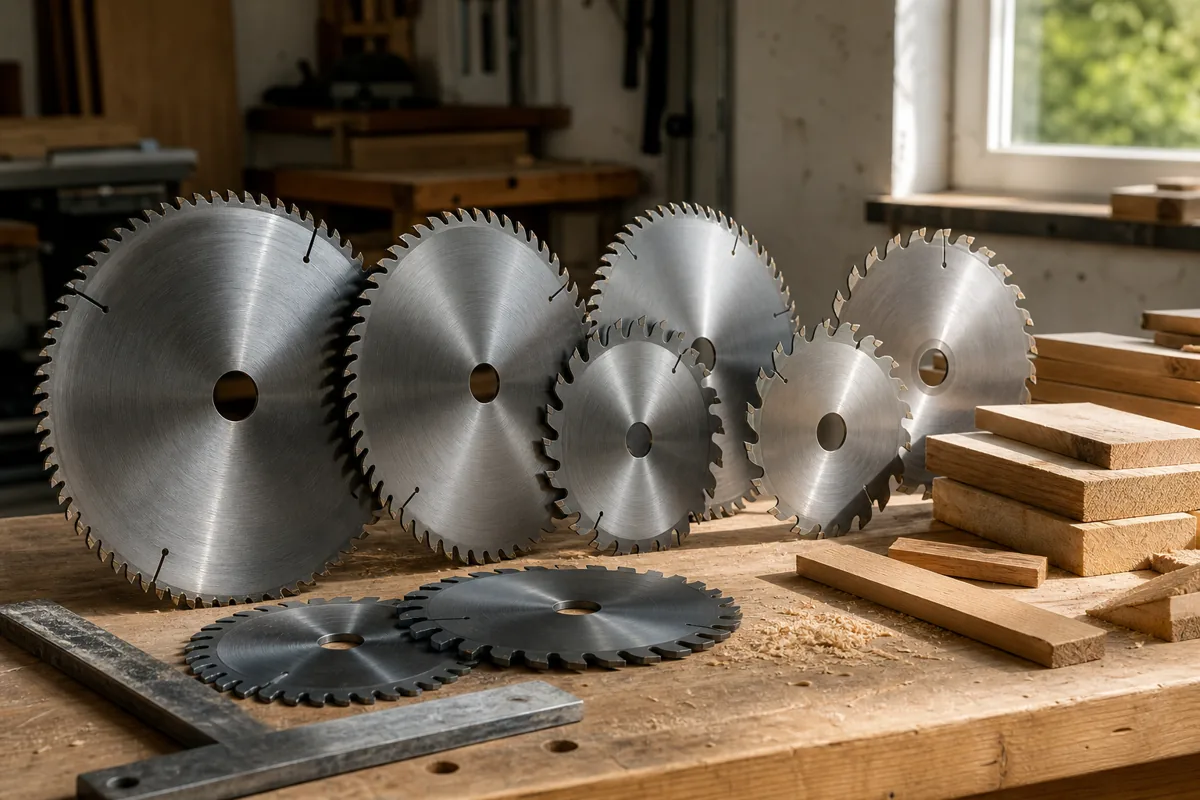
A 10-inch blade with 24 teeth is a common ripping choice. Its large gullets—the spaces between teeth—carry chips out of the kerf, and it generally feeds faster than a high-tooth-count crosscut blade. A 30-tooth combination blade is a useful compromise if you want one blade to handle occasional ripping and crosscutting without changing blades for every task.
Tooth count alone does not determine performance. Tooth shape, sharpening, blade alignment, and feed rate matter too. Still, avoid using a 60- or 80-tooth crosscut blade for long hardwood rips unless the cut is short and the saw handles it comfortably. Small gullets can pack with chips, increasing heat and making the cut feel laborious. If a blade bogs down, do not force the stock through faster.
Compare blade types
| Blade type | Best use | Trade-off |
|---|---|---|
| 24-tooth ripping blade | Frequent solid-wood ripping | Fast, efficient feed; rougher crosscuts |
| 30–40-tooth combination blade | General shop use and mixed cuts | Convenient, but not as quick at ripping as a dedicated rip blade |
| 60–80-tooth crosscut blade | Clean cuts across the grain | Usually slower and more prone to heat during long rips |
If ripping is regular work, a dedicated 10-inch, 24-tooth carbide ripping blade is worth considering. If you make only a few rips now and then, a sound combination blade may be enough. Spending more on a specialist blade does not make sense if it will sit unused or your cuts are short.
Check the grind and kerf
Flat-top grind (FTG) teeth cut a flat-bottomed kerf and are efficient for ripping. Many dedicated ripping blades use this grind, sometimes with alternating top bevel (ATB) teeth to improve the cut edge. A combination blade often uses an ATB/Raker pattern, balancing crosscut finish with general-purpose performance. For ordinary furniture parts where the edge will be jointed or planed, a little saw-marking is usually acceptable.
Kerf is the width of the cut. A full-kerf 10-inch blade is typically around 1/8 inch; a thin-kerf blade is often about 3/32 inch. Thin kerf removes less wood and can suit a lower-powered saw, but it is not automatically the right choice. Make sure the blade is compatible with your saw, and check that it does not flex or wander under the load. Follow the saw manufacturer’s limits for blade diameter, arbor, and kerf.
Most 10-inch table saws use blades with a 5/8-inch arbor, but verify your manual rather than assuming. Also check that the blade’s plate and teeth clear the riving knife and throat insert. A blade that fits on the arbor but conflicts with the guard or riving knife is not a safe fit.
Match the blade to the saw and stock
Hard maple, oak, and other dense species demand a steady feed and a sharp edge. A small jobsite saw may need a thin-kerf blade to reduce the load; a cabinet saw can usually run a full-kerf blade without the same concern. The saw’s condition matters: a dirty or misaligned blade can burn even when the tooth count is appropriate.
For a useful balance of feed speed and edge quality, consider a 40-tooth combination blade. It will generally rip more slowly than a 24-tooth blade, but it saves blade changes when jobs mix ripping and crosscutting. If you mostly break down hardwood and clean up edges with a jointer or planer, prioritize a ripping blade. If you want cleaner crosscuts straight off the saw, a combination blade is more versatile.
Read the cut before changing blades
Burn marks on the side of a rip can come from a dull or dirty blade, a fence that is not parallel to the blade, or stock pinching the blade as the cut closes. A slow, heavy feed can add heat; an excessively fast feed can leave a coarse surface or overload the motor. Check alignment and clean pitch from the blade before blaming the tooth count. If the blade is visibly dull, sharpening may cost less than replacing a quality blade.
For hardwood boards thicker than about 1-1/2 inches, the saw works harder and chip clearance becomes more important. Make sure the blade is exposed only as needed for the cut, use a riving knife, and support long stock so it cannot sag or twist. Never stand directly behind the board, and use a push stick or push block when your hands would otherwise approach the blade.
A practical buying checklist
Before ordering, confirm the blade diameter and arbor size in your saw manual, then choose tooth count for your main task: 24 teeth for regular ripping, or roughly 30–40 for a one-blade compromise. Pick thin kerf only when your saw benefits from the lower cutting load and the blade is approved for it. A modestly priced carbide blade is fine for occasional projects; frequent hardwood work justifies a better-made blade that can be sharpened repeatedly. Either way, a clean, sharp, correctly aligned blade is more useful than a premium blade installed on a misadjusted saw.