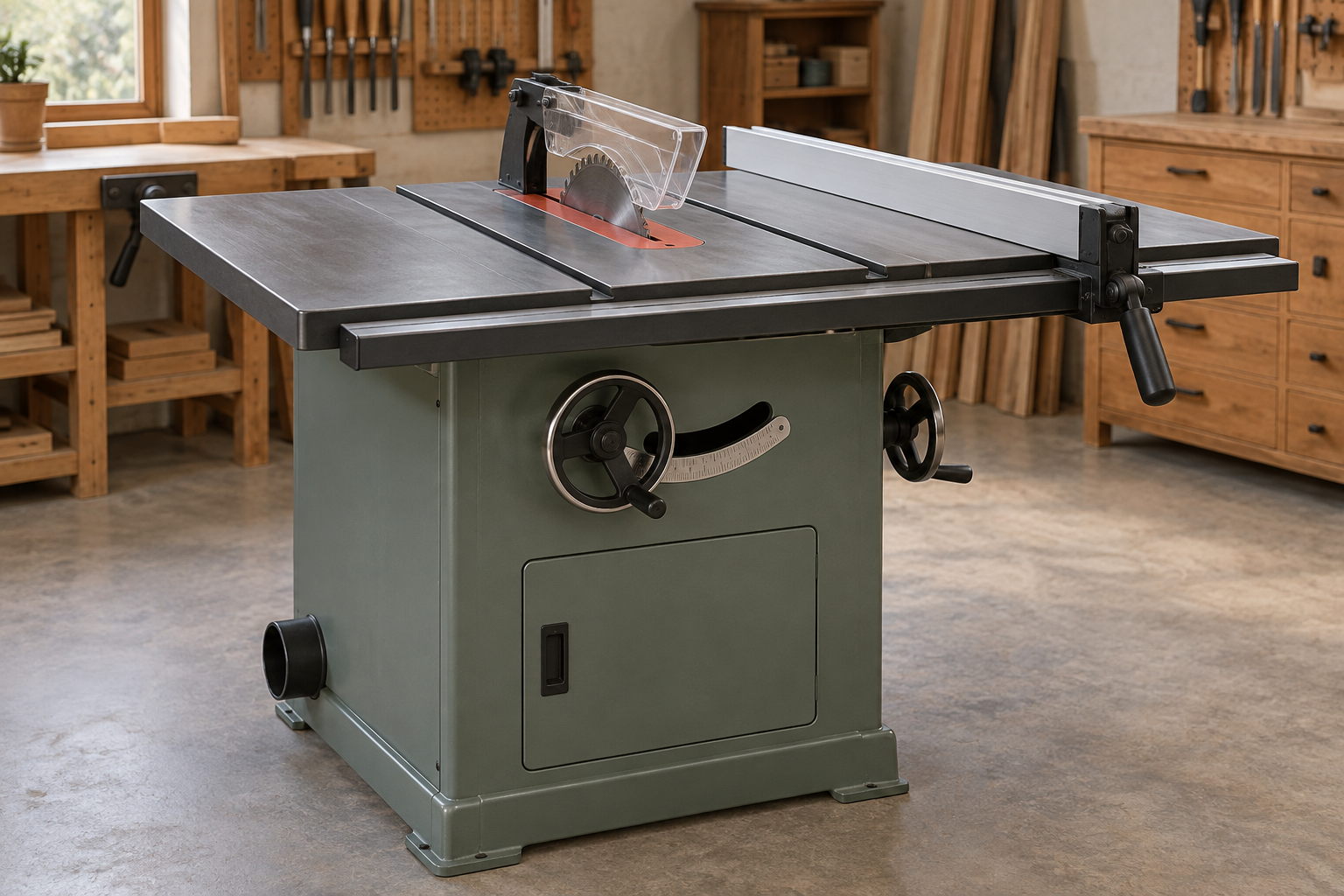
How to Cut Narrow Strips Safely on a Stationary Table Saw
What's inside
As an Amazon Associate I earn from qualifying purchases. This post may contain affiliate links at no extra cost to you.
Contents
Why narrow rips need a plan
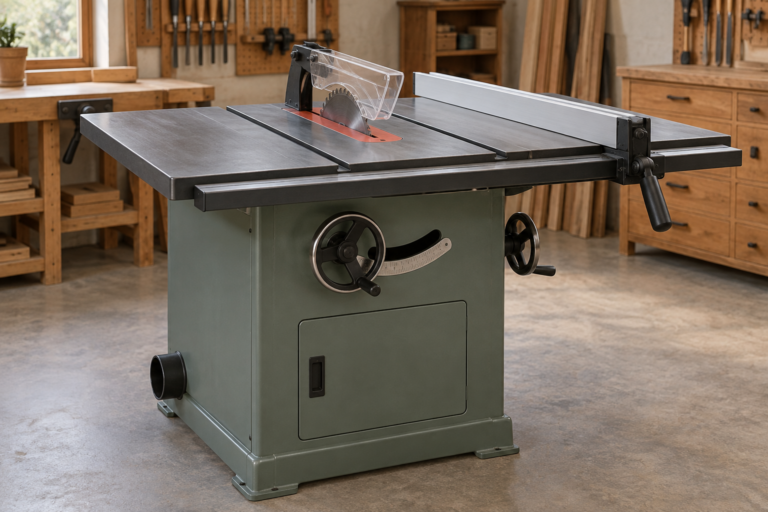
Ripping a narrow strip on a table saw is not just a matter of moving the fence close to the blade. The strip can become trapped between the blade and fence, twist into the teeth, or get lifted as the cut finishes. That can damage the workpiece or cause kickback. Before you start, decide which side of the blade the useful piece will be on, how you will keep it controlled, and how you will support it after the cut.
For many ordinary jobs, a strip around 1 inch wide is manageable with a suitable push stick and a riving knife. Below roughly 1/2 inch, control gets harder; a jig or a different machine may be the better choice. These are practical guidelines, not guarantees: stock thickness, blade height, grain, and the saw setup all affect risk.
Set up the saw and workpiece
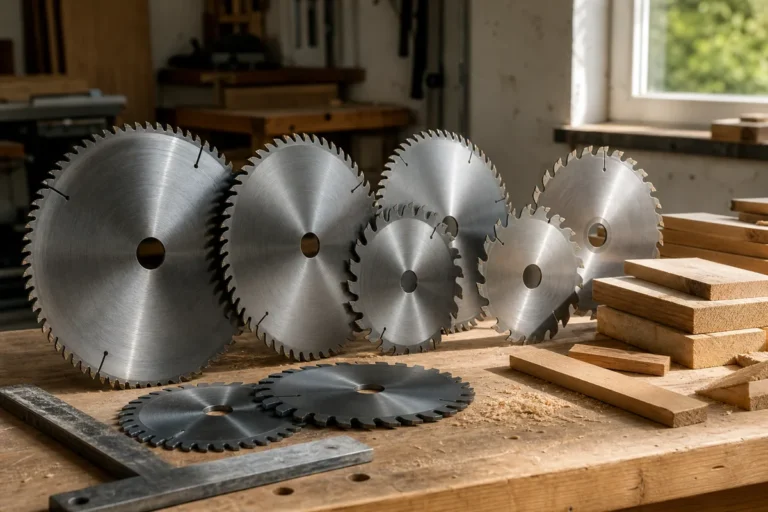
Use a sharp, appropriate ripping blade and make sure the blade is aligned with the miter slot and fence. A misaligned fence or dull blade can cause burning, wandering, or binding. Keep the riving knife installed and matched to the blade where possible; it helps keep the kerf open behind the teeth. Confirm that the guard can be used for the cut, and do not remove safety equipment just to make the setup more convenient.
Check the board for warps, twist, cracks, loose knots, and embedded metal. A bowed board can shift against the fence as you feed it. If it will not sit flat and stay against the fence, flatten or joint it first, or use another cutting method. Set the fence using the distance from the blade to the fence, accounting for blade kerf and which piece is the keeper. Unplug the saw before making adjustments.
Use a stable outfeed table or roller support if the workpiece is long enough to tip as it leaves the saw. The support should be level with the saw table and should not steer the board sideways.
Choose a control method
For a modest-width strip, a push stick keeps your hand away from the blade while helping maintain forward pressure. A push block can provide more control over a wider board, but it must not interfere with the blade or fence. Keep hands on the safe side of the blade, and do not reach over it to catch the offcut.
When the keeper strip is very narrow, consider a zero-clearance insert, featherboard, or purpose-made narrow-rip jig. A featherboard holds stock against the fence ahead of the blade; it should not press the workpiece into the blade or be placed where it can trap the stock after the cut. A narrow-rip jig can hold the board against the fence while the keeper remains on the side away from the fence, reducing the chance of pinching a thin offcut between fence and blade. Follow the jig maker’s instructions and verify the arrangement with the saw unplugged.
| Method | Useful for | Main trade-off |
|---|---|---|
| Push stick or push block | Strips with enough room for steady hand control | Low cost, but the operator must maintain consistent pressure and control |
| Featherboard | Keeping wider stock against the fence before the blade | Helps prevent wandering, but incorrect placement can trap or bind stock |
| Narrow-rip jig | Repeated cuts or very narrow keeper strips | More setup and expense; must suit the saw and cut direction |
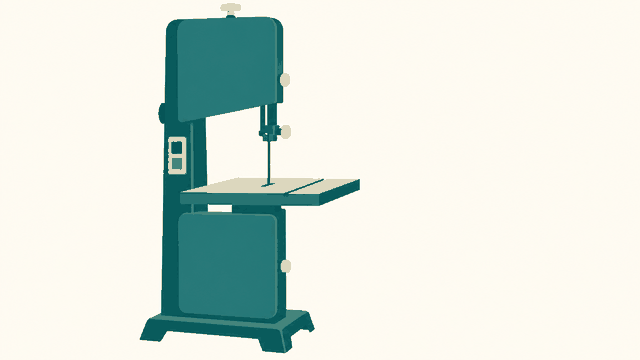
| Band saw | Very narrow strips or stock that is difficult to control on a table saw | Often safer for the task, but the cut may need cleanup and blade drift must be managed |
Buying an aid—or using what you have
If you make narrow rips regularly, a purpose-built table saw narrow-rip jig can make the setup more repeatable. Check that it is compatible with your fence and that its instructions keep the keeper piece under control. For occasional cuts, a sound push stick and careful setup may be enough; buying a jig is not a substitute for a riving knife, stable stock, or safe feeding technique.
A table saw featherboard is useful for routine fence-side pressure on suitable cuts. It is not, by itself, a narrow-strip solution. If your saw has no effective guard or riving knife, or the workpiece is too small to guide safely, stop and use a safer method rather than improvising a hand position.
Make the cut
Stand slightly to one side of the blade’s likely kickback path, not directly behind the workpiece. Start the saw and let it reach full speed. Feed steadily, keeping the stock flat on the table and snug to the fence. Do not force it: a sudden increase in resistance can indicate a dull blade, binding, or a shifting board. If the stock binds, do not pull it backward while the blade is running. Switch off, wait for the blade to stop, and diagnose the cause.
As the trailing end approaches the blade, use the push stick or jig to keep feeding until the stock has cleared the teeth. Keep the push aid moving the workpiece forward; do not push the offcut toward the blade. Let both pieces settle, then switch off and wait for the blade to stop before retrieving them. Never use your fingers to clear a thin strip from beside a running blade.
When to use another machine
For very thin strips, short pieces, or stock that flexes, a band saw may be the safer option. A band saw’s blade does not create the same trapped-offcut condition between a blade and fence, though the work still needs support and controlled feeding. Expect a rougher edge on many setups; leave a small amount of extra width and plane or sand to final size. A woodworking band saw can be a useful alternative if narrow-strip work is frequent, but it takes space and requires its own blade setup and maintenance.
If the strip is too narrow to guide without bringing a hand near the blade, do not make the cut freehand or rely on concentration alone. Change the process: use a suitable jig, cut on a band saw and clean up the edge, or ask a shop with the right equipment to do it. A safe, repeatable setup matters more than getting the exact width in one pass.