How to Safely Cut Rabbets on a Table Saw
What's inside
As an Amazon Associate I earn from qualifying purchases. This post may contain affiliate links at no extra cost to you.
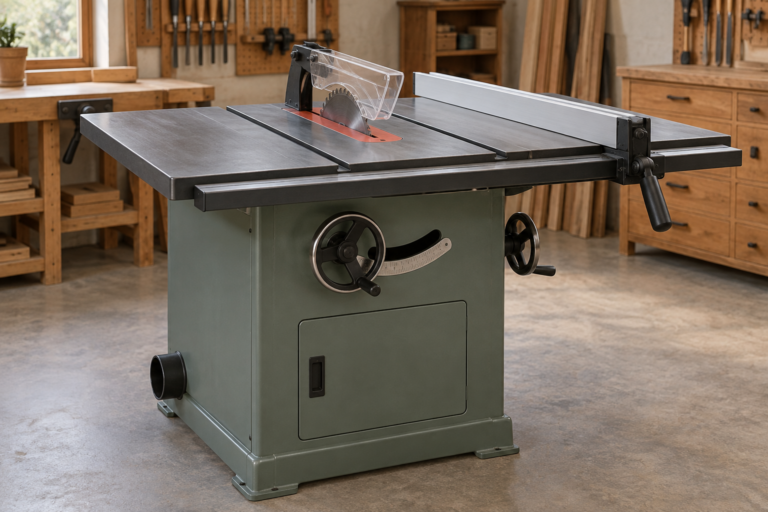
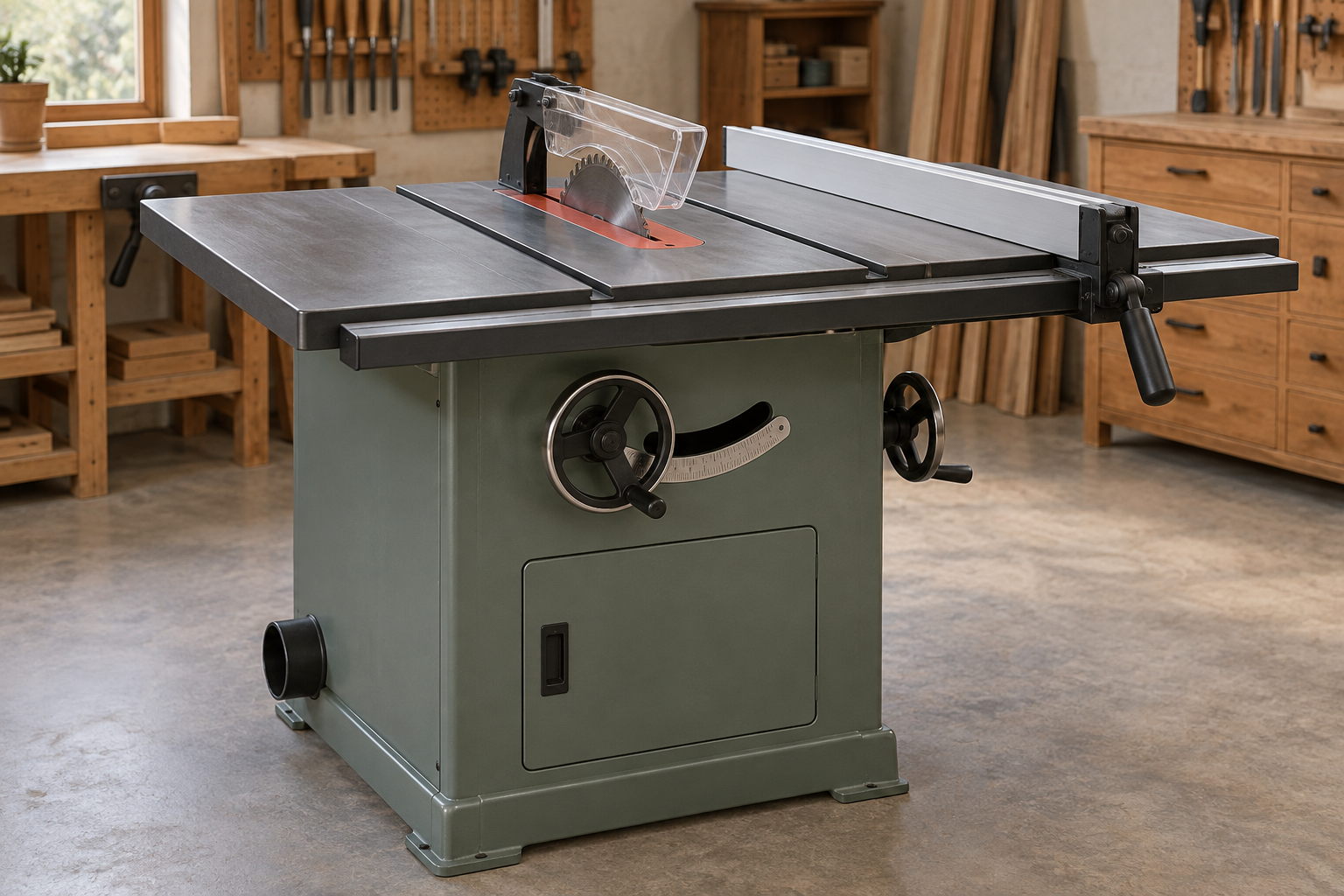
A table saw can cut a clean rabbet, but the safest setup depends on the saw’s guarding system, the workpiece, and the cut’s depth. A rabbet is a notch cut along the edge or end of a board, usually to form a joint. The blade exposes more teeth than a through-cut, so keep the work supported, use a suitable guard or jig, and make shallow passes when that improves control.
Contents
Check the saw and the workpiece
Read your saw’s manual before removing the blade guard or changing the riving knife. Some saws allow a dado stack; others do not. Never install a dado stack unless the saw, arbor, throat plate, and manual explicitly support it. Keep the riving knife installed whenever the cut allows, and use the blade guard if it fits the setup and does not obstruct the work.
Use a sharp, suitable blade. A standard combination blade can make a serviceable rabbet, especially on a few boards. A flat-top grind blade leaves a flatter-bottomed cut, but is a purchase worth considering mainly when appearance or fit matters. Inspect the stock for nails, screws, loose knots, and warping. Reject or flatten a board that rocks on the table or fence; unstable stock can shift into the blade.
Wear eye and hearing protection, stand out of the blade’s line, and connect dust collection where practical. Do not wear gloves near a running saw. Keep hands well clear of the blade, and use push blocks or push sticks to control the stock through the cut.
Choose the cutting method
| Method | Best for | Trade-off |
|---|---|---|
| Multiple blade-height passes | Occasional rabbets with a standard blade | Slower; leaves ridges that may need cleanup |
| Dado stack | Repeated, wider rabbets on a compatible saw | Costs more and requires compatible hardware and setup |
| Router or rabbeting bit | Short runs, narrow stock, or work better held on a bench | Can be slower or less convenient for long, straight edges |
For a one-off project, a standard blade and careful passes are usually enough. A dado stack can remove material in fewer passes, but it is not automatically safer: the wider cut demands a stable feed, correct throat plate, and a saw designed for the setup. If your saw does not support one, use the standard-blade method or another tool.
Cutting a rabbet with a standard blade
Set the fence to the rabbet’s width, measuring from the fence face to the blade’s nearest tooth. Set the blade height to the rabbet’s depth. For example, a 1/4-inch-deep by 3/8-inch-wide rabbet requires removing material across that 3/8-inch width to a depth of 1/4 inch. Make test cuts in scrap of the same thickness and confirm the fit before cutting the project piece.
To remove the waste in more than one pass, keep the fence position fixed and raise the blade gradually between cuts. Feed the board flat on the table with its reference face against the fence. Use a push block that applies downward and sideways pressure without putting your hand near the blade. Make each pass smoothly; forcing the stock can cause it to bind or wander. After the final pass, switch off the saw and wait for the blade to stop before checking the cut or clearing waste.
Some rabbet setups require the stock to pass over an exposed portion of the blade or be guided in a way the standard guard cannot cover. Do not improvise a guard arrangement that traps the work, removes the riving knife without need, or leaves hands close to the teeth. If the cut cannot be made with secure support and a safe feed path, choose a router, jointer-compatible setup, or other method instead.
For repeatable work, a properly sized table-saw push-block set can improve control. A homemade push block is fine if it has a secure grip, a flat sole, and enough clearance to keep it away from the blade.
Using a dado stack
First verify the maximum dado width and arbor requirements in the manual. Install the stack and matching throat plate with the saw unplugged. Measure the actual cutting width; a nominal 1/2-inch stack may not cut exactly 1/2 inch in a particular setup. Make a scrap cut and adjust with shims or a different stack width only as the manufacturer allows.
Set the blade height to the desired rabbet depth, then feed the work with its reference face flat on the table and against the fence. Use featherboards only when they do not press the work into an unsafe position or interfere with the cut. For long stock, provide outfeed support at table height; a board that tips as it exits can twist into the cutter. Never reach over a spinning stack to retrieve offcuts.
A compatible dado throat plate is required for many saws, but the plate does not make an unsupported dado setup safe. Check that it fits the saw and stack, sits flush, and leaves appropriate clearance. If you need a dado stack only for one small project, the cost and setup may not be justified.
Avoid common failures
If the rabbet width varies, check for a loose fence, debris between the fence and stock, or a bowed board. If the bottom has ridges, make a light cleanup pass or use a suitable flat-bottom cutter; do not compensate by pushing harder. Burning usually points to a dull blade, a slow or uneven feed, or stock pinching the blade. Stop and diagnose rather than continuing through smoke or a binding cut.
Do not cut narrow stock freehand against the fence, or use the fence and miter gauge together to trap a piece between the blade and fence. That arrangement can pinch the offcut and cause kickback. For small parts, use a carrier or a different tool that supports the work securely. When the setup feels awkward, stop, unplug the saw before adjustments, and choose a method that keeps the work stable and your hands away from the blade.