Best Table Saws for Cutting Solid-Wood Door Rails and Stiles
What's inside
As an Amazon Associate I earn from qualifying purchases. This post may contain affiliate links at no extra cost to you.
Door rails and stiles are long, narrow parts, but they are not light-duty table-saw work. A typical hardwood door component may be 2-1/2 to 5 inches wide, 3/4 to 1-1/4 inches thick, and 30 to 84 inches long. The saw must hold a straight fence, keep the stock supported, and cut without pushing the work into a dangerous bind.
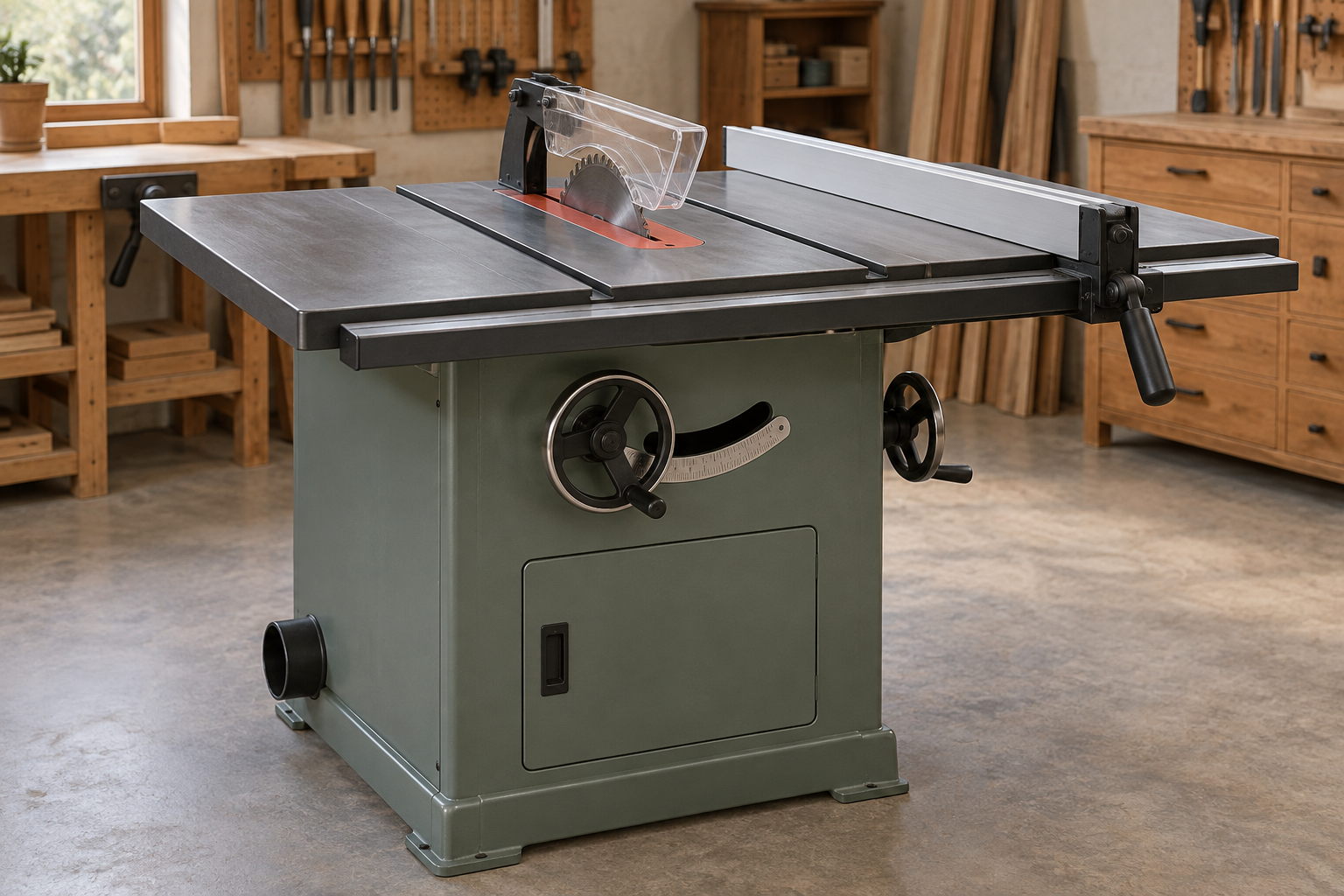
For most shops, the best choice is a cabinet saw or a well-built hybrid saw with a 10-inch blade, a 30-inch or greater rip capacity, and a reliable cast-iron table. A contractor-style saw can work, especially for occasional doors, but it gives up some mass, dust control, and fence stability.
Contents
What to Look For in a Door-Part Table Saw
Fence quality matters more than a few extra horsepower. A good fence should lock parallel to the blade without needing to be pushed into position. Check that it stays square when locked and does not bow away from the table near the outfeed end. A 30-inch rip fence is enough for most rails and stiles; 50 inches is useful when breaking down wide panels, but it takes more shop space.
Look for at least 2 hp of usable motor power on 120 volts, or roughly 3 hp on 240 volts. Hardwood such as white oak, hard maple, and beech is easier to cut with a 240-volt cabinet saw, particularly when using a stacked dado set. A 1-3/4 hp hybrid saw is still adequate for typical 3/4-inch or 1-inch stock if the blade is sharp and the cut is fed steadily.
Cast-iron tables reduce vibration and provide a flatter reference than thin stamped steel. They also make it easier to support long parts with an outfeed table or roller support. A riving knife that stays aligned with the blade is essential. It reduces the chance that a long rip closes onto the blade and kicks back.
Start your search with cabinet table saws with 3 hp motors and 30-inch fences if you build doors regularly. For a smaller shop, hybrid table saws with cast-iron tables are usually the better value.
Which Saw Type Fits the Work?
| Saw type | Best use | Main advantages | Limitations |
|---|---|---|---|
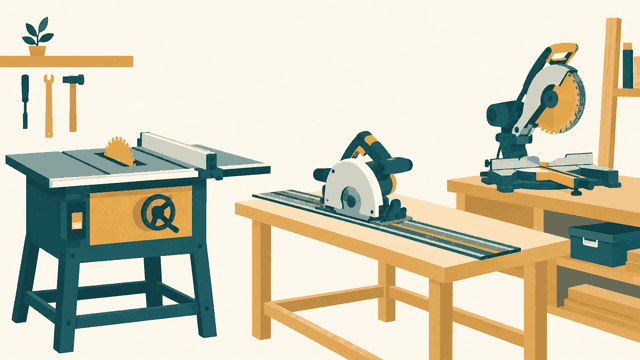
| Cabinet saw | Frequent door and furniture work | Powerful, stable, accurate fence, strong dust collection | Heavy, expensive, usually needs a 240-volt circuit |
| Hybrid saw | Serious hobby shop and occasional doors | Good accuracy, enclosed base, lower cost and power requirements | Less reserve power and lighter-duty hardware than a cabinet saw |
| Contractor saw | Occasional rails, stiles, and general ripping | Lower purchase price, often portable, simple to service | More vibration, weaker dust control, fence quality varies widely |
| Compact jobsite saw | Only light trimming or site work | Small and inexpensive | Short tables, limited rip capacity, less stable for long hardwood parts |
A cabinet saw is justified when you cut several doors a year, process dense hardwood, or need repeatable joinery. Its heavier trunnions and larger table make height and bevel adjustments less likely to drift. The price is not only the saw: plan on a 240-volt circuit, dust collector, mobile base, and adequate infeed and outfeed space.
A hybrid saw is the sensible middle ground for many home shops. It can rip door stock accurately and run a dado blade when the arbor and manufacturer’s instructions permit it. The cheaper option is fine when you build one or two doors occasionally, keep the stock dimensioned accurately, and accept slower feed rates.
Blade and Setup Matter as Much as the Saw
Use a sharp 40- to 50-tooth combination or general-purpose blade for ripping and crosscutting prepared hardwood. For long rips in 8/4 stock, a 24-tooth ripping blade reduces resistance. A flat-top grind blade is useful for grooves and some joinery, while a stacked dado set is convenient for tenon shoulders. Verify the saw’s maximum dado width and arbor length before buying one.
Rails and stiles should be milled flat and parallel before they reach the table saw. If a board rocks on the table, the saw cannot correct it. Joint one face, plane the opposite face, and rip one straight edge before setting the fence. Leave a small amount of extra width for final sizing if the stock is rough or stressed.
Align the blade to the miter slot and check the fence against the same reference. A practical tolerance is about 0.003 inch or less of blade-to-slot error across the blade’s usable travel. The fence can be parallel or opened slightly at the rear, but it must never angle toward the blade. A rear fence that closes in can pinch the work and cause kickback.
For long rails and stiles, use an outfeed table at the same height as the saw table. Add side support when the piece extends more than a few feet beyond the table. A roller stand that is too high can lift the stock into the blade; set it with a straightedge and confirm that the board slides without rocking.
Safe Cutting and Common Failure Modes
Keep the factory riving knife installed for through cuts, and use a push stick or push block once your hand would pass within 6 inches of the blade. Do not crosscut long parts against the rip fence without a stop system that prevents the offcut from being trapped between the blade and fence.
The most common problem is a bowed board pressing against the fence. The blade then burns the edge, stalls in dense wood, or throws the stock backward. Stop and straighten the board rather than forcing it through. Burning can also indicate a dull blade, too slow a feed, or a fence that is not aligned.
Do not choose a saw solely by motor horsepower. A powerful saw with a poor fence still produces tapered stiles. Before buying, inspect the fence lock, table flatness, riving-knife adjustment, arbor runout, and availability of replacement parts. For accurate door work, those details are worth more than a flashy specification.
If your shop already has a dependable saw but lacks capacity, spend the money on a solid outfeed and roller-support setup before replacing it. If the fence drifts, the table is badly warped, or the saw cannot maintain speed in hardwood, move up to a 3-hp, 240-volt cabinet saw. That is the upgrade most likely to improve both safety and repeatable door joinery.