Best Table Saws for Cutting Solid-Wood Door Components
What's inside
As an Amazon Associate I earn from qualifying purchases. This post may contain affiliate links at no extra cost to you.
Contents
What door work demands from a table saw
Solid-wood door parts put a premium on repeatability, a stable fence and clean, straight cuts. Stiles and rails are often long, and even a small change in width can show up as a mismatch at a joint. A saw does not need a huge motor to do this work, but it does need a table and fence that support the stock without shifting.
For typical interior-door components, a sharp 10-inch blade and a rip capacity of about 24 inches cover most ripping tasks. A 30-inch capacity gives more room for wide panels and occasional sheet goods. If you are making exterior doors or cutting thick, dense hardwood regularly, prioritize a full-size cabinet saw or a well-built contractor-style saw over a compact jobsite machine.
Which saw type fits your shop?
| Saw type | Best fit | Trade-off |
|---|---|---|
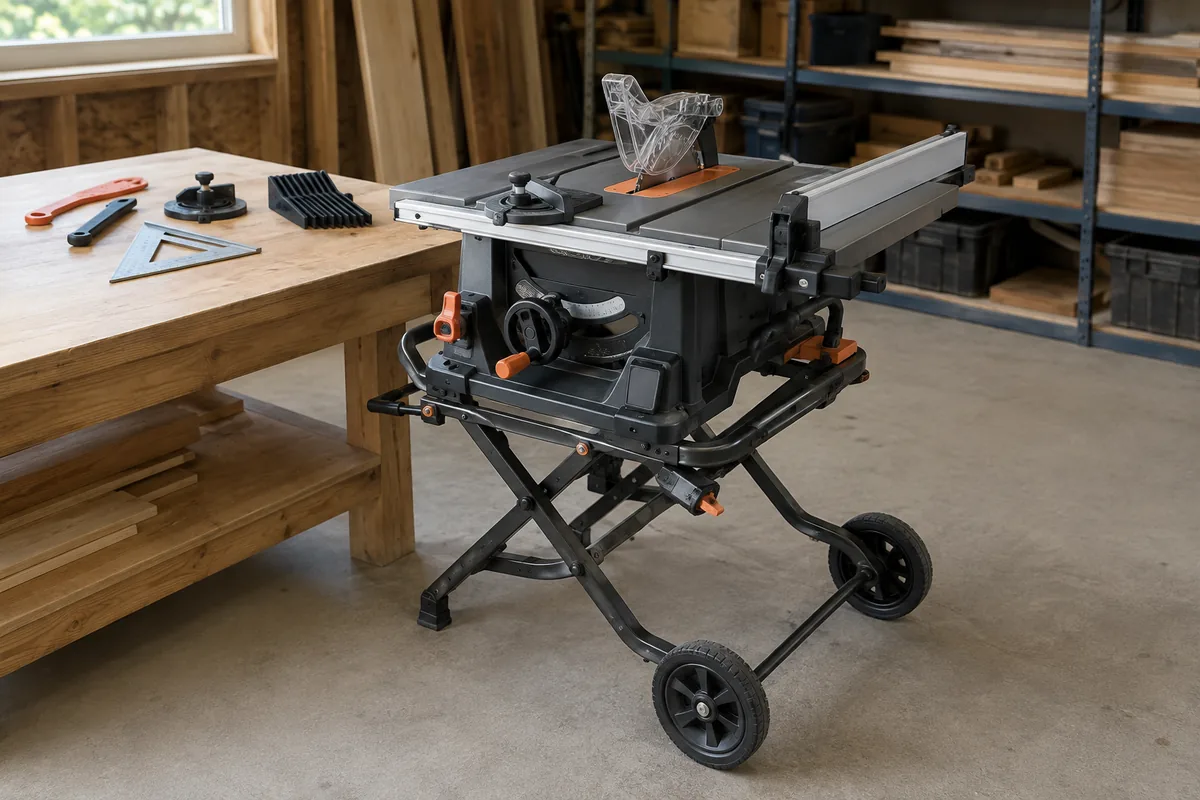
| Jobsite | Limited space, occasional door parts, portability | Smaller table and lighter fence make long stock harder to control |
| Contractor-style | Small stationary shop and regular hardwood work | Costs and footprint are higher than jobsite saws; features vary widely |
| Cabinet | Frequent production, thick stock, demanding accuracy | Highest price, weight and space requirements |
A jobsite table saw is a sensible choice if you make a few doors a year and can add outfeed support. For a permanent small-shop setup, a contractor-style table saw is often the better balance. A cabinet table saw makes sense when heavy use, low vibration and shop capacity justify the investment.
Features worth paying for
Fence accuracy comes first. The fence should lock parallel to the blade without needing a shove at the far end. Check it at the front and rear of the blade with a reliable rule or dial indicator. A slight toe-out at the rear can reduce binding, but a fence that wanders or changes position after locking is a problem. Before buying, look for a fence that stays square and has enough face height to support your usual stock.
Support matters as much as horsepower. A 7¼-inch-wide stile may be easy to rip, but handling an 8-foot blank is not. Plan on roller stands or a level outfeed table, with infeed support if the stock is especially long. The support must not lift the work or steer it sideways. An outfeed table is particularly useful when cutting multiple parts to matching widths.
Check the arbor and dust setup. Most 10-inch saws are designed around a 10-inch blade; use a sharp, appropriate-tooth-count rip or combination blade rather than forcing a dull general-purpose blade through dense hardwood. Dust collection matters in a stationary shop. A cabinet with a dust port and a well-fitting guard usually captures more debris than an open stand, though no saw collects all dust at the blade.
Set up the cut before making parts
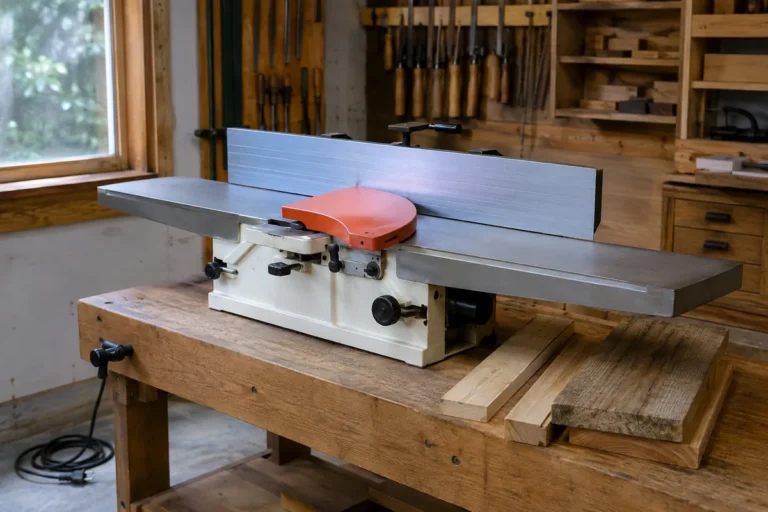
Mill door stock flat, straight and close to final thickness before ripping. A table saw is not a jointer: if a board has a bowed edge, pressing it against the fence can produce a matching bowed cut, or the board may shift and pinch the blade. Establish one straight reference edge first. For significantly bowed stock, use a jointer or a safe straight-line ripping method, then finish to width.
Set the blade just above the workpiece—roughly ¼ inch of tooth projection is a useful starting point for a typical through-cut. Align the fence and blade, verify the cut width with a test piece, and use a push stick or push block when the work approaches the blade. Keep hands away from the blade path and use the riving knife and guard whenever the cut allows. Do not rip freehand or stand directly behind the board; kickback can launch stock backward.
For matching stiles, rip all blanks with the same fence setting, then check several pieces rather than trusting the scale. If the workpiece is too narrow to control comfortably, use a suitable push block and featherboard or choose another operation. A featherboard should hold stock against the fence without forcing it into the blade.
Common problems and their causes
Burn marks usually point to a dull or dirty blade, a feed rate that is too slow, or stock that is pinching the blade. Confirm alignment and clean or replace the blade before changing the saw. Width variation often comes from inconsistent fence locking, a board with a poor reference edge, or unsupported stock twisting during the cut. Chipped edges are more common with a blade that has too few teeth for the material or with tear-out-prone grain; use a suitable sharp blade and test on offcuts.
A lower-cost saw can still make accurate door parts. If its fence locks consistently and the table is stable, careful setup and external support can compensate for a small work surface. Spend more when you need to rip thick hardwood every week, make many identical parts, or want a machine that stays aligned under sustained use. No price tier replaces straight, properly prepared stock or safe workholding.