Best Table Saws for Cutting Dados in Solid-Wood Cabinet Parts
What's inside
As an Amazon Associate I earn from qualifying purchases. This post may contain affiliate links at no extra cost to you.
Contents
What matters when cutting cabinet dados
A dado is a flat-bottomed groove cut across the grain, often used to seat a cabinet shelf or divider. In solid wood, the fit matters: a groove that is too tight can split a panel as humidity changes, while a loose one makes alignment and glue-up harder. The saw needs a stable fence, a table that supports the work, and enough power to cut the chosen width without forcing the stock.
For most cabinet parts, a dado between 1/4 and 3/4 inch wide is common. Measure the actual thickness of the mating piece rather than trusting its nominal size. “3/4-inch” lumber may be thinner, and a board’s thickness can vary along its length. Make a test cut in scrap from the same stock, then check the fit before cutting the parts.
Before buying, check the saw’s manual for dado-blade compatibility, maximum stack width, and arbor requirements. Some compact saws do not accept dado sets at all. On saws that do, use only the blade configuration and width the manufacturer permits. A dado set should be sharp, properly assembled, and rated for the saw’s speed.
Which table saw type to buy
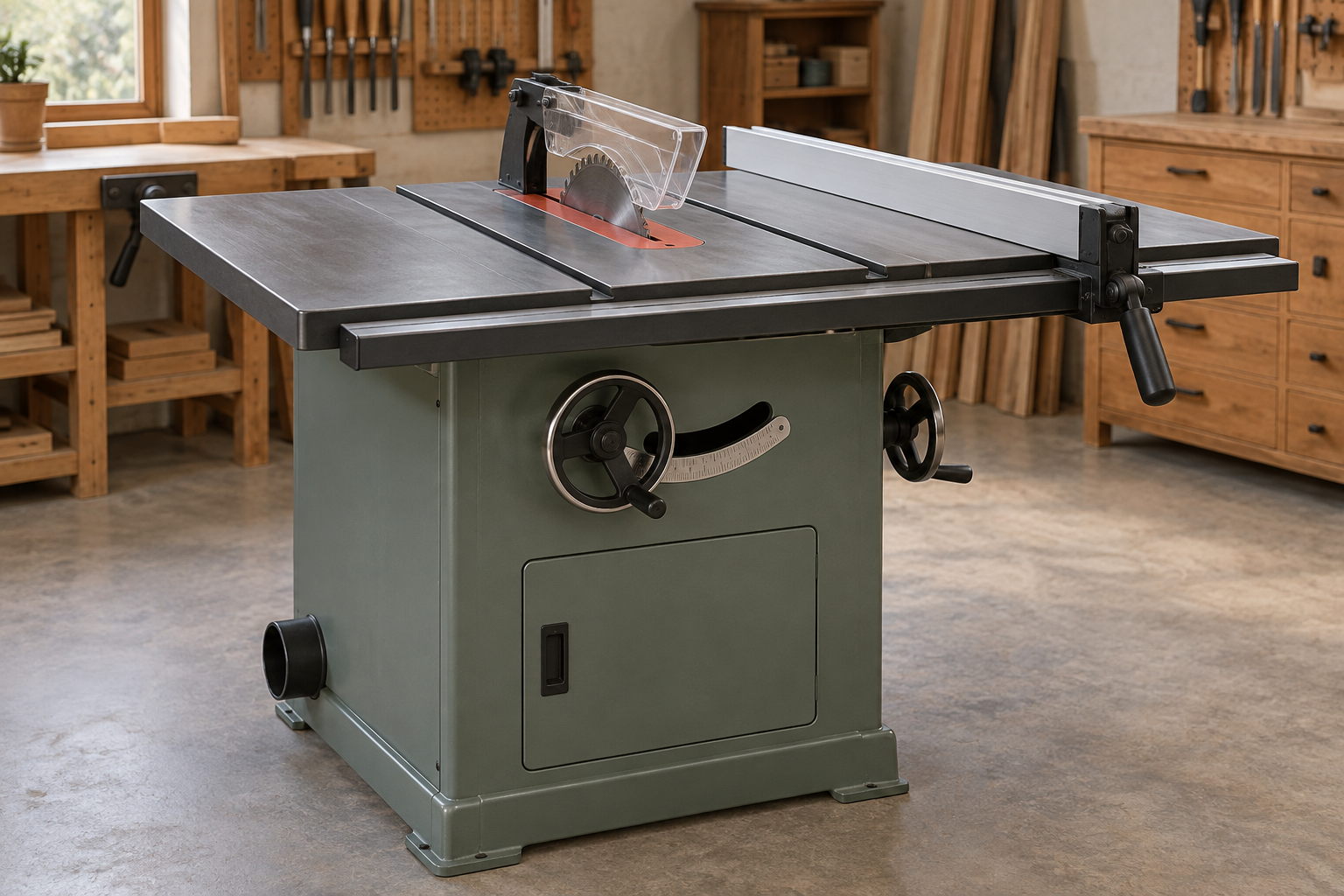
A cabinet saw is the strongest choice for a dedicated shop, but it costs more, takes up space, and usually needs a 240-volt circuit. A good contractor or hybrid saw can cut ordinary cabinet dados cleanly and is a sensible middle ground. Portable jobsite saws cost less and are easier to move, but their smaller tables and lighter fences make long, wide panels harder to control.
| Saw type | Best fit | Trade-off for dado work |
|---|---|---|
| Jobsite | Small shop, occasional cabinet work | Lower cost and portability; check dado support and table capacity carefully |
| Contractor or hybrid | Regular furniture or cabinet work | More support and stability than most jobsite saws without cabinet-saw cost |
| Cabinet | Frequent production or heavy solid-wood work | Stable and powerful, but expensive, large, and often requires 240 volts |
If you are shopping in the portable category, compare jobsite table saws that explicitly support dado sets. Don’t assume a saw accepts one just because its arbor looks long enough. The manual is the authority.
Fence, table, and power
For repeatable dados, a fence that locks square and stays put is more useful than a high advertised motor rating. Check that the fence does not deflect when pressed sideways and that its scale can be calibrated. A cut that is even 1/32 inch off can leave a shelf visibly misaligned or require extra fitting.
Table size matters when cutting wide cabinet sides. A small jobsite table can be adequate for narrow stock, but a large panel may tip or pull away from the fence unless supported. Use a properly positioned outfeed support or a helper when needed; neither should push the work sideways. If cabinet parts are a regular project, a hybrid table saw with dado capability is often a better value than upgrading from one portable saw to another.
Power affects how the saw handles a wide cut, especially in dense hardwood. A 120-volt saw can make dados in typical cabinet stock, but slow the feed if the motor strains. A 240-volt cabinet saw has more reserve for repeated cuts, though it is unnecessary for someone making a few grooves in a small shop. A burning cut usually points to a dull blade, slow or uneven feed, misalignment, or poor dust clearance—not simply a need for a larger saw.
Cutting dados accurately and safely
Use a stacked dado set for a groove wider than a single blade can cut. Set the stack to the measured width, make a test cut, and adjust in small increments. If you do not own a dado set, a regular blade can remove material with several passes, but the method takes longer and needs careful fence movement. A router and straightedge is another practical option for a small number of grooves.
Support the work flat against the table and fence. Mark the groove limits clearly, then check the fence setting against the marks before switching on. Use a push block or suitable hold-down method to keep hands away from the blade, and use the blade guard and riving knife where compatible with the setup. Never make a cut freehand or reach over a running blade to clear offcuts.
For a wide dado, remove waste with steady, controlled passes. Forcing the stock can cause a rough bottom, burning, or a sudden loss of control. A groove that is not square to the face often comes from stock that rocks on the table or a fence that is not parallel to the blade. Check both before changing the blade. Disconnect power before adjusting the stack or clearing a jam.
When a cheaper saw is enough
If you cut a few short dados each year in modest-width panels, a compatible jobsite saw can do the job. Spend time checking the fence, supporting the work, and testing the fit in scrap. You may get better results from a sharp, quality dado set and careful setup than from buying a larger saw you rarely use.
Pay more for a larger, heavier machine when you routinely cut wide solid-wood panels, make many repeated grooves, or need a fence and table that stay stable under regular use. If the saw does not support a dado set, do not modify the arbor or remove parts to make one fit. Choose a permitted cutting method—or buy a saw designed for the work.