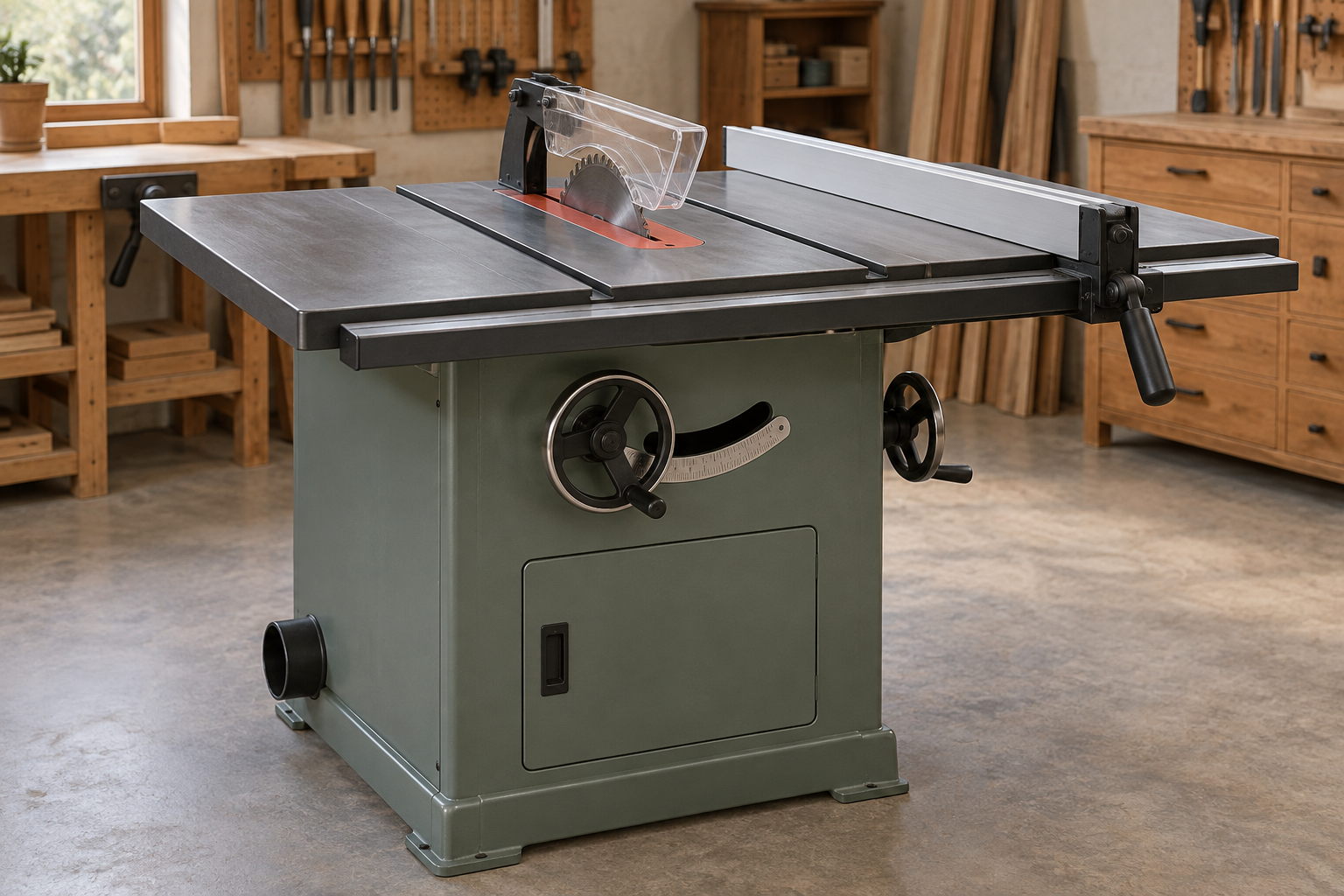
Best Table Saws with Cast-Iron Wings for Stable Panel Cutting
What's inside
As an Amazon Associate I earn from qualifying purchases. This post may contain affiliate links at no extra cost to you.
Contents
Why cast-iron wings matter
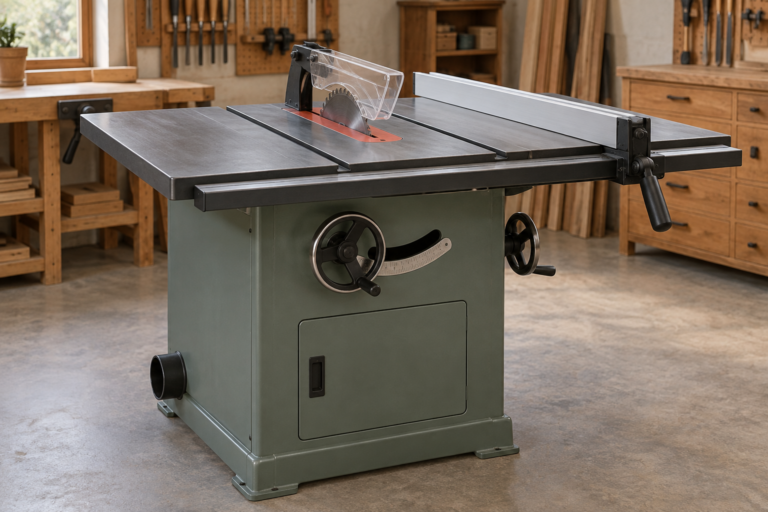
A table saw’s wings support the work; they do not make the cut more accurate by themselves. Their value is a broad, rigid surface that helps keep a large panel level as it passes the blade. Cast iron is heavy and resists flexing, but it can rust, and its mass makes a saw harder to move. A well-made steel extension can work perfectly well for occasional sheet goods, especially when backed by a sturdy stand or outfeed table.
For stable panel cutting, look beyond the wing material. Check the table’s flatness, fence rigidity, rail length, blade alignment, and how the saw is supported. A cast-iron wing attached to a flexible cabinet or a fence that deflects under pressure won’t solve those problems.
As an Amazon Associate we earn from qualifying purchases at no extra cost to you.

Choose the saw around your panels
Full 4-by-8-foot sheets are difficult to handle safely on a typical cabinet saw without infeed and outfeed support. If you regularly break down plywood alone, a track saw is often the better first tool; use the table saw for accurately ripping manageable pieces afterward. For smaller panels and hardwood stock, a cabinet saw or a robust hybrid saw with cast-iron wings can provide a stable working surface.
Before buying, measure the space needed for the fence rails and the material’s travel path. A saw with a 30-inch rip capacity can handle many cabinet parts, but that number does not mean you can safely support a full sheet without help. If you need wider cuts, compare the rail system and arrange support that stays level with the table. Browse cabinet table saws with cast-iron wings and check each listing’s included fence, motor, and extension-table details rather than relying on the headline capacity.
Comparing common saw types
| Type | Best fit | Main trade-off |
|---|---|---|
| Cabinet saw | Frequent ripping and heavier stock in a permanent shop | High cost, weight, and space requirements |
| Hybrid saw | Home shops needing a fixed saw with less bulk or cost | Motor and construction vary; verify fence and table quality |
| Contractor-style saw | Budget-conscious shops that still want a substantial table | Open stand and drive arrangement can add vibration or complicate dust collection |
| Portable jobsite saw | Moving between locations and occasional sheet breakdown | Usually lighter, with smaller tables and less support for large panels |
Some contractor-style and hybrid saws come with cast-iron wings; others use stamped steel or aluminum. Don’t pay extra for iron automatically. If the saw stays in one place and you cut wide, heavy stock often, the added mass and larger table may be worth it. If you work mostly with narrow boards and need to reclaim floor space, a lighter saw can be the more practical purchase.
What to inspect before buying
Table and wing flatness: Lay a reliable straightedge across the main table and each wing, front to back and side to side. A small variation may be manageable, but a noticeable ridge at the seam can catch a panel or shift its support. Check that the wings bolt up firmly and can be aligned; don’t assume “cast iron” guarantees a flat surface.
Fence and rails: Lock the fence at the near and far ends and check for movement. A fence that shifts when locked can produce inconsistent widths or pinch the work. Look for long, well-supported rails if you need wide rips. Confirm that the fence faces remain parallel to the blade through the range you use, following the saw maker’s setup procedure.
Blade and motor: A 10-inch blade is common and supports a broad choice of blades. Motor ratings alone are not a reliable comparison between saws; drive type, electrical supply, and cut depth matter. Verify whether the saw needs a standard 120-volt circuit or a 240-volt circuit, and don’t use an undersized or overloaded extension cord.
Support and dust: Plan for an outfeed table or roller support that is level with the saw, stable, and positioned so it cannot steer the panel. A sagging support can make a long cut bind. Dust collection also matters: fine dust can accumulate inside a cabinet and around the blade. Check the port size and whether your collector can supply useful airflow, not merely whether a hose fits.
Set up for safer panel cuts
Large panels can twist, sag, or trap the blade when their weight is unsupported. Before cutting, set up infeed and outfeed support and arrange a helper if the panel is too awkward to control alone. Keep the panel pressed against the fence without forcing it sideways into the blade. Use a sharp, suitable blade and a splitter or riving knife where the saw supports one. Keep hands out of the blade path and use a push stick for the final part of a narrow rip.
For a full sheet, a track saw or a rough-cutting station may be safer and easier than balancing the sheet on a table saw. Once it is reduced to manageable pieces, the table saw can establish final widths. A portable saw can be adequate for that workflow if its stand is rigid and its fence locks consistently. Compare hybrid table saws with cast-iron extension wings if you want a fixed-shop compromise, or consider portable table saws with stand and outfeed support when mobility matters more than table mass.
Make the trade-off that fits your shop
Choose a cabinet saw when you have permanent space, adequate electrical service, and frequent demanding cuts. Choose a hybrid or contractor-style saw when you want a fixed machine but cannot justify the cabinet saw’s price or footprint; inspect the fence, table seams, and stand carefully. A cheaper portable saw is fine for occasional projects, rough breakdown, or a shop that must be cleared after use, provided you add stable support and accept its smaller work surface.
Whichever type you buy, prioritize a straight, secure fence and a support plan before paying for extra table mass. Cast-iron wings are useful when they add a flat, rigid landing area to a saw you can set up accurately. They are not a substitute for safe panel handling, a properly aligned blade, or enough room to control the work.