Best Table Saws for Building Face-Frame Cabinets
What's inside
As an Amazon Associate I earn from qualifying purchases. This post may contain affiliate links at no extra cost to you.
Contents
What matters when cutting cabinet parts
Face-frame cabinets don’t require a production saw, but they do require repeatable cuts. A typical kitchen cabinet uses ¾-inch plywood for its sides, bottoms, and shelves, plus narrower solid-wood rails and stiles for the face frame. The saw needs to cut sheet goods without wandering, hold a reliable 90-degree angle, and make repeated rip cuts to the same width.
Before shopping, measure the largest panels you expect to cut and the space available around the saw. A full 4-by-8-foot sheet is awkward on a small table, even if the saw’s fence can rip it. Plan on using outfeed support and, for full sheets, a helper or a track saw to break panels down before they reach the table saw. A good blade and a calibrated fence matter more than a long list of features.
As an Amazon Associate we earn from qualifying purchases at no extra cost to you.


Choose a saw that fits the shop
A jobsite saw is portable and comparatively inexpensive, but its short table and lightweight stand make wide plywood rips harder to control. It can build cabinets, especially if you break sheets down first and add outfeed support. A contractor-style or hybrid saw takes up more room but gives you a larger table, a heavier base, and generally better support for repeat work. A cabinet saw is the most stable and powerful option, but it is expensive, heavy, and usually excessive for a one-off kitchen.
For most small cabinet shops and serious home workshops, a good hybrid saw is the sensible middle ground. If you need to move the saw between jobs, a portable jobsite table saw with outfeed support is easier to justify. If the saw will stay in one place, compare hybrid table saws with a 30-inch rip capacity.
Quick comparison by shop and workload
| Saw type | Best fit | Main trade-off |
|---|---|---|
| Jobsite | Small shops, occasional cabinets, mobile work | Less table support and more setup sensitivity |
| Hybrid or contractor-style | Regular cabinet projects in a fixed shop | Costs more and needs dedicated floor space |
| Cabinet saw | Frequent production and demanding workloads | High cost, weight, and power requirements |
Rip capacity is the maximum distance between the blade and fence, not the size of panel the saw can safely manage by itself. A 30-inch capacity is useful for ripping a 4-by-8 sheet lengthwise, but you still need support at the front, side, and outfeed end. Check whether the fence rail can be mounted to suit your shop layout; extended rails can make a small room difficult to navigate.
Features worth paying for
Look for a fence that locks parallel to the blade without needing to be nudged into place, a flat table, and a miter slot that accepts a standard gauge or sled. A riving knife is essential for reducing the risk of a workpiece pinching the blade during through-cuts. Use the blade guard when the cut allows it, and use push sticks for narrow rips. These safeguards do not replace safe technique, but removing them without a specific reason leaves less margin for error.
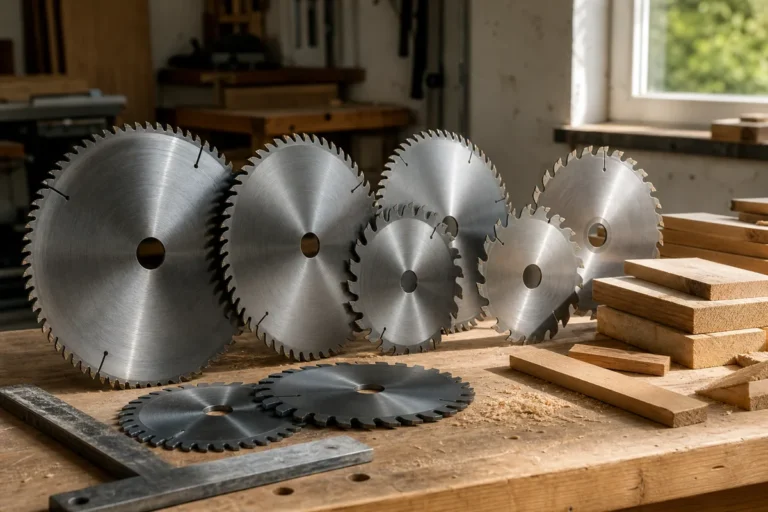
For cabinet plywood, a sharp 40-to-60-tooth combination or plywood-oriented blade usually leaves a cleaner edge than the low-tooth general-purpose blade supplied with many saws. Check the arbor size and blade diameter before buying. A zero-clearance insert can reduce tearout on crosscuts, but it must be made for the saw and used with the correct blade height and cutting operation.
Dust collection is another practical dividing line. A cabinet saw with an enclosed base generally captures more dust than an open portable saw, though neither makes collection perfect. Fine plywood dust is unpleasant and should not be treated as harmless. Check whether the machine’s port matches your collector or shop vacuum, and budget for a suitable hose and fittings if it does not.
When the cheaper saw is enough
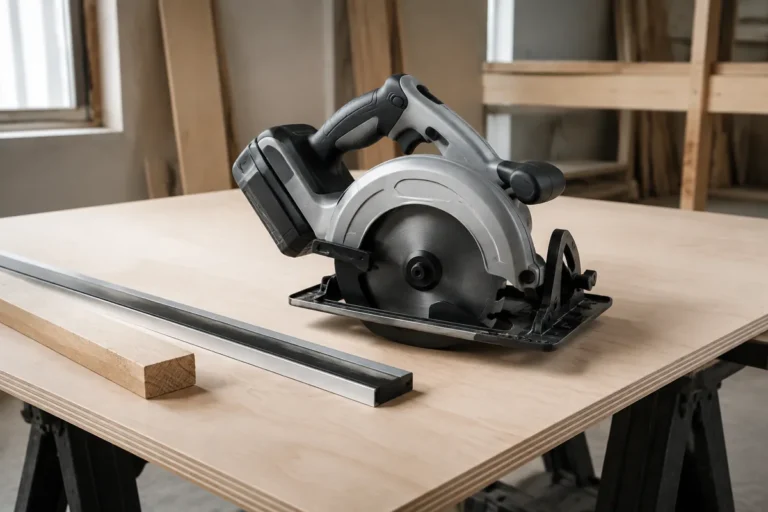
A jobsite saw is a reasonable choice if you are building one kitchen, have limited floor space, and can break down plywood with a circular saw and straightedge before making final-width cuts. It is also a good fit for face-frame parts, which are narrow enough that table size is less of a constraint. Expect to spend time checking the fence, blade alignment, and stand before each project. A fence that shifts under pressure can turn a nominally accurate saw into a source of inconsistent cabinet parts.
Pay more for a heavier saw if you expect to rip sheet goods often, make many repeat cuts, or use hardwood regularly. More mass helps the saw stay planted and can make setup less frustrating, but it does not guarantee accuracy. A poorly aligned heavy saw can still burn wood or produce tapered parts. Likewise, a larger motor is not a cure for a dull blade, an out-of-square fence, or feeding stock too quickly.
Set it up for accurate cabinet work
After assembly, verify that the blade is parallel to the miter slot and that the fence is parallel to the blade. Follow the manual’s adjustment method; as a practical target, keep alignment error small enough that it cannot be detected in a normal cabinet cut, and confirm with a reliable square and test cuts. Check the blade at both the front and rear rather than trusting the indicator scale. Make a test rip and measure the piece at both ends. If the width differs, stop and correct the setup before cutting a stack of panels.
Use a crosscut sled or a properly adjusted miter gauge for square ends, and keep the fence from trapping offcuts during crosscuts. Never use the rip fence as a stop for a piece that is also held against a miter gauge; the trapped offcut can bind and kick back. For cabinet boxes, a few minutes spent labeling parts and checking each setup is cheaper than remaking a side panel.
Make the purchase fit the work
Choose a jobsite saw when portability, low cost, and limited space outweigh the convenience of a broad, heavy table. Choose a hybrid or contractor-style saw for frequent cabinet work in a fixed shop. Reserve a cabinet saw for sustained workloads that justify its cost and footprint. Whichever type you buy, prioritize a dependable fence, a riving knife, adequate support, and a good blade. Those details have more effect on clean, repeatable cabinet parts than an impressive horsepower claim.