Best Table Saws for Building Cabinets from Sheet Goods
What's inside
As an Amazon Associate I earn from qualifying purchases. This post may contain affiliate links at no extra cost to you.
Contents
Best Table Saws for Building Cabinets from Sheet Goods
Building cabinets from plywood, melamine, or MDF demands more from a table saw than cutting occasional 1×6 boards. The saw must hold a straight cut over 8 feet, support a heavy panel without tipping, and deliver a clean edge without constant fence adjustments. Dust control also matters: sheet goods create a large volume of fine dust, especially MDF.
The best choice depends on how often you break down full sheets, how much shop space you have, and whether you can safely handle 4-by-8 panels alone. For most cabinet shops, a powerful cabinet saw paired with an outfeed table is the best long-term setup. A contractor-style saw can work well for a small shop, but it needs more help from support tables and a reliable fence.
What Matters Most for Sheet Goods
Fence accuracy is the first priority. A fence that shifts by 1/32 inch over the length of a cabinet side can create visible gaps or make a box go out of square. Look for a rigid fence that locks firmly at both the front and rear rail. A long rip capacity is useful, but a stiff fence is more important than a large number printed on the specification sheet.
Table and support area matter because a 3/4-inch plywood sheet weighs roughly 50 to 70 pounds, depending on the material. If the panel hangs off the saw, it can lever the workpiece upward or sideways as the cut progresses. That increases the chance of binding and makes accurate cuts difficult. Plan on adding an outfeed table and a side support, even with a large cabinet saw.
Power is less complicated than marketing suggests. A properly wired 3-hp cabinet saw has plenty of capacity for plywood, MDF, and hardwood edging. A good 1-3/4-hp saw can also cut cabinet materials, but it may bog down in thick hardwood or when the blade is dull. A 5-hp saw is useful in production work, not necessary for occasional home cabinet projects.
Safety equipment should include a riving knife, blade guard, and effective anti-kickback design. The riving knife should stay close to the blade and remain installed for normal ripping. Cabinet parts often involve narrow strips, and removing safety equipment to make a cut is a poor trade.
Which Type of Table Saw Fits the Job?
| Saw type | Best use | Main advantage | Main limitation |
|---|---|---|---|
| Cabinet saw | Frequent cabinet building | Power, stability, dust collection | Heavy, expensive, permanent setup |
| Contractor-style saw | Small shops and serious DIY work | Good accuracy at a lower price | Needs added support and may have less power |
| Jobsite saw | Occasional work or mobile installation | Portable and relatively affordable | Small table, shorter fence, more flex |
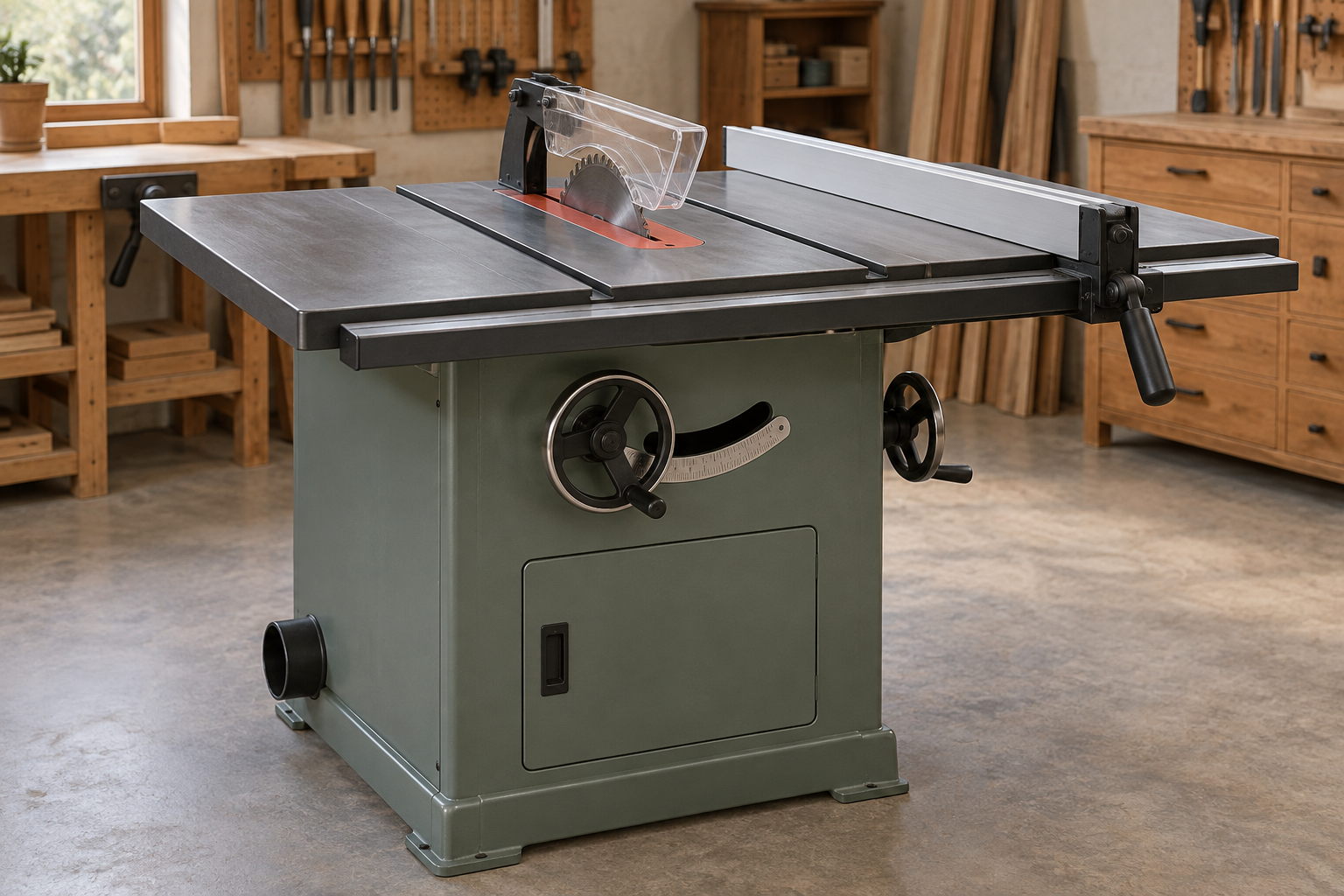
A 3-hp cabinet table saw is the strongest choice for a dedicated cabinet shop. Its cast-iron table resists movement, the enclosed base improves dust collection, and the motor has enough reserve for repeated cuts. The downside is commitment: many weigh 400 to 600 pounds and require a 240-volt circuit. If you are cutting several sheets every week, that stability pays for itself in fewer ruined parts and less setup time.
A contractor-style saw is often the better value for a homeowner building one kitchen or a few built-ins. A solid contractor table saw with a rolling stand can make accurate cabinet cuts if you add a full-size outfeed table, side support, and a dependable fence. The cheaper option is fine when the saw will be stored between projects and you are not cutting hardwood parts all day. Check that the stand does not flex when the fence is locked; movement here is more damaging than a modest difference in motor power.
Jobsite saws are workable for trim pieces, toe-kick parts, and small panels, but they are not ideal for breaking down full sheets. Their tables are commonly less than 30 inches wide, and their fences may be too short to support a long rip. If this is the only saw available, break sheets down with a track saw or circular saw first, then use the table saw for final sizing. A track saw and guide rail kit often improves a small-shop setup more than upgrading to a slightly better jobsite saw.
Blade and Setup Choices
Use a sharp 40-tooth or 50-tooth combination blade for general plywood work. For melamine, use a blade specifically designed for laminated panels, ideally with a high tooth count and a zero-clearance insert. A standard ripping blade can chip the surface badly, particularly on the exit side of the cut. MDF is easier on the surface but produces heavy dust and quickly exposes a dull blade.
Before cutting cabinet parts, verify that the blade is parallel to the miter slot and that the fence is parallel to the blade. A deviation of about 0.003 inch is a reasonable target for a well-set saw. The rear of the blade should not be forced hard against the fence; that condition can cause burning, kickback, and wandering cuts. Check the fence with a reliable rule or dial indicator rather than trusting the factory scale.
Cutting Sheet Goods Safely
Do not try to balance a full 4-by-8 sheet on a standard saw table. Use a panel-cutting guide, track saw, or temporary support platform to divide the sheet into manageable pieces first. Keep the factory edge for the first reference cut when possible, then establish a straight edge before sizing cabinet sides and shelves.
Support the offcut so it cannot fall and pull the panel into the blade. Never reach over the blade to retrieve a falling piece. For narrow rips, use a push block or push stick, keep your hands at least 6 inches from the blade, and stand slightly to the side of the cut line. MDF dust should be captured at the saw with a suitable vacuum; sweeping it into the air is a poor substitute.
What I Would Buy
For regular cabinet production, buy a cabinet saw with a riving knife, a rigid T-square-style fence, a 3-hp motor, and a dust port that can connect to a real collector. For occasional projects, choose a contractor-style saw with the best fence you can afford and reserve part of the budget for support tables and a good blade. Spend less on motor size before spending less on fence quality, stability, or safety hardware. Those are the features that determine whether sheet goods become accurate cabinet parts or expensive firewood.