Best Stationary Machines for Milling Rough Lumber in a Small Shop
What's inside
As an Amazon Associate I earn from qualifying purchases. This post may contain affiliate links at no extra cost to you.
Contents
What each machine contributes
Rough lumber needs to be flattened and made consistent before it is ready for accurate joinery. The usual sequence is to establish one flat face on a jointer, make the opposite face parallel in a planer, then rip and crosscut to final width and length on a table saw. A band saw is useful for breaking down wide stock and resawing; a drill press is helpful for repeatable holes but does not prepare lumber for milling.
In a small shop, capacity and dust handling matter as much as motor size. A machine that can’t accept your boards, or that leaves piles of chips around its infeed and outfeed, may be a poor fit even if its cutting performance is good.
As an Amazon Associate we earn from qualifying purchases at no extra cost to you.


The core pair: jointer and planer
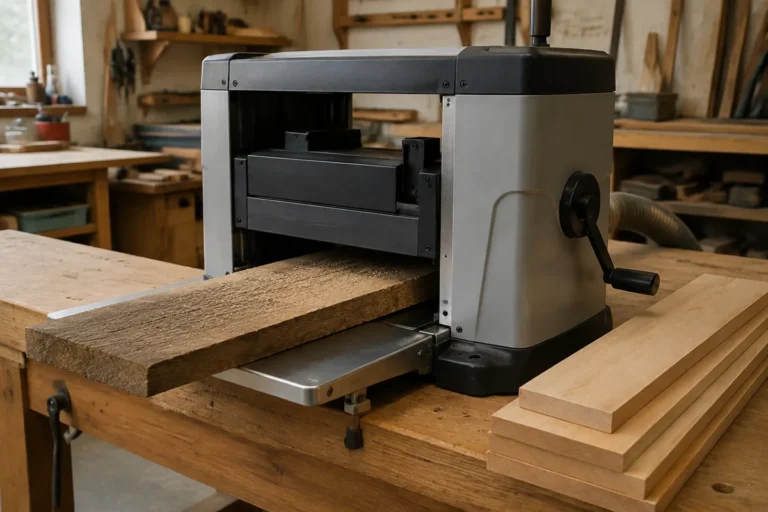
A benchtop planer is often the best first purchase if your lumber is already reasonably flat or you can flatten it with hand tools, a sled, or a local milling service. It makes faces parallel and brings boards to consistent thickness, but it does not reliably remove twist or cup by itself. Feeding a twisted board straight through can preserve the twist, or the rollers can press it flat temporarily and let it spring back afterward.
For rough stock, a 12- or 13-inch planer handles many furniture boards and fits a small shop better than a wide industrial machine. Check the maximum cut width against your typical stock, and allow room for long boards at both ends. A practical target is roughly 8 feet of clear infeed and outfeed space for 6-foot boards, though roller stands can help. Deep cuts invite snipe, tearout, and motor strain; taking light passes—often around 1/32 inch on difficult grain—is slower but safer.
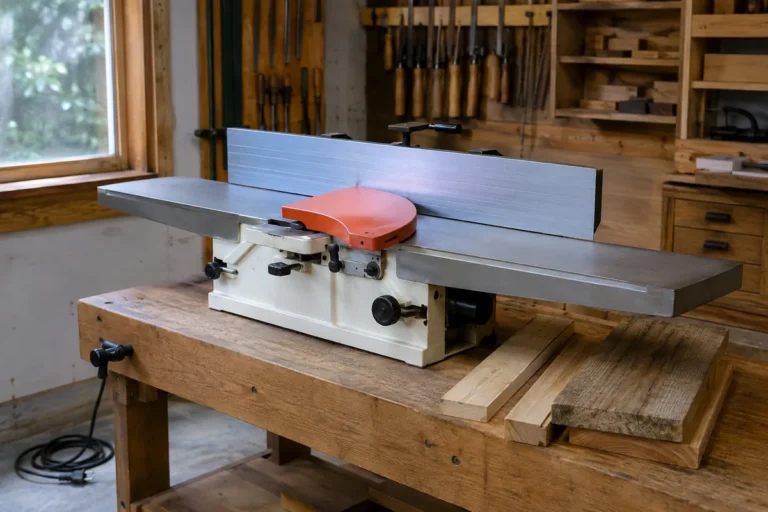
A jointer establishes a flat face and a square edge. A 6-inch jointer can handle a lot of hobby work, but its short beds make long boards harder to control. An 8-inch model gives more width and typically longer beds, at a substantial cost in floor space and price. If you buy a jointer, verify that its tables are coplanar and its fence stays square; a misaligned machine can turn flattening into a repeated fight.
When space or budget allows only one machine, the planer usually earns the spot because it makes thickness consistent across a board. For reliably flat stock, pair it with a jointer or a stable planer sled. A sled is a cheaper workaround for occasional twisted boards, but it takes setup time and reduces usable planer capacity.
Choosing a saw for rough stock
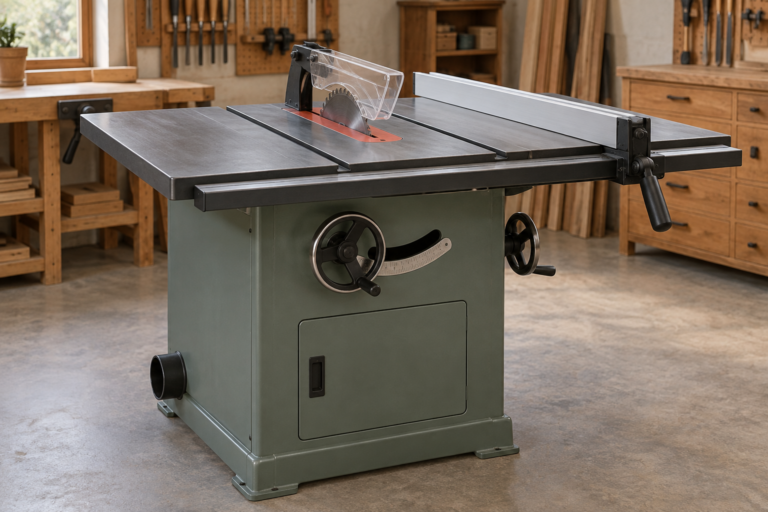
A table saw is the efficient choice for ripping straight, flat boards to width and for accurate crosscuts with a suitable sled or miter gauge. It is not a flattening machine: feeding bowed lumber against the fence can pinch the blade or kick the board back. Flatten one face and edge first, or use a track saw or band saw to remove the worst waste before final table-saw cuts.
For a small shop, a quality jobsite or compact contractor-style saw is usually easier to store than a cabinet saw. Look for a fence that locks parallel to the blade, a stable stand, and enough rip capacity for your projects. A 24- to 30-inch rip capacity covers many cabinet and furniture tasks. A larger cabinet saw is quieter and more capable in sustained work, but its footprint, electrical needs, and weight can be hard to justify in a shared shop.
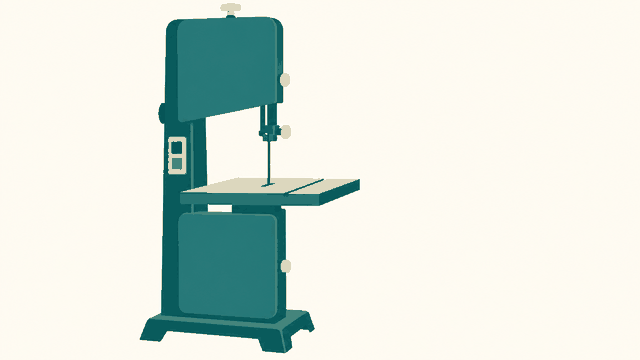
A band saw is better for cutting curves, resawing, and rough breakdown where a narrow kerf saves material. A 14-inch frame is a common small-shop size, but “14-inch” does not tell you how tall a board it can resaw; check actual resaw capacity and throat depth. Resawing dense hardwood requires a sharp, wide blade, suitable tension, and a fence that can be adjusted for blade drift. A small saw with too little power may wander or bog down, leaving a wavy surface that needs extra planing.
Quick comparison
| Machine | Best job | Small-shop drawback | Good first choice when |
|---|---|---|---|
| Planer | Make two faces parallel and set thickness | Does not flatten twist on its own; chips need strong extraction | You can flatten one face by another method |
| Jointer | Flatten a face and square an edge | Long tables take floor space; width limits stock | You regularly mill rough boards and need reliable reference faces |
| Table saw | Rip flat stock and make repeatable cuts | Unsafe on unstable, bowed lumber | Most stock is already flattened or rough-cut elsewhere |
| Band saw | Rough breakdown, curves, and resawing | Blade setup and drift take practice | You resaw or work with irregular, wide boards |
| Drill press | Repeatable perpendicular holes | Does not mill faces or edges | Accurate drilling is a regular part of your projects |
Buying priorities for a limited shop
Start with the operation you cannot do safely or consistently now. If you mostly buy surfaced lumber, a table saw may matter more than a jointer. If you buy rough boards, a planer plus a flattening method is a practical starting point; add a jointer when the sled or hand-tool routine becomes a bottleneck. A benchtop thickness planer is the compact route, while a 6-inch jointer is a reasonable choice for narrower stock and limited floor space.
Do not treat a drill press as part of the flattening lineup. It is valuable for dowels, hardware, and repeated holes, but a handheld drill and guide can be adequate if those jobs are occasional. A 14-inch band saw is worth considering when resawing is frequent; for a few boards a year, paying a lumberyard to resaw them can be cheaper than buying and tuning a saw.
Before buying any stationary machine, measure its footprint with the fence, guards, and dust port installed, then map the longest board’s travel path. A compact machine can still need several feet of clear space in both directions. Budget for dust collection too: planers produce a high volume of chips, while jointers and saws spread fine dust. A shop vacuum may work for light use, but a planer often needs a dedicated collector to avoid clogged ports and chips packed into the cutter area.
Finally, inspect used machines for table damage, loose bearings, cracked castings, and missing guards or adjustment parts. Dull blades and knives are normal wear; damaged tables and unavailable parts can make a bargain a costly repair. Choose capacity that matches the boards you actually handle, not the widest board you might buy once.