Best Table Saws for Cutting Thick Hardwood Tenons
What's inside
As an Amazon Associate I earn from qualifying purchases. This post may contain affiliate links at no extra cost to you.
Thick hardwood tenons are a demanding table-saw job. The blade must cut a deep shoulder cleanly, the fence and miter gauge must hold the work square, and the saw needs enough capacity to make the cut without forcing the stock. For occasional tenons in 4/4 or 5/4 lumber, a well-tuned contractor saw can be enough. For repeated work in 8/4 stock and up, a cabinet saw’s mass, fence, and larger motor are useful advantages—but they do not replace a tenoning jig, careful setup, or a sharp blade.
Contents
What matters for thick tenons
Check the saw’s actual blade height at 90 degrees, not just its advertised horsepower. A 10-inch blade commonly offers about 3 inches of cutting depth; that is enough to cut a shoulder in stock around 2 inches thick in one pass, but not enough for every oversized timber tenon. Tilting the blade reduces usable depth. A 12-inch saw can reach farther, but is less common and costs more.
Look for a flat table, a fence that locks parallel to the blade, and a miter gauge or tenoning jig that supports the work without play. A heavy cabinet saw generally stays put better under pressure than a light jobsite saw. On any saw, verify blade-to-miter-slot alignment and fence parallelism before cutting. A fence that toes inward can pinch stock against the blade; one that is out of square can produce a tenon shoulder that does not seat evenly.
Which saw type fits the work?
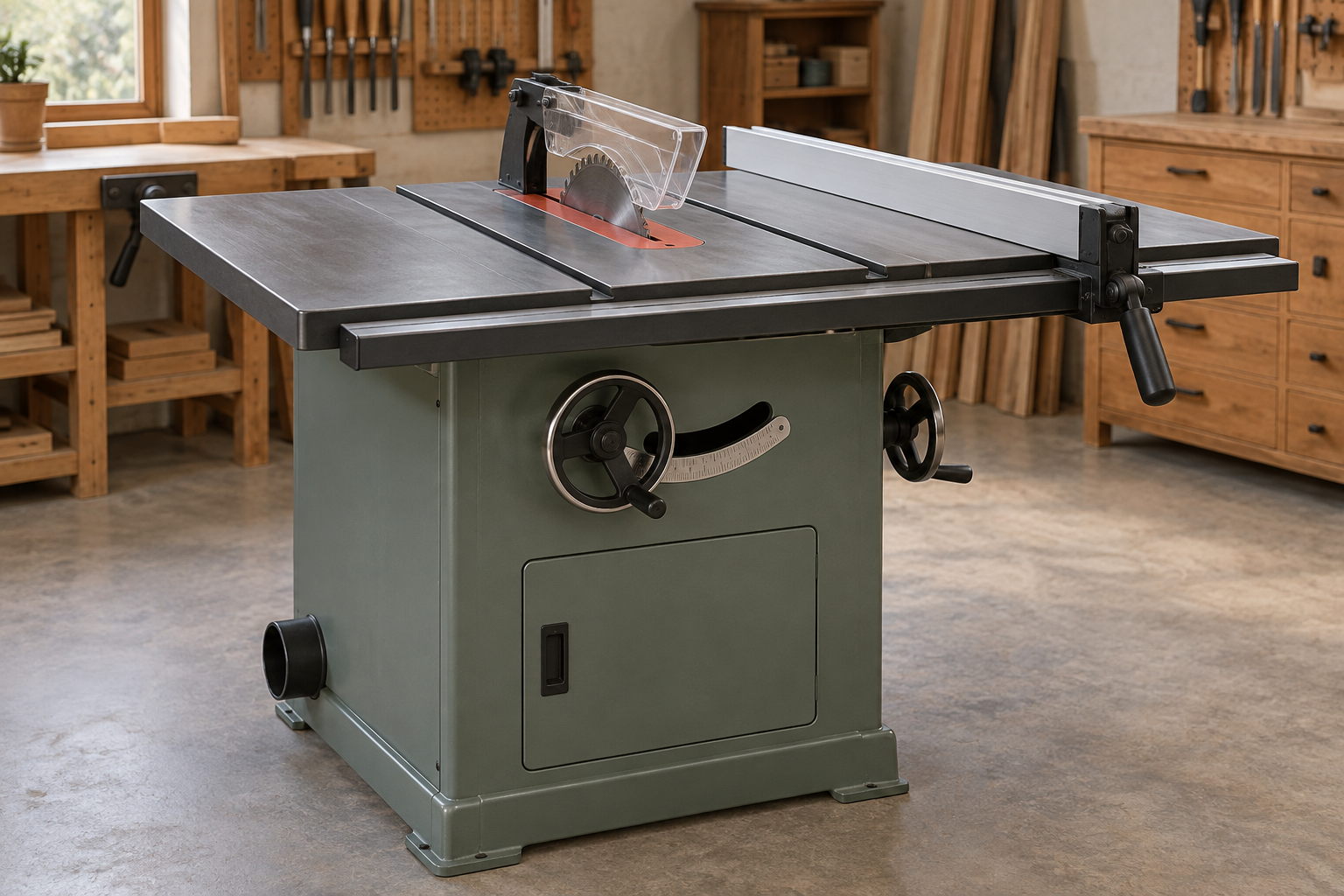
A cabinet saw is the strongest choice for a dedicated shop and frequent thick-tenon work. Its weight helps limit movement, and its larger trunnions and robust fence are suited to repeated setups. It is expensive, heavy to install, and needs adequate electrical service and floor space. A contractor-style saw is a sensible middle ground for a smaller shop: it can handle substantial hardwood when fitted with a suitable blade and a stable outfeed arrangement.
A jobsite saw is cheaper and easier to move, but its smaller table and lighter stand make long, heavy stock harder to control. It can still cut tenons in moderate stock if the saw is properly aligned and the work is supported. Do not buy one expecting it to behave like a cabinet saw under a heavy, continuous feed. For a stationary shop, compare cabinet table saws with contractor table saws based on capacity and fence quality, not motor claims alone.
Quick comparison
| Saw type | Best fit | Main advantage | Trade-off |
|---|---|---|---|
| Cabinet | Frequent thick stock and a permanent shop | Mass, stable fence, typically stronger drive system | Price, weight, space, and installation |
| Contractor-style | Regular woodworking with limited floor space | Good capacity without cabinet-saw footprint or cost | Less mass; performance varies by design and setup |
| Jobsite | Occasional tenons or a portable shop | Lower cost and easy transport | Smaller support area and less stability with heavy stock |
Blade, jig, and setup
For shoulders, use a sharp, flat-top grind (FTG) blade or a dedicated tenoning blade compatible with your saw. A general-purpose combination blade can work, but a flat-top tooth leaves a flatter shoulder and is better suited to repeated dados and tenons. A 10-inch blade with a 24-tooth rip profile is a common starting point for hardwood; a higher tooth count may cut more smoothly but can feed more slowly and load the motor in thick stock. Keep the blade clean—resin buildup increases heat and encourages burning.
A tenoning jig holds the work vertically for cheek cuts, while a miter gauge or crosscut sled can guide shoulder cuts. Use a jig that fits the saw’s miter slot and clamps the stock securely. A shop-made jig is viable if it is rigid, square, and free of movement. Compare table-saw tenoning jigs if you want adjustable clamping without building one. In either case, support long stock at the same height as the table; sag or twist can turn a square cut into a tapered tenon.
A safer way to cut the tenon
Mark the shoulder and cheek lines clearly, then make a test cut in scrap of the same species and thickness. Set blade height just above the shoulder line and use repeated passes to remove waste, rather than trying to bury a large amount of hardwood in one aggressive cut. Check the fit with a gauge or offcut after each adjustment. A tenon that is too tight can split a mortise cheek during assembly; one that is too loose weakens the joint and leaves a visible gap.
Keep hands out of the blade path and use a push block or jig handle to control the work. Never trap offcuts between the blade and fence during a crosscut; remove the fence or use a stop block positioned so the waste cannot bind. If the motor slows, the cut burns, or the stock requires force, stop and inspect the blade, feed rate, and alignment. For stock beyond the saw’s safe capacity, cut the shoulders with another method or use a band saw to remove bulk before trimming to the line.
What to buy
Choose a cabinet saw if thick tenons are routine and you have the space, budget, and electrical setup. A contractor-style saw is the better-value choice for a serious hobby shop that cuts hardwood regularly but does not need industrial capacity. A jobsite saw is fine for occasional work in moderate stock, especially if portability matters; spend the savings on a good blade, a stable outfeed support, and a dependable jig. Before ordering, confirm blade height, arbor compatibility, fence travel, power requirements, and whether the saw has a riving knife that remains usable with the blade and accessories you plan to fit.