Best Bar Clamps For Woodworking
Key takeaways
- Parallel, F-style or pipe: how we judge bar clamps on stiffness, jaw parallelism and clutch action, and the length mix a working shop actually needs.
What's inside
As an Amazon Associate I earn from qualifying purchases. This post may contain affiliate links at no extra cost to you.
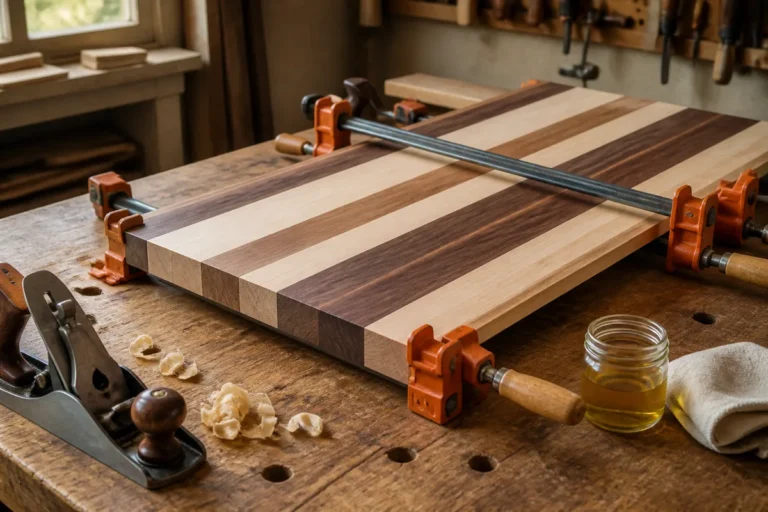
A glue-up fails in the last thirty seconds, not the first ten minutes. The panel closes, the joint line looks tight, and then a bar flexes, a jaw tips a few degrees, and the assembly walks out of square while the glue cures. That is why we keep returning to the question of the best bar clamps for woodworking: a clamp is not a squeezing device, it is a fixture that has to hold geometry under load.
Bar clamps are also where woodworkers waste the most money. It is easy to accumulate a drawer of light clamps, discover that none of them will pull a 30 inch carcass square, and end up buying the whole category twice. We sort the field here by mechanism rather than by brand, name the failure points, and suggest a length mix that suits real furniture work.
As an Amazon Associate we earn from qualifying purchases at no extra cost to you. Product prices and availability are accurate as of the date shown and are subject to change.



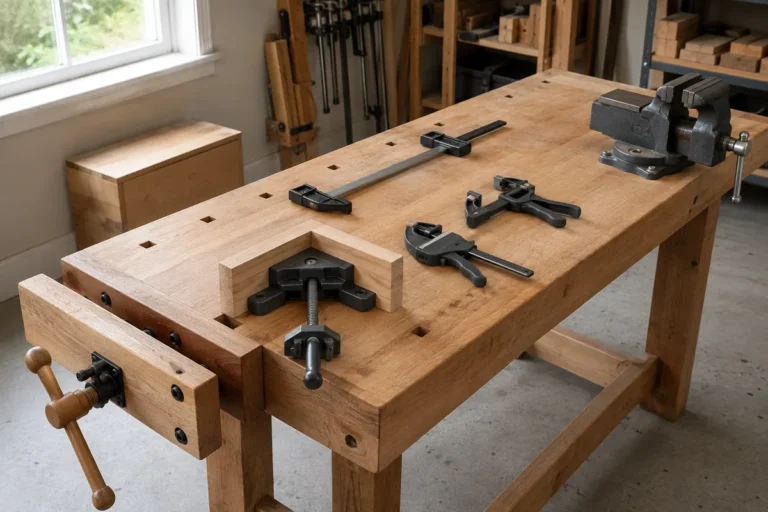
| Clamp type | Best use | Main weakness |
|---|---|---|
| Parallel jaw (I-beam) | Carcasses, panel glue-ups, squaring | Heaviest and priciest per clamp |
| F-style sliding head | Jigs, fences, stop blocks, edge work | Heads can rack under high force |
| Ratcheting one-handed | Positioning and light holding | Modest force, plastic wear points |
| Pipe clamps | Long spans on a budget | Pipe bows, no self-squaring |
| Light aluminum bar | Portable, low-force holds | Bar bends before the joint closes |
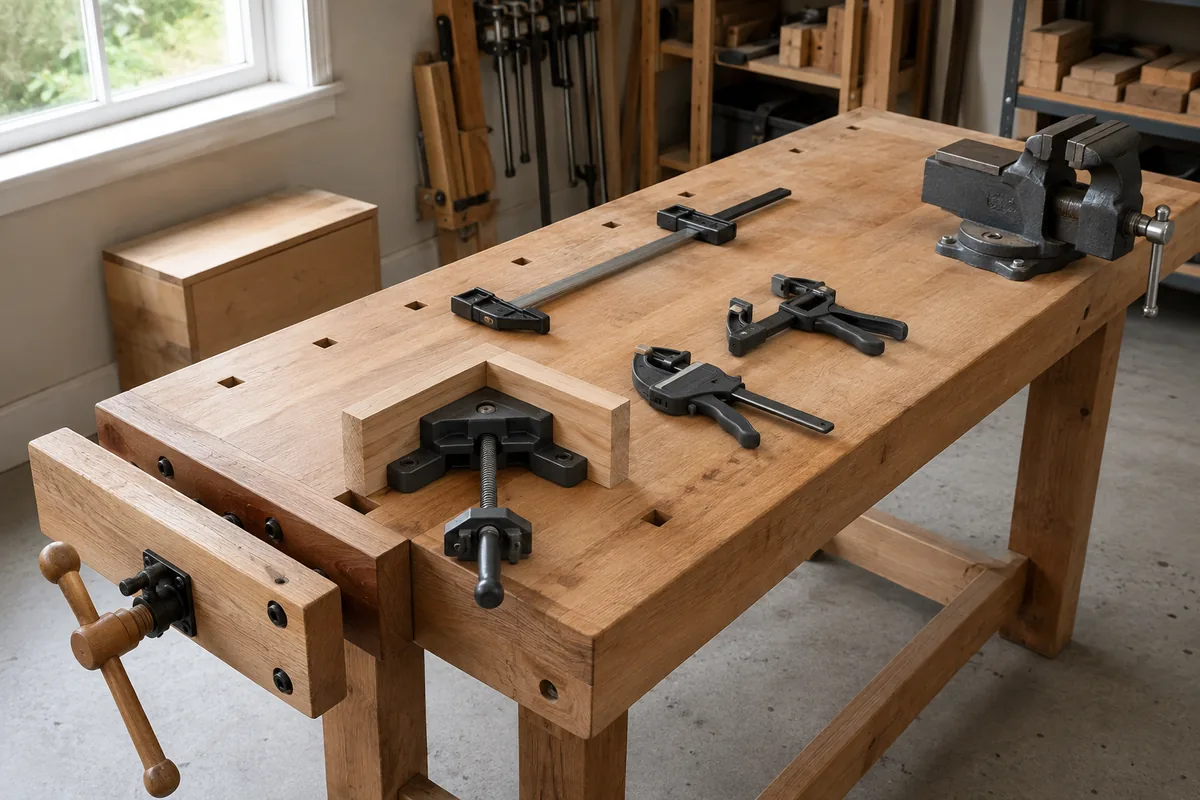
How We Judge the Best Bar Clamps for Woodworking
We assess a clamp the way we assess a saw fence: as a reference surface that must keep its geometry under load. Five mechanical criteria drive our conclusions.
Bar stiffness. A deep I-beam or box section resists bending far better than a flat strip of equal weight. Visible bow under pressure means your effort is flexing steel instead of closing a joint.
Jaw parallelism. Parallel-jaw heads should stay perpendicular through their full travel. Loose castings tip near the tail, press unevenly, and lift panels off the bench rather than pulling them square.
Screw and handle. Thread pitch, a genuine thrust bearing and handle length decide how much of your effort reaches the work. A gritty screw only gets worse once glue finds it.
Pads and glue release. Replaceable plastic jaw covers that cured glue will not bond to are worth paying for. Bare steel faces bruise softwoods and can stain a damp glue line.
Slide and clutch action. The moving head has to lock without back-slip and release without hammer taps. This mechanism fails first on bargain clamps and is almost never repairable.
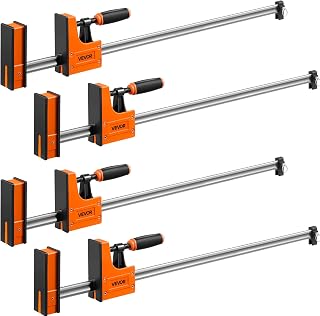
Parallel jaw clamp set for cabinet work
If you build casework, buy parallel-jaw clamps first, and buy them in pairs so pressure stays balanced. Look for a deep I-beam bar, replaceable jaw covers and a tail stop that does not creep. Four in the 24 to 40 inch range covers most doors and small carcasses.
Parallel Jaw Clamps: The Cabinet Shop Standard
Parallel-jaw clamps earn their price on assemblies where squareness is the product. Because the jaws stay perpendicular to the bar, the clamp nudges an out of square carcass toward true instead of racking it into a rhombus. Lines such as the Bessey K Body and Jorgensen Cabinet Master defined the format, and the credible competitors copy the same geometry: tall jaws, flat reference faces, and a bar broad enough to stand a panel on edge.
The tradeoffs are real. They are heavy, they demand rack space, and each costs several times what a light F-style does. Size up rather than fighting for the last inch of travel, since a clamp working at the very end of its bar is at its least stable.
- ✔ Jaws hold 90 degrees so assemblies stay square
- ✔ Wide bars let panels stand upright on the bench
- ✔ Replaceable pads protect softwoods and veneer
- ✔ High force without racking the joint
- ✘ Highest cost per clamp in the category
- ✘ Heavy and awkward to store
- ✘ Bulk crowds tight assemblies
- ✘ More clamp than jig work needs
F-Style and One-Handed Clamps for Daily Holding
Most shop clamping is not a glue-up. It is holding a fence to a workpiece, pinning a stop block, or keeping a template from shifting under a router. F-style and ratcheting one-handed clamps own that work, and you want more of them than feels reasonable, mostly in short lengths.
Judge them at the sliding head. A hardened head bites the bar and stays put, while a soft one polishes the rail and then slips. Throat depth is the second question, since reach decides whether you can clamp inside a case or only at its edge. Ratcheting designs, the Irwin Quick-Grip pattern among them, trade force for speed, which is right for positioning and wrong for closing a tight tenon.
F-style bar clamps in short lengths
Buy these by the handful in 6 to 12 inch lengths and treat them as shop consumables. The head should slide freely on a clean bar yet lock with no drift, and swiveling pads help on angled surfaces. Thin stamped rails burr at the edges and the heads eventually slip.
Pipe Clamps: Budget Route to Long Reach
For panels wider than 4 feet, pipe clamps are still the most rational money in the shop. Fixtures are cheap, black pipe is stocked at any home center, and you can cut it to whatever length a project demands. Use 3/4 inch pipe rather than 1/2 inch, because the smaller size bows as pressure builds and that bow lifts the middle of a panel.
What pipe clamps do not offer is self-squaring. The jaws touch the work at a small point, so misalignment shows up as cup or twist. Alternate clamps above and below the panel, spread pressure with cauls, and set the pipes in feet or a rack so they cannot roll. Thread each fixture onto its pipe before the glue is open.
Pipe clamp fixtures for wide panels
The most clamping capacity per dollar available, provided you commit to 3/4 inch pipe and use cauls. Favor cast fixtures with a full crank handle and a tail clutch that grips without chewing the pipe. Buy pipe long; couplers let you extend later.
How Many Clamps, and in What Lengths
The old joke is that you need one more clamp than you own. The useful version: match lengths to the assemblies you actually build, and buy in pairs so pressure can be balanced on both faces of a panel.
| Length | Suggested count | Typical job |
|---|---|---|
| 6 to 12 in F-style | Six or more | Jigs, stop blocks, fences, repairs |
| 24 in parallel | Four | Doors, drawer boxes, face frames |
| 40 in parallel | Four | Wall cabinet carcasses, small panels |
| 4 to 6 ft pipe | Four | Tabletops, wide panels, long case sides |
Two habits protect the investment. Wax bars and screws so dried glue chips off instead of grinding into the mechanism, and store clamps on a rack rather than in a pile, since a bent bar never comes fully back. Resist the urge to crank, too: excess pressure starves a joint of glue and prints jaw marks into the surface.
Frequently Asked Questions
Are parallel clamps worth the extra cost over pipe clamps? For casework, yes. The perpendicular jaws do squaring work that pipe clamps cannot, which saves time and rework. For wide tabletops, pipe clamps with cauls remain the better value.
How much clamping pressure does a glue joint actually need? Less than most people apply. Well-mated surfaces need only enough force to bring the parts into full contact and produce a fine, continuous bead of squeeze-out. Gaps are a jointing problem, not a clamping problem.
Can I mix clamp types and brands in one glue-up? Yes, and most shops do. Keep the jaw heights consistent along a panel so pressure lands on the same plane, and use parallel clamps where squareness matters most.
The Verdict
Judged on the mechanics that matter, a working shop wants three things: a core of parallel-jaw clamps in the 24 to 40 inch range for casework, a generous pile of short F-style clamps for jigs and fixtures, and four pipe clamp sets for anything wide. Spend on bar stiffness, jaw geometry and clutch quality, and skip the flat-strip bargain bins entirely.
Check prices on Amazon →