Best 220 Volt Garage Heaters: Wiring and Sizing 2026
What's inside
- Quick comparison of 220 volt garage heaters
- 220, 230, and 240 volts: the same circuit
- Circuit math in plain steps
- Best plug-in: Dr. Infrared DR-988
- Best for large or leaky shops: Dr. Infrared DR-975
- Best ceiling-mount: Fahrenheat FUH series
- Gas alternative: Mr. Heater Big Maxx
- Sizing worked example
- How to choose a 220 volt garage heater
- Running cost
- Frequently Asked Questions
As an Amazon Associate I earn from qualifying purchases. This post may contain affiliate links at no extra cost to you.
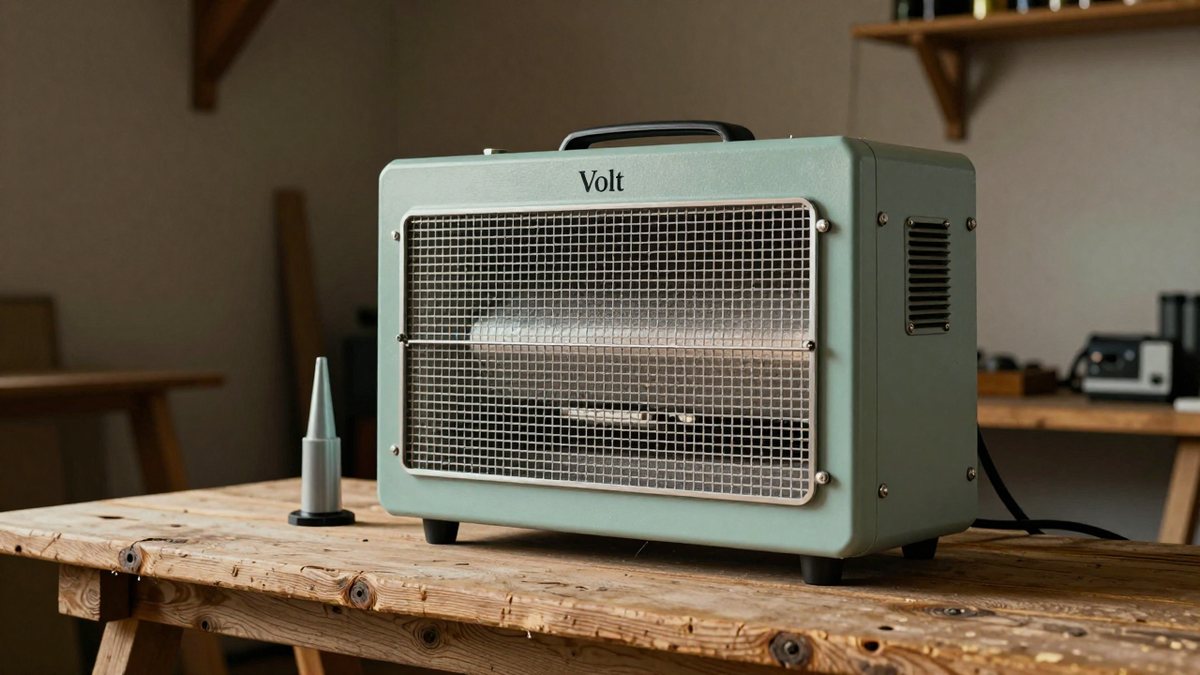
The best 220 volt garage heaters (sold as 208, 220, or 240 volt, which share the same two-hot-wire circuit) are 4,800 to 7,500 watt units, with the Dr. Infrared DR-988 as the plug-in pick and the Fahrenheat FUH series and Dr. Infrared DR-975 as hardwired options. The decision comes down to your circuit: a 5,600 watt heater needs a 30-amp breaker and 10-gauge wire, while a 7,500 watt model needs 40 amps and 8-gauge. This guide compares the real models, then walks through the wiring and sizing math so you know what an electrician will quote before you buy.
As an Amazon Associate we earn from qualifying purchases at no extra cost to you.


Contents
- Quick comparison of 220 volt garage heaters
- 220, 230, and 240 volts: the same circuit
- Circuit math in plain steps
- Best plug-in: Dr. Infrared DR-988
- Best for large or leaky shops: Dr. Infrared DR-975
- Best ceiling-mount: Fahrenheat FUH series
- Gas alternative: Mr. Heater Big Maxx
- Sizing worked example
- How to choose a 220 volt garage heater
- Running cost
- Frequently Asked Questions
Our Top Picks
Quick comparison of 220 volt garage heaters
| Pick | Best for | Watts | BTU per hour | Amps at 240 V | Breaker size | Price range |
|---|---|---|---|---|---|---|
| Dr. Infrared DR-988 | Best plug-in | 5,600 | About 19,100 | 23.3 | 30 A (NEMA 6-30) | Mid-range |
| Dr. Infrared DR-988A | Best for 208 V or 240 V supply | 4,800 / 5,600 | About 16,400 / 19,100 | 20 to 23.3 | 30 A | Mid-range |
| Dr. Infrared DR-975 | Best for large shops | 4,700 / 7,500 | About 16,000 / 25,600 | 19.6 / 31.3 | 40 A at high setting | Mid-range to upper-mid |
| Fahrenheat FUH54 class | Best ceiling-mount | 2,500 / 5,000 | Up to about 17,065 | 10.4 / 20.8 | 25 to 30 A | Mid-range |
| Mr. Heater Big Maxx (gas) | Best if 240 V is not available | Gas | 50,000 to 80,000 | Not applicable | Gas line | Upper-mid |
Specifications follow manufacturer and retailer listings. Always confirm the exact label on the heater and have a licensed electrician approve the circuit.
220, 230, and 240 volts: the same circuit
Shops use these numbers interchangeably. North American homes supply 240 volts nominal between the two hot legs of a split-phase service; older documents say 220. Heaters labeled 208/240 volt can run on commercial 208 volt supply, though at a lower output. A heater that says 220 volt only is the same appliance for residential purposes, and the wiring requirements follow the amps, not the label.
Circuit math in plain steps
- Divide watts by volts to get amps. A 5,600 watt heater at 240 volts draws 23.3 amps.
- Multiply by 1.25 because heaters run continuously. 23.3 x 1.25 = 29.2 amps.
- Round up to the next standard breaker, which is 30 amps.
- Match wire gauge to the breaker: 30 amps uses 10-gauge copper, 40 amps uses 8-gauge, 20 amps uses 12-gauge, subject to local code and run length.
- Choose a receptacle or hardwire junction. The DR-988 uses a NEMA 6-30R receptacle.
For a 7,500 watt heater: 31.3 amps x 1.25 = 39.1 amps, so a 40 amp breaker and 8-gauge wire. Note that a garage subpanel with a small feeder may not have the capacity; your electrician will check the load.
Best plug-in: Dr. Infrared DR-988
The DR-988 is a 5,600 watt portable-style unit with a 6-foot cord and a 6-30P plug. According to the maker and listings, it covers up to about 600 square feet with moderate insulation. The thermostat range is shown differently by sellers (37 to 113 degrees or 45 to 95), and it weighs roughly 17 to 21 pounds. It mounts to a wall or ceiling or sits on a stand. The plug-in design cuts installation cost to the price of a dedicated outlet. The fan is audible, so it is not a quiet tool, and the output is directional.
Best for large or leaky shops: Dr. Infrared DR-975
The DR-975 is a hardwired 240 volt model with two settings, 4,700 and 7,500 watts. At the high setting, it produces about 25,600 BTU per hour. The tradeoff is the installation: hardwiring with a 40-amp breaker costs more, and the unit is fixed in place. Choose it when your space is large, high-ceilinged, or poorly insulated.
Best ceiling-mount: Fahrenheat FUH series
Fahrenheat’s FUH54 is rated at 2,500 or 5,000 watts, 208 or 240 volts, up to about 17,065 BTU per hour and roughly 500 square feet of insulated space. The two power levels let you hold temperature at low power and recover quickly at high power. Ceiling mounting clears floor space, which matters when you have workbenches and machines. It requires hardwiring.
Gas alternative: Mr. Heater Big Maxx
When the electrical service cannot support another 30 or 40 amp circuit, a gas-fired ceiling heater delivers far more heat. The Big Maxx comes in 50,000 and 80,000 BTU per hour sizes. It needs a gas line, venting, and a 24 volt thermostat, so plan for an installer and a permit.
Sizing worked example
A 20 by 20 foot garage (400 square feet), insulated, 8-foot ceiling: planning at about 10 watts per square foot gives 4,000 watts; the DR-988 at 5,600 watts leaves margin for a cold day. If the garage door is uninsulated, planning at 15 watts per square foot gives 6,000 watts, so the DR-975 at 7,500 watts or an insulation upgrade is sensible. For 208 volt supply, remember the output drops by the square of the voltage ratio: 5,600 watts becomes about 4,200 watts.
| Garage size | Insulated (10 W/sq ft) | Poorly insulated (15 to 20 W/sq ft) | Suggested heater |
|---|---|---|---|
| Single car, about 250 sq ft | 2,500 W | 3,750 to 5,000 W | FUH54 at 2,500/5,000 W |
| Two car, about 450 sq ft | 4,500 W | 6,750 to 9,000 W | DR-988 or DR-975 |
| Large shop, about 700 sq ft | 7,000 W | 10,500 to 14,000 W | DR-975 plus insulation, or gas |
Figures are planning estimates, not measurements, and assume an 8-foot ceiling and a moderate temperature rise.
How to choose a 220 volt garage heater
Plug-in or hardwired
Plug-in is faster to install and portable. Hardwired is cleaner and supports higher wattages. Both need a dedicated circuit.
Wattage and staging
Two-stage models hold temperature more efficiently and avoid short cycling. Single-stage heaters may overheat small spaces.
Mounting and clearances
Observe the manufacturer’s required distances to walls, ceilings, and combustibles. Lumber racks and finish storage should be kept clear.
Thermostat placement
A wall thermostat located away from direct heat gives accurate control. Built-in thermostats read the temperature near the heater and may shut off early.
Dust and combustibles
Wood dust is flammable and builds up on elements and screens. Clean regularly and avoid heaters near spray finishing or solvent storage.
Running cost
A 5,600 watt heater running continuously uses 5.6 kilowatt-hours each hour. At 16 cents per kilowatt-hour, that is roughly 90 cents an hour, and a thermostat that cycles the heater half the time lowers it to about 45 cents. Insulating the garage door and sealing gaps often reduces the run time more than any change of heater.
Frequently Asked Questions
Is 220 volt the same as 240 volt?
For residential garage wiring, yes. The nominal voltage is 240, and 220 is an older label. Check the heater’s nameplate for the exact voltage range.
What breaker does a 5,600 watt heater need?
A 30-amp, double-pole breaker with 10-gauge copper wire, based on 23.3 amps of load multiplied by 1.25 for continuous use. Local code and wire length can change this, so a licensed electrician should confirm.
Can I install a 220 volt heater myself?
Plugging in a heater to an existing correct outlet is simple. Installing a new circuit involves a panel and code compliance, and should be done by a licensed electrician in most jurisdictions.
Will a 220 volt heater work on 208 volts?
It will run, but at reduced output. Choose a model rated for 208 and 240 volts if your building has 208 volt service.
Is electric heat cheaper than gas?
It depends on local energy prices. Electric resistance is efficient at the point of use, but gas often costs less per unit of heat. Compare your rates before deciding.