Best Corner Clamps
Key takeaways
- A criteria-led guide to corner clamps: how much pressure you actually need, which jaw geometries hold square, and where cheap castings fail.
What's inside
As an Amazon Associate I earn from qualifying purchases. This post may contain affiliate links at no extra cost to you.
Corner clamps promise something simple: hold two parts at 90 degrees while you drive screws or wait for glue to grab. Plenty of them fail at it. Light bodies flex under real pressure, jaws sit out of flat so the parts rock, and the 90 degrees cast into the frame is closer to 89. Choosing the best corner clamps is therefore a question of mechanical honesty rather than features: can the tool hold a reference angle under load without walking, and does it do that repeatably?
The other complication is that the phrase covers four unrelated tools. A welder’s magnetic square, a framer’s band clamp, a pocket-hole face clamp and a cast right-angle screw clamp all show up under the same search term. Buying the wrong category costs you more than buying a mediocre example of the right one, so we sort the types first, then judge them on the criteria that decide whether a joint closes tight.
As an Amazon Associate we earn from qualifying purchases at no extra cost to you. Product prices and availability are accurate as of the date shown and are subject to change.
![Housolution Right Angle Clamp, [4PACK] 90° Aluminum Alloy, Silver Gray | Single Handle Corner Clamp, Clamps for Woodworking Adjustable Swing Jaw, Tools Photo Frame Vise Holder, Gifts for Men Dad](https://m.media-amazon.com/images/I/71xNSiBOZ+L._AC_UL320_.jpg)


| Clamp style | Best suited to | Main weakness |
|---|---|---|
| Cast right-angle screw clamp | Plywood and MDF carcases, box corners | Jaw flatness, casting flash, narrow thickness range |
| Single-handle face clamp | Pocket-hole joinery, face frames | Holds parts flush, not square |
| Band clamp with corner blocks | Picture frames, mitered boxes | Only as good as your miters |
| Magnetic welding square | Steel fabrication and tack welds | No real clamping force on wood |
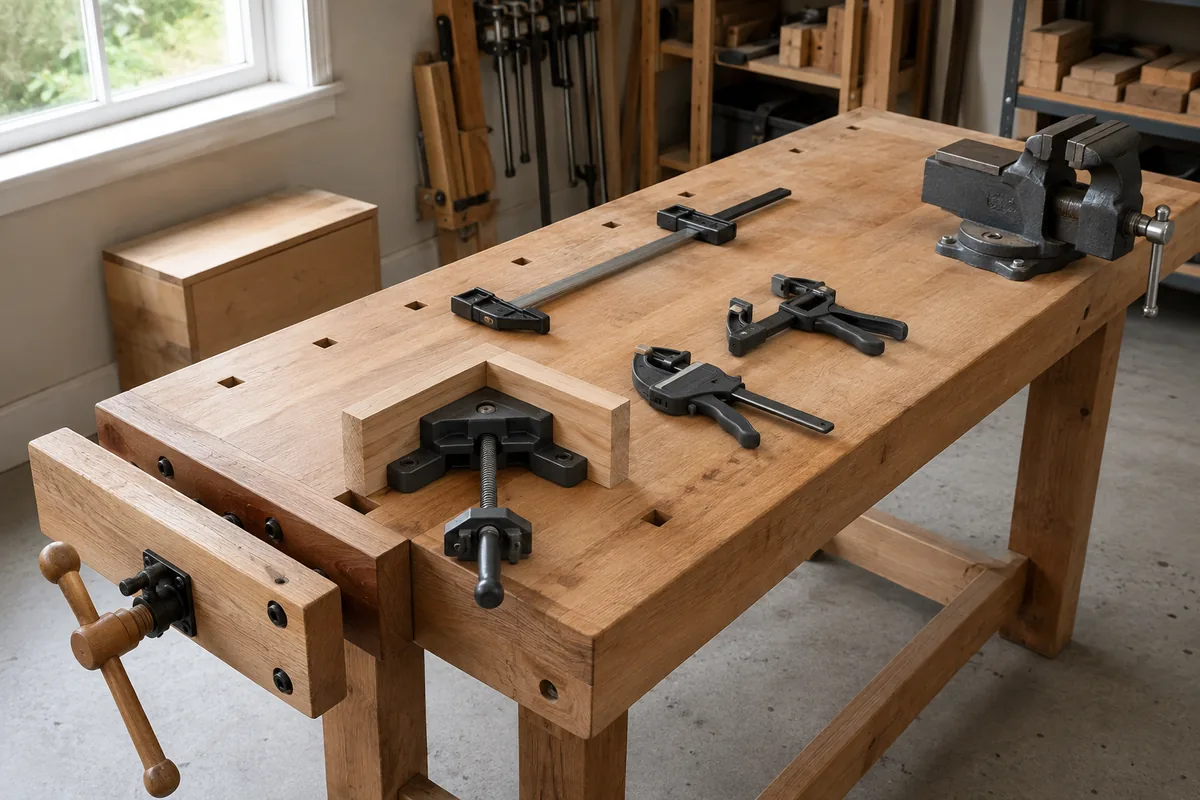
The Four Tools Sold as Corner Clamps
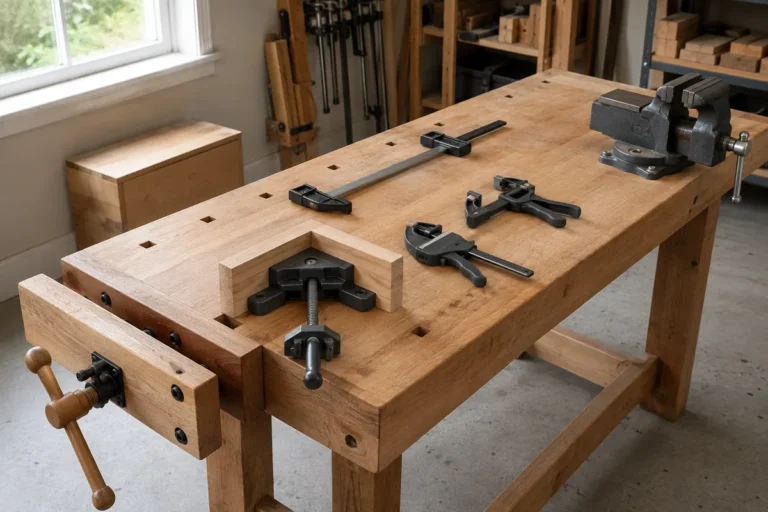
The cast right-angle clamp is the workhorse. Two fixed reference faces meet at a machined corner and one or two screws press the work into it. Because the reference is fixed, the tool defines the angle instead of following it, which is exactly what a plywood carcase needs.
Single-handle clamps with an offset jaw, often sold as face clamps, do something different. They pull two boards into the same plane and hold them flush while a pocket screw draws the joint together. They prevent the step you get when a screw drags one board past the other, but they do not enforce square, so pair them with a separate reference.
Band clamps wrap a strap around four corner blocks and pull all four joints at once. For a mitered frame that is the right answer, since pressure equalizes and the assembly finds its own balance. It also punishes bad miters: an inaccurate cut shows as a gap that no amount of strap tension will close.
Magnetic squares belong to metalwork. They hold light steel for a tack weld, exert no meaningful pressure and collect every chip on the bench. Despite where the marketplace files them, they are not a woodworking clamp.
Cast Right-Angle Corner Clamps, Sold in Sets
Buy these in fours, never singly, because one clamp cannot hold a corner square against a driver’s twist. Look for visible machining on both reference faces rather than a raw casting, and screw pads that swivel so they seat flat on the work. Aluminum handles sheet goods well. For hardwood over an inch thick, size up.
What Makes the Best Corner Clamps Hold Square
Reference face flatness and angle accuracy
This is the criterion that separates a usable clamp from a paperweight. The two inside faces are your fence, and any error there is inherited by the joint. Check a new clamp against an engineer’s square before it touches a project. Casting flash in the inside corner is the most common defect and the easiest to fix with a few file strokes. If the faces themselves are twisted, send it back.
Rigidity under load
A corner clamp is a small structure carrying a bending load. Thin die-cast bodies open up as the screws tighten, which is why a corner can look perfect while clamped and read out of square once released. Weight is a crude proxy. Section thickness where the two arms meet is a better one, because that junction is where deflection happens.
Screws, threads and pressure pads
Rolled threads on a hardened rod turn smoothly under pressure; soft threads gall, bind, then strip. The pad matters as much. A swiveling pad stays parallel to the work and spreads load, while a fixed pad digs a crescent into softwood and pushes the part off the reference face as it bites.
Capacity, throat depth and marring
Read the stock thickness range, not the marketing photo. Many inexpensive right-angle clamps top out near three quarters of an inch, which suits plywood boxes and nothing heavier. Throat depth decides whether the clamp reaches past your fastener location or sits exactly where you need to drill. Bare metal marks finished faces, so favor models with nylon inserts, or use tape and cauls.
- ✔ Fixed reference faces enforce square without a second pair of hands
- ✔ Cheap enough to buy four and clamp every corner at once
- ✔ Frees both hands for starting screws
- ✔ Most out-of-box defects tune out with a file and a square
- ✘ Light castings flex and can hold a false square under load
- ✘ Thickness capacity is often narrower than buyers expect
- ✘ Jaws frequently block the exact spot you want to fasten
- ✘ No substitute for accurate crosscuts and a flat assembly table
Matching the Clamp to the Joint
For plywood cabinet boxes, cast right-angle clamps in sets of four are the straightforward choice. Dry fit, clamp all four corners, then check the diagonals with a tape before a single screw goes in. For face frames and pocket-hole work, a single-handle face clamp does better, because flushness rather than squareness is the failure mode you are fighting.
Mitered frames and small boxes want a band clamp, where the corner blocks spread pressure and the strap equalizes it. For heavier hardwood casework, treat corner clamps as a temporary reference and follow with parallel-jaw bar clamps for real pressure. Corner clamps position parts; bar clamps close joints.
Single-Handle Face and Corner Clamp
Anyone driving pocket-hole joinery should own two of these before buying more right-angle clamps. The offset jaw grips both boards on one face and holds them level while the screw pulls, which is the most common failure in pocket-hole assembly. Look for a large pad diameter, a locking action that holds tension without creeping, and a throat that clears your thickest common stock.
Where the Money Goes, and Where It Does Not
Corner clamps sit in an odd price band. Budget multipacks are genuinely useful for sheet goods, and a whole set often costs about what one premium bar clamp does. Spending more buys machined rather than as-cast reference faces, thicker sections, better threads and swiveling pads. What it does not buy is accuracy you can see across the shop. A tuned budget clamp on a flat bench beats a premium clamp on a twisted one every time.
The spending that pays off is on what corner clamps depend on: a flat assembly surface, an accurate crosscut and a large square you trust. Corner clamps are amplifiers. They amplify good setups and bad ones equally.
Band Clamp with Corner Blocks
For picture frames, mitered boxes and any four-sided assembly, a strap clamp does what four separate clamps cannot: apply equal pressure to every corner at the same time. Choose one with a ratchet or crank rather than a simple cam, since fine tension control matters when coaxing miters closed. Inspect the corner blocks for square before the first glue-up.
Frequently Asked Questions
How many corner clamps do I need? Four for a cabinet box, and two as the minimum on any single joint. One clamp leaves the assembly free to twist as you drive a screw, which defeats the purpose, so buy in pairs or sets.
Are corner clamps accurate enough for fine furniture? They are accurate enough to position parts, not to replace joinery. In casework and shop furniture they save time and hands. For fine work, cut accurate joints, trust a known square as your reference, and let the clamps be helpers rather than arbiters.
Can I use magnetic welding squares on wood? Not usefully. Magnets do not grip wood, so the square is a visual reference at best, and it carries steel chips that scratch finished faces. A wooden or aluminum assembly square is the better tool.
The Verdict
Judged on the criteria that matter mechanically, the right setup for most shops is a set of four cast right-angle clamps with machined reference faces, thick sections at the arm junction and swiveling pads, backed by two single-handle face clamps for pocket-hole work. Add a band clamp once you start cutting miters. Check every new clamp against a square, file the flash out of the inside corner, and never ask one clamp to define an angle on its own. That combination covers the great majority of DIY and shop-furniture assembly without pretending to replace bar clamps or clean crosscuts.
Check prices on Amazon →