DeWalt Orbital Sander Vacuum Attachment: Ports, Adapters & Dust Setup
What's inside
As an Amazon Associate I earn from qualifying purchases. This post may contain affiliate links at no extra cost to you.
The quickest way to make a dewalt orbital sander vacuum attachment actually work: the dust port on DeWalt’s current 5-inch random orbital sanders is roughly 1½ inches (about 37–38 mm) across — a size that matches no standard shop-vac hose directly — so you need a 1¼-inch hose plus a small adapter, not a bigger hose jammed on with tape. Below is the port-to-hose mapping, the adapters that bridge the gap, and the suction tuning that keeps the pad from clogging or sticking to the work.
As an Amazon Associate we earn from qualifying purchases at no extra cost to you.


Contents
DeWalt Sander Dust Port Sizes
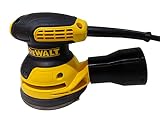
DeWalt uses a round, twist-lock collar port so the factory dust bag can rotate freely while you sand. Across the current 5-inch lineup, the port lands in the same ~1½-inch class, but legacy models vary enough that a ruler or calipers beats guessing.
| Model | Type | Dust port OD (approx.) | Pad hole pattern | Ships with |
|---|---|---|---|---|
| DWE6421 | Corded 5″ ROS, fixed 12,000 OPM | ~1½ in (37–38 mm) | 8-hole hook-and-loop | Twist-lock dust bag |
| DWE6423 | Corded 5″ ROS, variable 8,000–12,000 OPM | ~1½ in (37–38 mm) | 8-hole hook-and-loop | Twist-lock dust bag |
| DCW210B | 20V MAX cordless ROS, 8,000–12,000 OPM | ~1½ in (37–38 mm) | 8-hole hook-and-loop | Twist-lock dust bag |
| DW421 / DW423 / D26451 | Legacy 5″ ROS | ~1¼–1½ in (varies — measure first) | 8-hole | Bag; some without |
Two practical notes: measure the outer diameter of the port where the bag collar seats, not the inner opening, and check that your sanding discs use the matching 8-hole pattern — misaligned holes block the pickup path no matter how good your vacuum hookup is.
Which Vacuum Hose Size Actually Works
Sanding dust is fine and light, so extraction depends on air velocity at the pad holes more than raw volume. A smaller hose keeps velocity high through the port; a big hose just chokes down at the ~1½-inch opening anyway while adding weight that drags on a palm sander.
| Hose ID | Metric | Where it’s common | Fit on a DeWalt ROS |
|---|---|---|---|
| 1¼ in | ~32 mm | Small accessory hoses, most tool-extraction kits | Best match — needs a short adapter to the port, stays light and flexible |
| 1⅞ in | ~48 mm | Default hose on most 5–12 gallon shop vacs | Works with a step-down adapter, but stiff and heavy on the tool |
| 2½ in | ~64 mm | Large wet/dry vacs | Avoid — adds bulk with zero airflow gain through a 1½-inch port |
| 27 mm | Anti-static | Premium dust extractors (Festool-style) | Excellent flexibility; needs the same port adapter, higher cost |
| 35 mm | European standard | Bosch-type extractors | Good middle ground if you already own a European vac |
The takeaway: run a 1¼-inch line to the sander even if your vac tank has a 2½-inch inlet. Most shop vacs ship with a small-hose adapter for the tank end, or a rubber step-down coupler covers it.
Adapters That Bridge the ~1½-Inch Gap
DeWalt DWV9000 universal connector
DeWalt’s own quick connector is built to clamp onto its tool dust ports — including the ~1½-inch ROS collar — and step down to extractor-style hoses. It locks on positively instead of relying on friction, which matters because friction-fit adapters loosen as the rubber warms during long sanding sessions. Expect roughly $20–30.
Universal stepped rubber adapters
The generic cone-shaped rubber adapters (usually stepped across about 1 to 1⅞ inches) are the budget answer at roughly $10–15. Push the correct step over the port; if the fit is marginal, a hose clamp or a wrap of electrical tape on the port OD firms it up. Cut steps off with a utility knife only if you must — each cut permanently removes a size option.
What to skip
- Duct-taped 2½-inch hoses — heavy, leaky, and they pull the sander off vertical surfaces.
- Hard plastic thread-on cuffs that don’t match the port — they seal on one point and leak the rest.
- Leaving the dust bag on as an “adapter” — it isn’t a hose fitting and leaks fine dust at the collar.
Setting Up So Dust Collection Works Instead of Clogging the Pad
- Measure the port first. Confirm ~1½-inch OD (legacy tools may read closer to 1¼) before buying any adapter.
- Fit the adapter to the tool end. Twist-lock the DWV9000 or push-fit the stepped adapter until it seats fully — a partial seat leaks dust and drops suction.
- Run 1¼-inch hose to the vac. Keep it as short as practical; every extra foot of small hose costs airflow.
- Protect the filter. Fine wood and MDF dust blinds a pleated shop-vac cartridge fast. A fleece or high-efficiency filter bag inside the tank, or an inline cyclone pre-separator (e.g., a Dust Deputy-style unit), keeps suction stable for hours instead of minutes. A clogged filter is the number-one reason a “hooked up” sander still leaves dust on the work.
- Throttle the suction. Full shop-vac pull on a 5-inch pad causes the pad to suck down and stall, which leaves pigtail swirls and starves the hole pattern. Open a bleed gate, a second inlet, or the vac’s suction relief until the sander glides normally — you want enough pull to clear the holes, not pin the tool.
- Support the hose weight. A Velcro strap or overhead hook near the workbench keeps the hose from levering the adapter off mid-pass.
- Maintain the pickup path. Align disc holes to the 8-hole pad, and periodically blow out or pick out pad holes packed with resinous dust — clogged pad holes are the second-biggest suction killer.
Which Hookup Fits Your Situation
| Your situation | Recommended setup | Typical cost |
|---|---|---|
| Weekend DIYer with a standard shop vac | 1¼” accessory hose + universal stepped adapter + tank filter bag | ~$30–55 total |
| DCW210B owner who wants a factory-style fit | DWV9000 connector on the port + 1¼” hose | ~$20–30 for the connector |
| Multi-tool shop (sander, router, track saw) | One good 1¼” or 27 mm hose + a small set of tool-end adapters you swap between tools | ~$50–90 |
| Daily/professional use, MDF or drywall dust | Tool-actuated HEPA extractor (e.g., a ~10-gallon class unit) + anti-static hose | ~$400–700 |
On cost per use: a ~$50 DIY hookup spread over 200 sanding sessions is about $0.25 per session and captures most airborne dust; the extractor route makes sense when you sand daily or need certified fine-dust capture.
Ownership Realities: What Wears and What Goes Wrong
- Pad hooks wear first. The hook-and-loop face loses grip after heavy use; replacement 8-hole pads run roughly $15–25 and restore both disc grip and hole alignment.
- Rubber adapters loosen with heat. Re-seat or clamp them each session if the fit is marginal.
- Filter bags are consumables. Budget for them; a bagged tank stays at near-full suction far longer than a bare cartridge.
- Static is normal. Dry fine dust in a plastic hose builds charge — annoying zaps, not a fault. Anti-static hoses or occasionally grounding the hose help.
- Common mistakes: maximum suction (stalls the pad), wrong disc hole count, oversized hose dragging the tool, and ignoring a blinded filter while blaming the sander.
FAQ
Will a 2½-inch shop-vac hose connect directly?
No — nothing about the ~1½-inch DeWalt port accepts it, and stepping down just adds bulk. Keep the big hose for floor cleanup and run a 1¼-inch line to the sander.
Is the dust bag good enough on its own?
For occasional sanding in open air, yes — DeWalt’s bag filters better than most. For indoor work, finishes, or MDF, vacuum extraction captures noticeably more fine dust and keeps the pad holes clear longer.
Suction seems weak even though everything is connected — why?
In order of likelihood: a clogged vac filter or full bag, a leaking adapter seat, misaligned disc holes, or packed pad holes. Check the filter first — it causes the majority of complaints.