Best Table Saws for Narrow-Rip Jig Compatibility
What's inside
As an Amazon Associate I earn from qualifying purchases. This post may contain affiliate links at no extra cost to you.
Contents
What makes a table saw work with a narrow-rip jig
A narrow-rip jig guides a board past the blade while keeping your hands away from the cut. Compatibility is mostly about the saw’s fence and table, not a special accessory mount. The fence needs to lock parallel to the blade, hold its position under pressure, and leave enough room to clamp or register the jig. A flat table and a reliable insert also matter: a jig that rocks or catches at the throat plate is a problem on any saw.
Before buying, check the fence-to-blade distance with the fence set for a narrow cut. Some jigs ride against the fence; others use the fence as a stop while the jig’s rollers or bearing guide the stock. Make sure the design suits your intended cuts and that the fence can be set without obstructing the jig. For repeatable work, verify fence alignment with a reliable square or dial indicator rather than trusting the scale alone.
Which saw type to choose
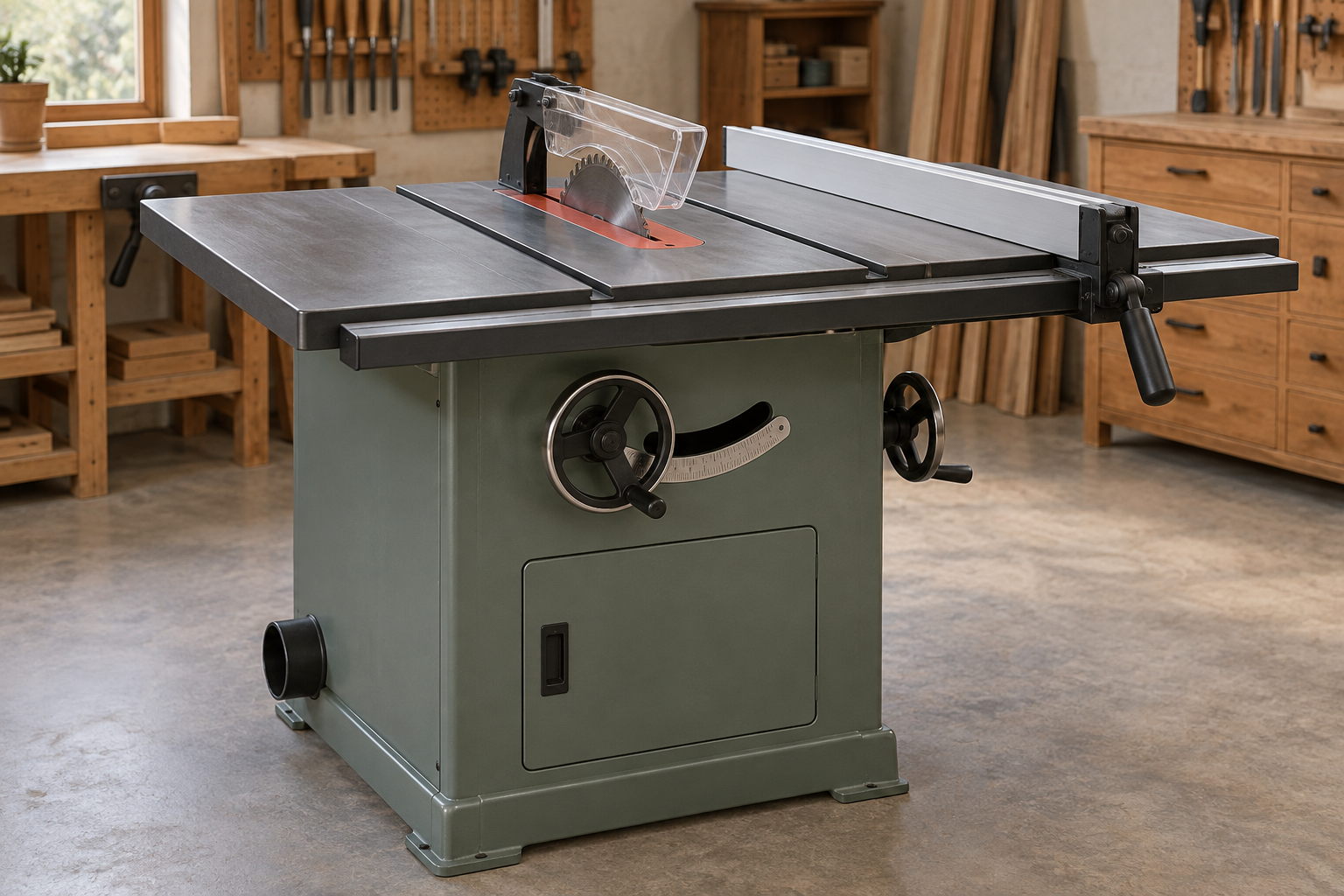
A cabinet or hybrid saw is the best fit for regular ripping of hardwood and larger stock. Its heavier table and more substantial fence tend to stay put, and its motor is less likely to bog down in demanding cuts. The costs are space, weight, and a higher purchase price. A contractor-style saw can be a sensible middle ground if you want a full-size table and fence without paying for a cabinet machine.
A jobsite saw can handle occasional narrow rips, especially in thinner material, but its compact table and lighter fence make setup more sensitive. It is a reasonable choice for a small shop or modest workload, not a bargain replacement for a cabinet saw when you routinely rip thick hardwood. Compare hybrid table saws with precision fences if the saw will stay in a shop, or jobsite saws with rack-and-pinion fences if portability matters more.
Compare the main options
| Saw category | Narrow-rip strengths | Trade-offs | Best for |
|---|---|---|---|
| Cabinet saw | Heavy, stable table; strong fence; good capacity for repeated cuts | High cost, weight, and space needs | Frequent hardwood work |
| Hybrid saw | Shop-sized table and fence at a lower cost than many cabinet saws | Motor and fence quality vary by model | Serious hobby shops |
| Contractor-style saw | Full-size work surface without cabinet-saw pricing | Stand and fence can be less rigid | Moderate use on a budget |
| Jobsite saw | Portable; often offers convenient fence adjustment | Shorter support, lighter structure, less comfortable with thick stock | Occasional cuts or limited space |
Category is only a starting point. A well-adjusted fence on a mid-priced saw is more useful than a premium saw with a fence that shifts or binds. If possible, test the fence: lock it at several positions, push sideways with moderate hand pressure, and check whether it moves. Also confirm that the saw accepts a suitable zero-clearance insert or that compatible inserts are available. A narrow-rip jig does not replace a splitter or riving knife.
Features worth checking before purchase
Look for a fence that locks at both ends or otherwise resists deflection, with a readable scale and a smooth adjustment mechanism. A rack-and-pinion fence can make small adjustments easier, but it is not automatically more accurate; alignment and stiffness still decide how well it performs. Confirm that the fence stays parallel to the blade through its travel. A fence that toes inward can pinch the work; one that toes outward may leave a rougher cut or encourage wandering.
Check throat-plate availability and table geometry. A standard insert opening with aftermarket zero-clearance options makes it easier to support thin offcuts close to the blade. Keep the riving knife installed and use the correct blade guard whenever the cut allows it. For a jig that requires a different guard arrangement, follow the jig and saw manuals, and do not remove safety equipment casually. A narrow rip is not a reason to put fingers near the blade.
Motor power matters most when stock is thick, hard, or cut at a steady production pace. A modest saw may do fine on 3/4-inch softwood strips, but a long rip through dense 8/4 hardwood can slow the blade, burn the edge, or overload the motor. Feed at a steady rate; forcing the cut is a common cause of binding and poor finish. If that work is routine, spend more on a heavier saw and adequate electrical service rather than expecting a jig to compensate for a strained motor.
Set up the jig and make the cut safely
Read the jig instructions and make a test cut in scrap of the same thickness and material. Set the fence, confirm the jig’s guide and hold-downs engage the work, and check that the offcut has a clear path. Narrow strips can wedge between the blade and fence, so use the jig’s intended feed and pressure points; never improvise by pushing a loose strip with your fingers. Keep your body out of the blade’s line and use push blocks or the jig handles as directed.
Stop if the stock lifts, twists, or stalls. Those are signs the work is not being controlled, the fence or jig is misaligned, or the material has internal stress. Do not pull stock backward past a spinning blade. Turn off the saw, wait for the blade to stop, then inspect the setup. A featherboard or additional support may help with suitable cuts, but it must not trap material against the blade.
Buying advice by workload
For daily narrow ripping, choose a cabinet or well-built hybrid saw with a rigid, repeatable fence and a compatible insert. For weekend furniture work, a solid contractor-style saw is often enough. If you already own a jobsite saw and make only occasional narrow strips in modest stock, a compatible jig and careful setup may be the economical answer; upgrading solely for jig compatibility may not improve your results. A table-saw narrow-rip jig is useful only when it fits the stock and fence arrangement, so check its stated capacity before choosing one.

