Best Table Saws with Large Rip Capacity for Cabinet Panels
What's inside
As an Amazon Associate I earn from qualifying purchases. This post may contain affiliate links at no extra cost to you.
Contents
What rip capacity means for cabinet panels
Rip capacity is the maximum distance between the blade and the fence. For breaking down a full 4-by-8-foot sheet, the saw needs at least 48 inches of capacity; extra room helps support the offcut and gives you more flexibility. But a 52-inch fence does not turn a table saw into a panel saw. A full sheet of 3/4-inch plywood can weigh around 60 pounds, and its broad, flexible surface is difficult to control alone.
For cabinet work, the practical question is whether you can make a straight, safe first cut, then dimension narrower parts accurately. A track saw or circular saw with a straightedge is often the better way to reduce full sheets. The table saw can then handle repeatable rips on manageable pieces. If you plan to feed full sheets across the table, arrange substantial infeed and outfeed support and get help handling the panel.
Quick comparison
| Saw type | Typical rip capacity | Best fit | Main trade-off |
|---|---|---|---|
| Cabinet saw with extended fence | 50–52 inches | Frequent cabinet production and a permanent shop | High cost, weight, and installation demands |
| Contractor or hybrid saw with extension | 30–50 inches, depending on setup | Serious hobby work with a tighter budget | Less mass and often less convenient sheet handling |
| Jobsite saw with wide-rail kit | About 24–32 inches | Portability and breaking down smaller panels | Usually short of the capacity for a full-width sheet |
| Track saw plus table saw | Track-saw cut is not limited by fence width | Accurate sheet breakdown followed by repeatable ripping | Two tools and a separate setup for sheet cuts |
Choose capacity to fit the shop
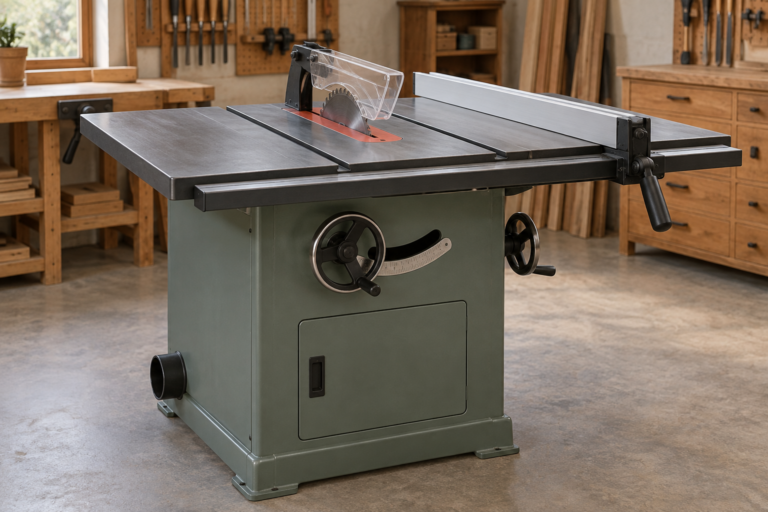
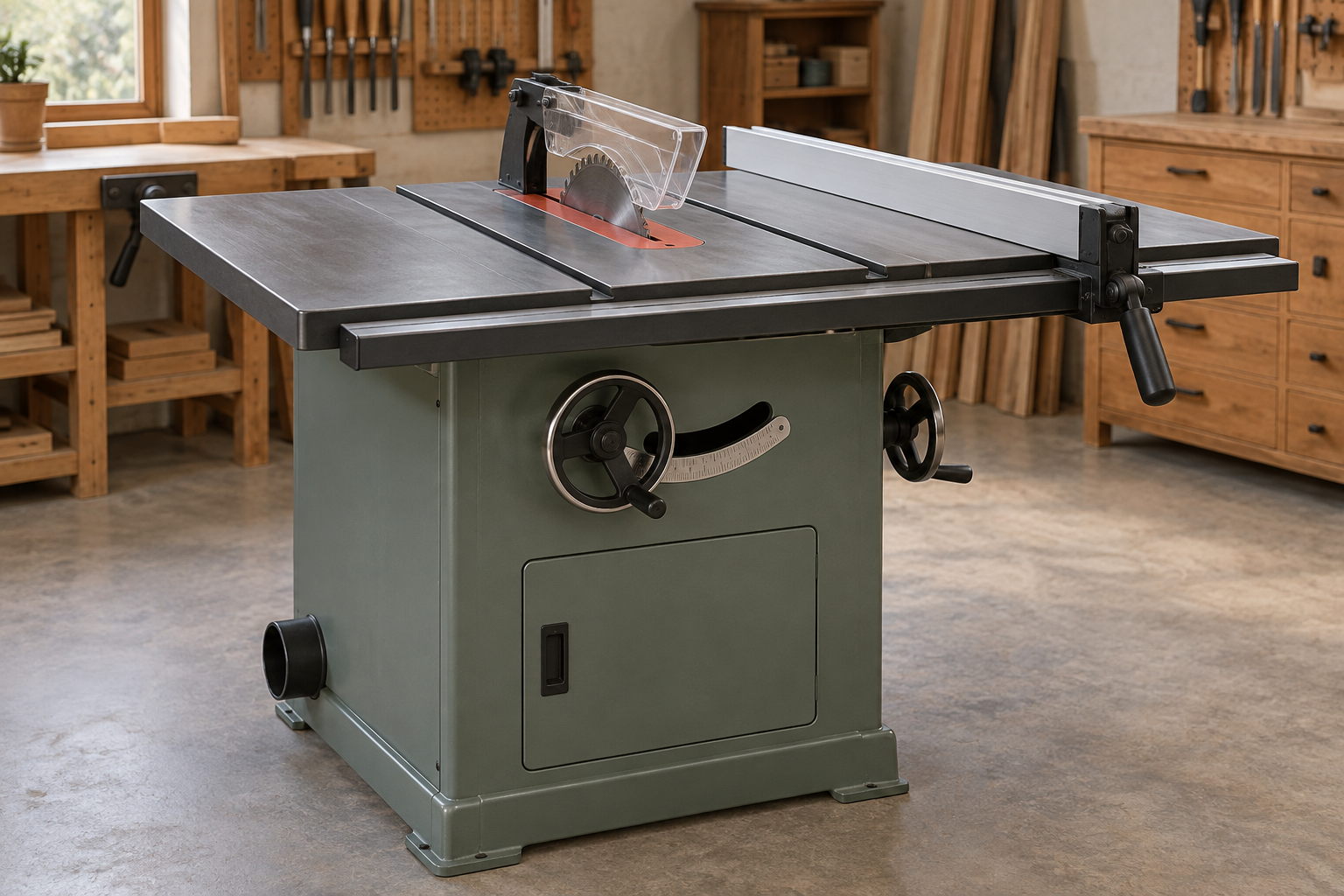
If your work regularly involves full sheets and you have a dedicated shop, start with a cabinet table saw with a 50- or 52-inch rip fence. These saws have the mass and stable stands that suit repeated cabinet work, but their weight and footprint make delivery, moving, and assembly serious considerations. Check the electrical requirements and dust-collection connection before buying; a large saw is a poor fit if your shop cannot power or exhaust it properly.
A hybrid saw with a wide extension table can be a sensible middle ground. It may offer enough fence travel for large rips at a lower purchase and installation cost than a full cabinet saw. Compare the complete setup, not just the saw: confirm the stated capacity includes the fence rails, extension, and any required accessories. A long fence rail can also consume wall space and obstruct other shop equipment.
If full sheets are occasional, a track saw and a conventional table saw are often a more useful combination than paying for a wide-rail machine. The track saw makes the first cut while the sheet is supported on foam or a panel-cutting surface. Once the pieces are smaller, the table saw gives you a reliable reference for repeated rips. This approach does not require the table saw to support a full 48-inch panel, and it is easier to manage in a small shop.
Features that matter more than the headline number
Look for a fence that locks parallel to the blade without needing a shove at the far end. A fence that shifts or racks can spoil a cabinet side across a long cut. Check how far the rail extends, whether the fence reads accurately at both narrow and wide settings, and whether the scale is easy to recalibrate. A tape measure attached to the rail is useful, but verify it against the blade before trusting it for precision work.
Blade and safety setup matter just as much as width. A sharp, appropriate plywood or general-purpose blade helps reduce tear-out; a dull blade can burn edges and make a long cut harder to control. Use the riving knife, blade guard, and anti-kickback devices where appropriate, and keep hands out of the blade path. Never use the fence and a miter gauge together to trap a workpiece during a cut: the offcut can bind and kick back. For narrow rips, use a push stick or push block and follow the saw manufacturer’s guidance.
Cabinet sheet goods can bow, sag, or catch on an uneven support. Align infeed and outfeed supports to the table height, and make sure they cannot tip or roll as the panel moves. If you cannot keep the panel flat and controlled, do not force a full-sheet cut. First reduce the sheet with a guided saw, then finish on the table saw.
A practical buying checklist
Measure the largest panel you expect to rip and allow room for safe handling—not just fence travel. Confirm the saw’s actual rip capacity, extension-table dimensions, arbor and blade compatibility, power supply, dust port, and available replacement parts. Ask whether the fence can be installed on either side if your layout may change. For a used saw, test fence locking, blade-to-miter-slot alignment, arbor runout, elevation and tilt mechanisms, and the condition of the rails before paying.
For a small shop or occasional cabinet project, a standard-width saw paired with a track saw is often the less expensive and more manageable choice. Spend extra on a wide-rip cabinet saw when you will use that capacity often, can support the panels safely, and have the floor space and power to make the investment worthwhile.