Best Table Saws for Accurate Cabinet Carcass Panels
What's inside
As an Amazon Associate I earn from qualifying purchases. This post may contain affiliate links at no extra cost to you.
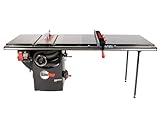
Cabinet carcass panels demand a table saw that cuts straight, repeats settings accurately, and supports large sheets without letting them sag or twist. The saw does not need to be the most powerful machine in the shop, but its fence, table, dust collection, and adjustment mechanisms matter more than a large horsepower number.
As an Amazon Associate we earn from qualifying purchases at no extra cost to you.

Contents
What Makes a Table Saw Suitable for Carcass Panels
Most cabinet sides, bottoms, and partitions are cut from 3/4-inch plywood or sheet goods. A suitable saw should have at least a 24-inch rip capacity to the right of the blade, although 30 to 36 inches is more useful for breaking down full-width panels. A stable fence is essential. If the fence shifts by even 1/32 inch over its length, that error can create visibly uneven cabinet edges and out-of-square boxes.
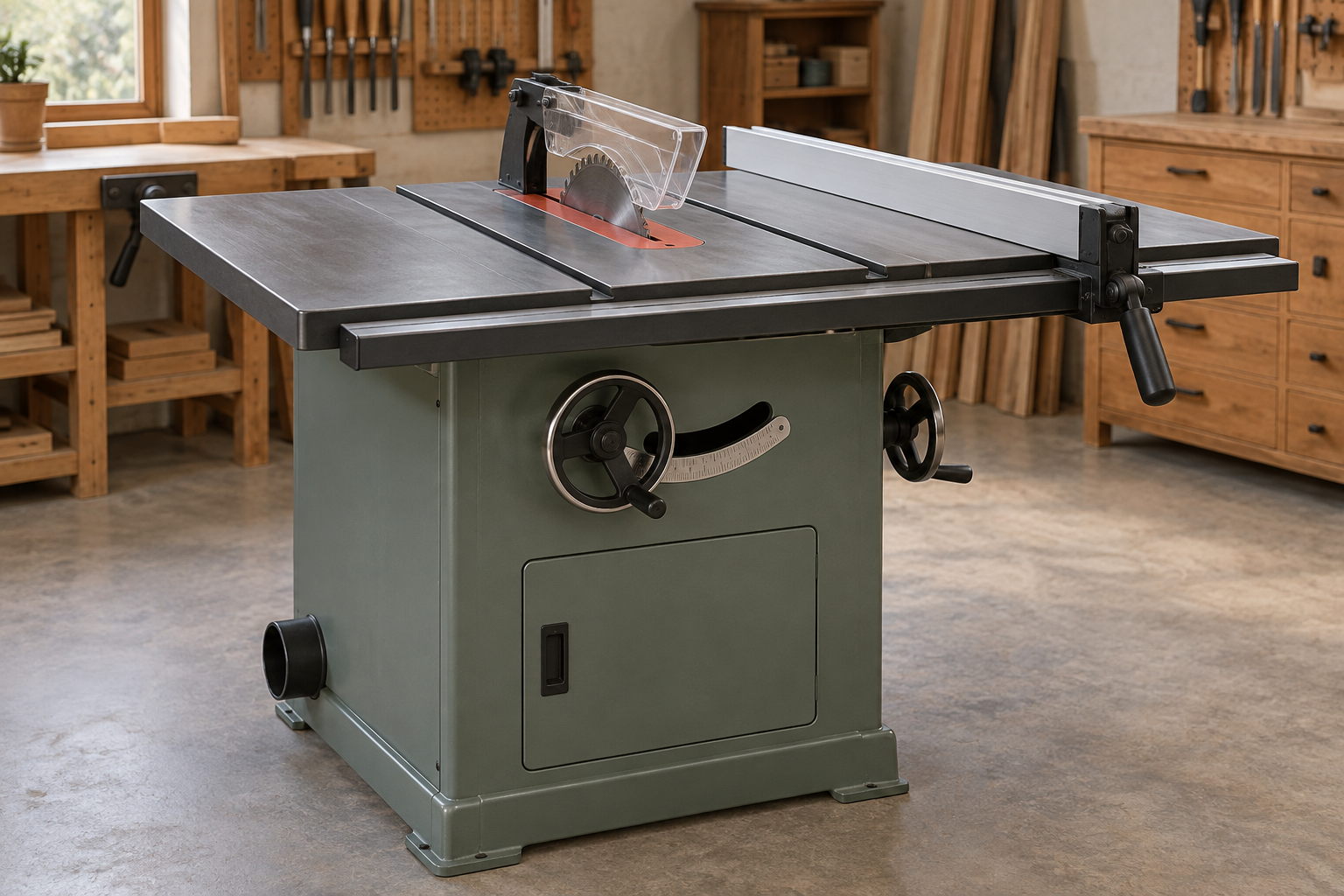
Look for a fence that locks at both ends or uses a rigid front rail. The rip scale should be readable and easy to calibrate. A heavy cast-iron or steel table is helpful because it stays flat under a large panel. Extension wings are not just a convenience: they reduce the leverage a sheet applies to the fence and make it easier to keep the cut on line.
A 10-inch blade is the normal choice. For plywood, use a sharp 40-tooth or 50-tooth combination blade, or a dedicated plywood blade with a high tooth count. A thin-kerf blade reduces waste and motor load, but it can wander more easily if the stock is pushed aggressively or the riving knife is not matched to the blade.
The Best Saw Types for This Work
| Saw type | Best use | Main strengths | Main compromises |
|---|---|---|---|
| Cabinet table saw | Frequent cabinet and furniture work | Excellent stability, powerful motor, accurate fence, strong dust collection | Expensive, heavy, and usually needs a dedicated 240-volt circuit |
| Hybrid table saw | Small shops and serious hobby use | Good accuracy, enclosed base, reasonable dust control, often runs on 120 volts | Less power and smaller capacities than a full cabinet saw |
| Contractor-style stationary saw | Occasional sheet-good work | Lower cost, easier to move, adequate for moderate workloads | More vibration, weaker dust collection, and commonly less rigid fences |
| Portable jobsite saw | Renovation work and limited storage | Compact, inexpensive, easy to transport | Small tables, short fences, limited support, and more setup-dependent accuracy |
Cabinet Table Saws: The Accurate Long-Term Choice
A cabinet saw is the easiest type to recommend when you cut carcass parts every week. Its enclosed base and heavy trunnions resist vibration, while the larger table makes it easier to hold a panel flat through the cut. A well-adjusted cabinet saw can routinely hold parallel cuts within a few thousandths of an inch over a short workpiece, provided the plywood itself is straight and stable.
Power is useful when ripping hardwood edging, solid-wood face-frame parts, or multiple panels. A 3-horsepower cabinet saw is not necessary for ordinary 3/4-inch plywood, but it provides more reserve and slows less under load than a typical 1-1/2 or 2-horsepower machine. The trade-off is electrical work, cost, and weight. These saws commonly weigh several hundred pounds, so plan the location before buying.
Choose a cabinet table saw with a 36-inch fence if you regularly cut cabinet sides or shelves from full sheets. For a small shop, a 30-inch fence may be enough, particularly if you break sheets down with a track saw first.
Hybrid Saws: Where the Cheaper Option Is Fine
A good hybrid saw is sufficient for many home cabinet shops. It generally has a cast-iron center table, an enclosed or semi-enclosed stand, a 1-1/2 to 2-horsepower motor, and a fence capable of accurate repeat cuts. If you mainly cut one or two sheets at a time, work with 3/4-inch plywood, and use proper outfeed support, the finished cabinets can be just as square as those made on a more expensive saw.
Hybrid saws are usually the better value when the budget is limited. Spend the savings on a quality blade, a stable outfeed table, and sheet support. The limitations show up when ripping thick hardwood, cutting continuously, or using a wide dado setup. Motor overload can cause a rough edge or force you to feed too slowly, increasing the chance of burning and wandering.
When comparing models, prioritize a rigid fence and reliable blade-angle adjustment over electronic features. A hybrid table saw with a 30-inch fence is a sensible target for most built-in cabinet work.
Why Portable Saws Are a Compromise
Portable jobsite saws can cut carcass panels, but they demand more preparation. Their narrow tables and short fences make a full 48-inch panel difficult to control. The common failure is not a crooked blade; it is the sheet lifting, dragging against the fence, or pulling the operator off line near the end of the cut.
If a portable saw is your only option, add a level outfeed table and side support at the same height as the saw. Check the fence at the front and rear, and make a test cut before every batch. Use a separate track saw or circular saw with a straightedge to reduce full sheets to manageable blanks. Then use the table saw for final sizing, where its smaller work surface is less of a problem.
A stationary contractor table saw is often a better choice than a portable saw if the machine will stay in one shop. It usually offers a heavier stand, a larger table, and a more useful fence without reaching cabinet-saw prices.
Setup Rules That Matter More Than the Price
Before cutting panels, align the blade parallel to the miter slot and set the fence parallel to the blade. A slight toe-out at the rear of the fence—about 0.005 to 0.010 inch—can reduce binding, but excessive toe-out produces inconsistent widths. Verify the setting with a reliable square or dial indicator rather than trusting the factory scale.
Set the blade about 1/8 inch above the panel. Higher exposure increases the severity of kickback without improving the cut. Keep the riving knife installed, use a push block when your hand would approach within 6 inches of the blade, and never trap a narrow offcut between the blade and fence.
For repeatable carcass parts, cut a test piece first and measure both ends with calipers or a reliable rule. If the two ends differ, stop and correct the fence or support instead of compensating at the next cut. Use featherboards only when they do not push the work into a misaligned fence, and support the panel before it reaches the blade. Accuracy comes from a rigid saw, a calibrated fence, and controlled material handling—not from horsepower alone.