Best Cabinet Table Saws for Cutting Hardwood Panels Accurately
What's inside
As an Amazon Associate I earn from qualifying purchases. This post may contain affiliate links at no extra cost to you.
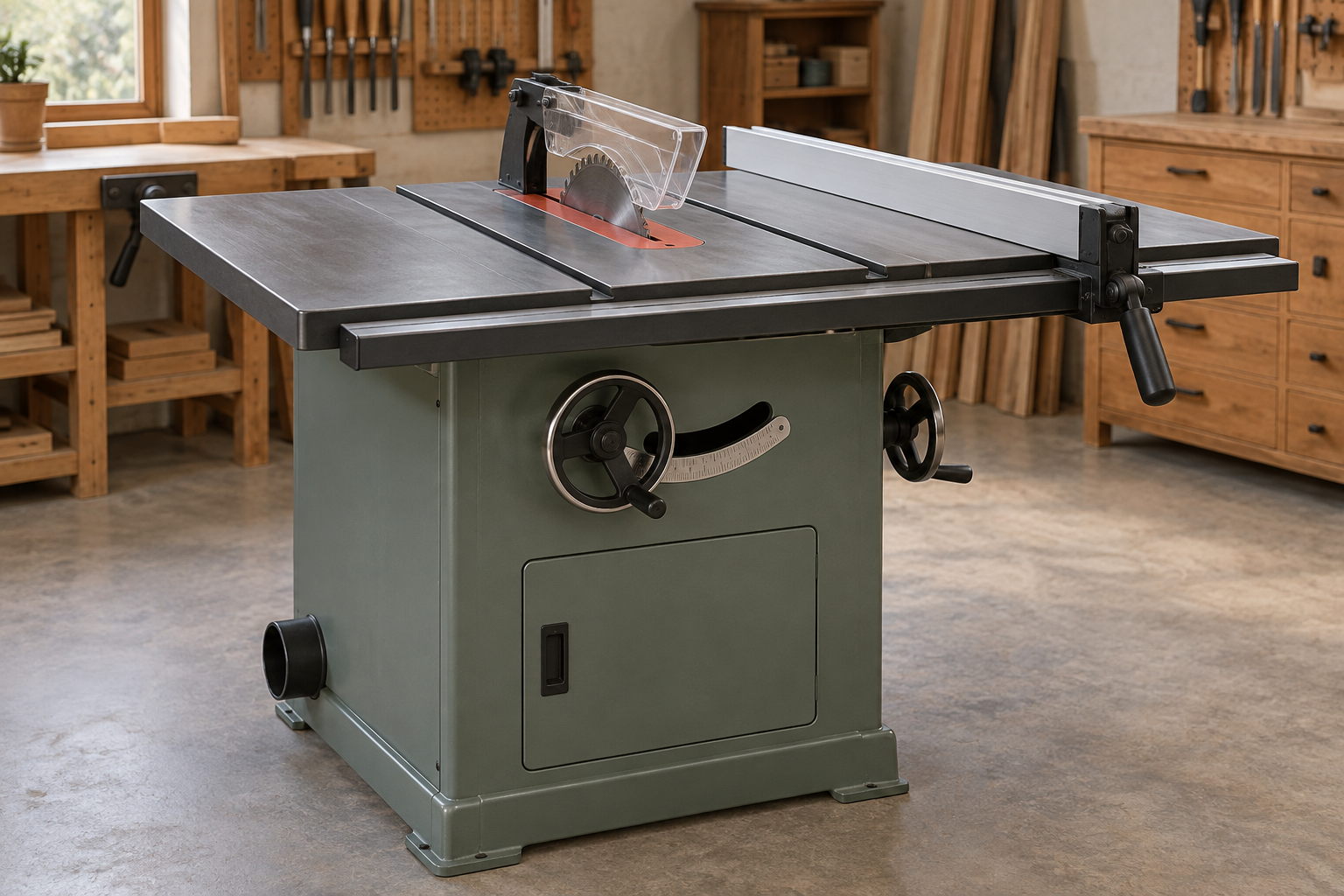
Hardwood panels expose every weakness in a table saw. A slightly misaligned fence can leave a visible taper, a dull blade can burn dense maple, and a small table can let a wide panel sag into the cut. For accurate panel work, a cabinet saw is usually the right class of machine: rigid, heavy, quiet enough for shop use, and built around a full-size rip fence and cast-iron table.
As an Amazon Associate we earn from qualifying purchases at no extra cost to you.


Contents
What Makes a Cabinet Saw Accurate
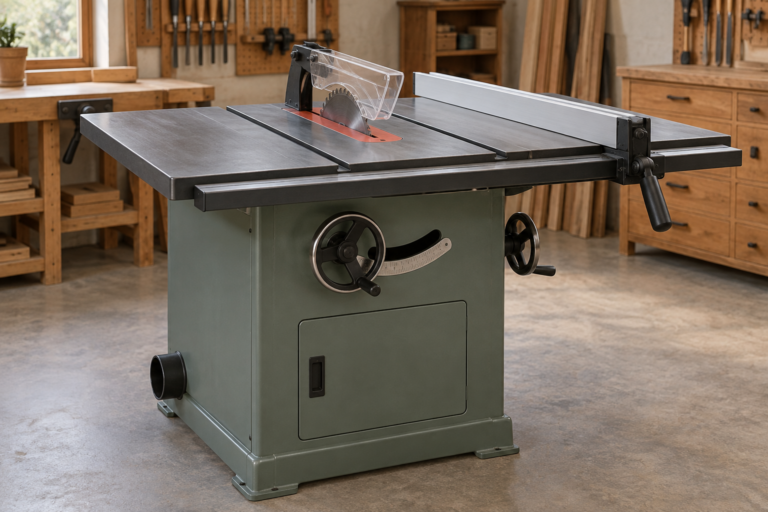
A cabinet saw uses a fully enclosed base and a motor mounted inside the cabinet. That arrangement reduces vibration and keeps the arbor assembly supported more rigidly than on most jobsite or contractor saws. The difference becomes obvious when ripping 8/4 walnut or making repeated cuts where a small error compounds.
Look for a cast-iron top at least 27 inches deep and a rip capacity of 50 inches or more with the fence in its extended position. The extra capacity is useful for breaking down 4-by-8-foot sheets, but it does not replace proper outfeed support. A panel hanging several feet off the back can lift or twist as it passes the blade, even with an excellent saw.
The fence should lock firmly at both ends without needing a hard shove. After locking it, measure from the fence to the front and rear of the blade. The difference should be no more than about 0.005 inch for demanding furniture work. A few thousandths of toe-out at the rear of the blade is generally safer than toe-in, which can pinch the workpiece against the teeth.
Best Cabinet Saw Types for Hardwood Panels
| Type | Best use | Main advantage | Trade-off |
|---|---|---|---|
| 3-hp cabinet saw | Most hardwood and sheet goods | Strong cutting performance on 120-volt or 240-volt shop setups, depending on model | Higher price and substantial weight |
| 5-hp cabinet saw | Thick hardwood, production ripping, frequent use | More reserve power and less bogging | Usually requires a 240-volt circuit and costs more to operate and install |
| Hybrid table saw | Occasional furniture work and smaller shops | Lower cost, lighter footprint, often adequate for 4/4 hardwood | Less rigid, smaller capacity, and more likely to struggle in thick stock |
| Sliding table cabinet saw | Crosscutting large panels and cabinet parts | Excellent support and repeatable crosscuts | More expensive and takes significant floor space |
For most serious home shops, a 3-hp cabinet saw is the sensible target. It has enough power for ripping common hardwoods and does not force the electrical and space requirements of a large production machine. A 5-hp saw makes sense when you routinely rip thick stock, run wide dadoes, or cut for hours at a time. It is not automatically more accurate; accuracy still depends on alignment, the fence, the blade, and operator support.
A hybrid saw can be the better buy if you cut hardwood panels only a few times a month. The cheaper option is fine when your material is mostly 3/4-inch plywood, solid wood is usually 4/4, and you can accept slower feed rates. Spend the savings on a good fence, outfeed table, and quality blade rather than paying for unused motor capacity.
Features Worth Paying For
Prioritize a reliable 50-inch fence system, a riving knife that moves with the blade, and a dust collection port that actually captures chips. A riving knife helps prevent the kerf from closing onto the blade and reduces kickback risk without requiring the larger gap of an old-style splitter. It should sit close to the blade and remain installed for normal through-cuts.
A 4-inch dust port connected to a collector capable of roughly 800 to 1,200 cubic feet per minute at the machine is a practical baseline. Fine hardwood dust is a health hazard, and cabinet saws can send a surprising amount of dust below the table. Dust collection will not replace a respirator or shop air filtration, but poor collection makes cleanup and visibility worse.
For a general-purpose setup, buy a 3-hp cabinet table saw with a 50-inch fence. If your shop has limited power or you do not need extreme capacity, search for a hybrid table saw with a cast-iron top and solid fence instead.
Blade and Setup Matter More Than the Badge
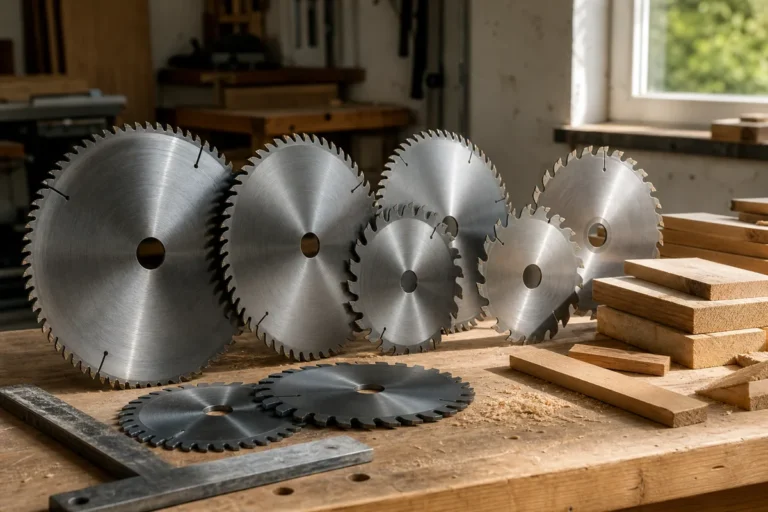
Use a sharp 40-tooth or 50-tooth combination blade for general hardwood panel work. A 24-tooth rip blade cuts faster along the grain but leaves a rougher edge and can be aggressive in thin panels. For crosscutting or plywood, an 80-tooth blade produces a cleaner surface, though it feeds more slowly and creates more resistance.
Before judging a saw, align it. Check that the blade is parallel to the miter slot, then adjust the fence parallel to the slot. Use a dial indicator or a reliable combination square; do not trust the printed scale. Set the blade height so the gullets are just above the panel surface, typically about 1/8 to 1/4 inch above the material. Excessive height increases exposed tooth area and can worsen tear-out.
Let the saw warm up briefly, then make a test cut in scrap from the same material. Check the cut with a straightedge and calipers at both ends. If the panel is consistently wider or narrower than the scale indicates, adjust the pointer—not the fence position. If the width changes along the cut, investigate alignment, fence lock, panel support, or a warped workpiece.
How to Cut Hardwood Panels Accurately
Support the panel before the blade reaches it and after it leaves the blade. The table saw should not be expected to support a full sheet by itself. Use an outfeed table at the same height as the saw, plus side support or a helper for wide panels. Keep the panel flat against the fence without forcing its trailing edge sideways.
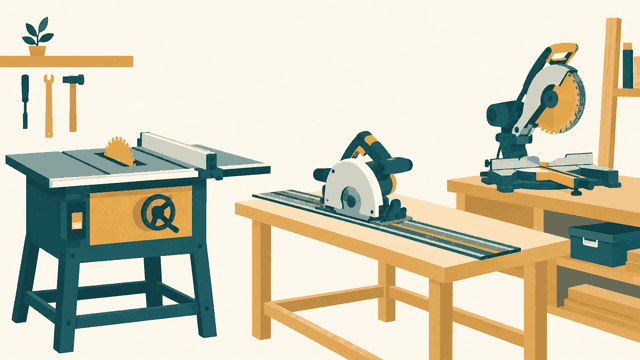
Break down full sheets with a track saw or a rough-cutting station when possible. A cabinet saw is excellent for bringing a panel to final width, but wrestling a 4-by-8-foot sheet across the table is a common cause of crooked cuts and kickback. Leave at least 1/16 inch for final trimming if the sheet is bowed or difficult to handle.
Never freehand a panel, reach over the blade, or pull a workpiece backward while the blade is turning. Use a push handle or push block once your hand approaches roughly 6 inches from the blade. Stop the saw if the motor bogs, the cut begins burning, or the panel starts closing on the riving knife. Those symptoms usually indicate a dull blade, excessive feed pressure, poor alignment, or internal stress in the wood.
A Practical Buying Decision
Choose the 5-hp 240-volt cabinet saw only if thick hardwood and high production justify the installation. For a furniture shop making cabinets, tables, and built-ins, a 3-hp model with a dependable fence is usually the best balance. If crosscut accuracy on large parts is more important than long ripping capacity, consider a cabinet saw with a sliding table.
Budget for the complete system: blade, dust collector, outfeed support, push devices, and electrical work. A perfectly aligned mid-priced saw with a sharp blade will outperform an expensive saw that is poorly supported or fed with a dull one.