Best Table Saws for Accurate Crosscutting of Cabinet Rails
What's inside
As an Amazon Associate I earn from qualifying purchases. This post may contain affiliate links at no extra cost to you.
Crosscutting cabinet rails is a small-cut accuracy job with little tolerance for drift. A rail that is only 1/32 inch short may leave a visible gap, while a cut that is slightly out of square can twist a face frame during assembly. The table saw matters, but the saw is only one part of the system: a rigid table, reliable miter gauge or crosscut sled, sharp blade, and repeatable stop are just as important.
As an Amazon Associate we earn from qualifying purchases at no extra cost to you.


Contents
What Makes a Table Saw Good for Cabinet Rails
For cabinet work, prioritize four things: a flat table, a miter slot that runs parallel to the blade, a fence that locks without shifting, and a blade height adjustment that stays put. A powerful motor is useful when ripping long stock, but it does not by itself improve crosscut accuracy.
A good stationary saw should hold the work securely without excessive vibration. Cast-iron tables are helpful because they resist flexing, though a well-built steel-table saw can also make accurate cuts. Check that the table extension is level with the main table. A step or dip at the extension can lift a long rail as it passes the blade and change the cut angle.
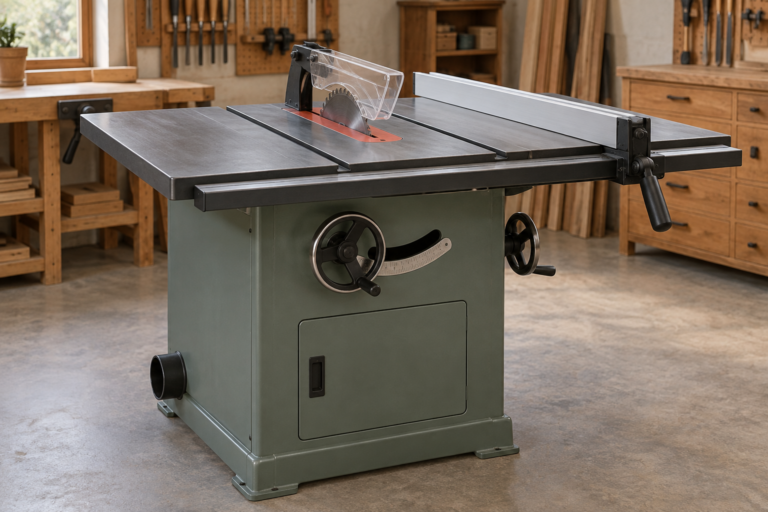
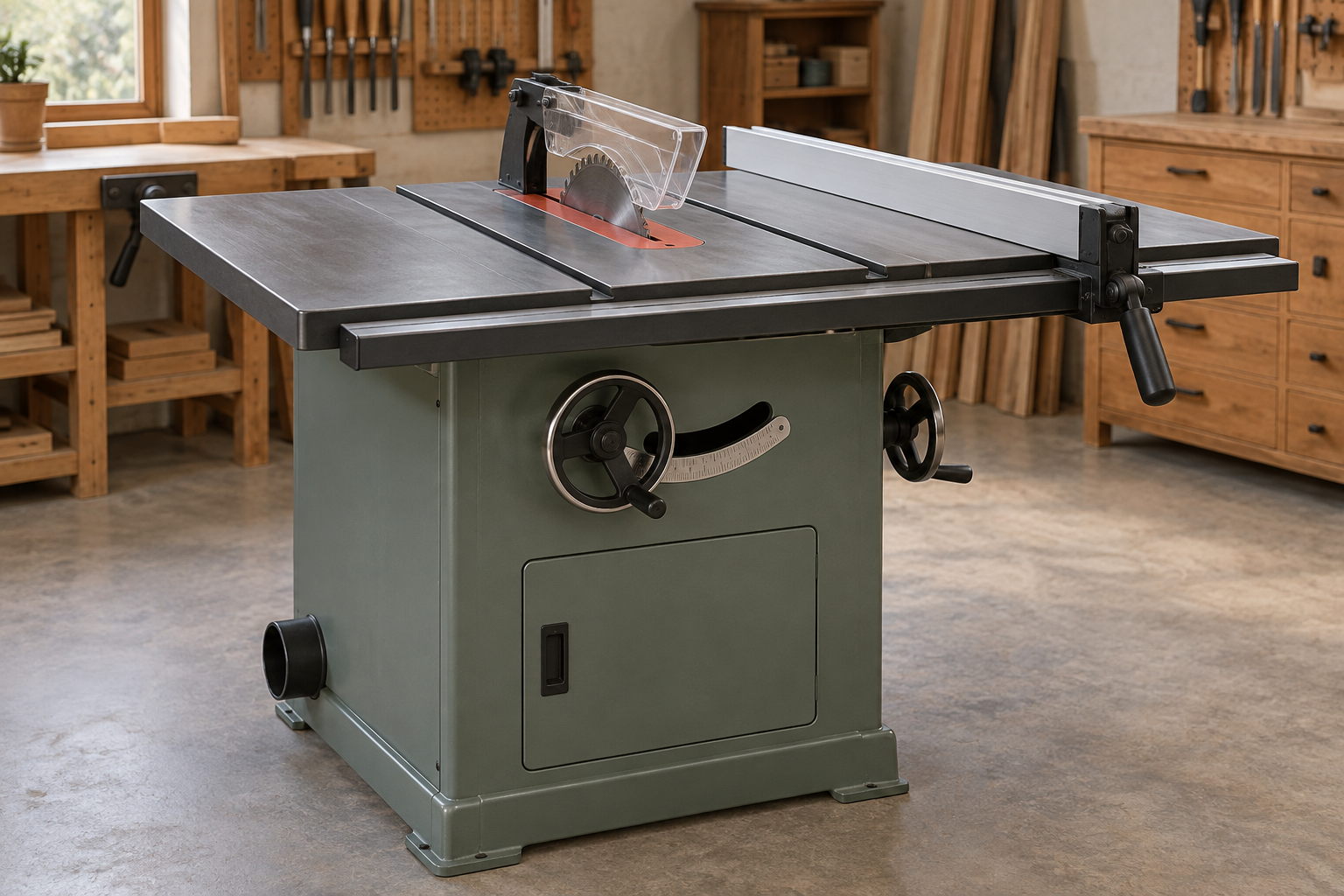
For a dedicated shop, a 3 HP cabinet table saw offers the best combination of stability and capacity. It is expensive and usually requires 240-volt power, so it is excessive if you build only occasional face frames. A quality 1-3/4 to 2 HP contractor-style saw is enough for most hardwood rails when fitted with a proper blade.
Best Saw Types for the Job
| Saw type | Best use | Main advantage | Trade-off |
|---|---|---|---|
| Cabinet saw | Frequent cabinet and furniture work | Heavy, stable, powerful, accurate | High cost, large footprint, often 240V |
| Contractor-style saw | Serious home workshops | Good accuracy for less money | More vibration and less enclosed dust collection |
| Jobsite saw | Portable or occasional work | Compact and easy to store | Smaller table, lighter fences, less refined adjustments |
| Sliding table saw | Repeated panel and crosscut work | Excellent support and controlled movement | Expensive and space-consuming |
A cabinet saw is the easiest platform on which to get repeatable results, but a cheaper option is fine when the saw is carefully tuned and the number of parts is modest. A jobsite saw can cut cabinet rails accurately, but its small top makes support more difficult. Use an outfeed table and an auxiliary crosscut sled rather than relying on a small stock miter gauge.
Crosscut Sled or Miter Gauge?
For rails, a crosscut sled is usually the better investment. It supports the work on both sides of the blade, keeps the piece square to the cut, and prevents a narrow offcut from being trapped between the blade and fence. Build the sled from stable plywood or MDF, and tune the runners so they slide freely without side play.
A quality precision table saw miter gauge is a reasonable alternative for occasional work. It needs a solid face, a positive 90-degree stop, and an adjustment system that removes slack in the miter slot. Test it with the five-cut method or by cutting two parts and checking them against a reliable square.
Do not use the rip fence as the only stop for a crosscut sled when the offcut remains between the blade and fence. That offcut can bind and kick back. If a fence-mounted stop is needed, use a flip stop or position it so the work is fully past the blade before it contacts the stop. For narrow rails, a stop block attached to the sled is safer.
Blade and Setup
Use a sharp crosscut or combination blade with about 40 to 60 teeth for typical hardwood rails. A general-purpose blade with a flat or modified tooth profile leaves cleaner shoulders than an aggressive ripping blade. If the rail stock is 3/4 inch thick, set the blade only about 1/8 to 1/4 inch above the material. Excessive blade height increases exposed tooth area and can worsen tear-out.
Before cutting production parts, verify that the blade is parallel to the miter slot. A deviation of even a few thousandths of an inch can cause rubbing, burning, or a cut that is not square. Check the fence separately; it should be parallel to the blade, or very slightly open at the rear. A fence that closes toward the blade is a kickback risk.
Support long stock at the same height as the saw table. A helper holding the far end is less reliable than an outfeed table or roller support because lifting or lowering the rail changes how it contacts the sled. Keep hands at least 6 inches from the blade and use a push block or handle for short pieces.
A Repeatable Rail-Cutting Method
Mill all rails to the same width before crosscutting. Mark the finished length clearly, then make one test cut in scrap from the same batch. Measure with a steel rule or a reliable stop setup rather than trusting a pencil mark alone. When several rails must match, cut them against the same stop without changing its position.
Cut one or two extra rails if the material allows. This is often cheaper than discovering during dry assembly that a small error has multiplied across the frame. Inspect each end for tear-out, especially when the rail will meet a visible stile. A zero-clearance insert or sled opening reduces chip-out around the blade.
If you need to add a crosscut system to an existing saw, a table saw crosscut sled kit can save fabrication time, but it will not correct a misaligned saw. Tune the machine first, then calibrate the sled. For a few cabinet projects, a homemade sled from straight plywood is often just as accurate and costs less.
What to Buy
Choose a cabinet saw if you build cabinets regularly, use hardwood often, or want the least troublesome platform for a permanent shop. Choose a contractor-style saw if your budget is tighter but you still want a stable cast-iron work surface and a full-size sled. Choose a jobsite saw only when portability or storage matters more than convenience; budget for better support and more setup time.
Regardless of category, spend part of the budget on a sharp blade, a safe crosscut sled or miter gauge, and accurate support. Those accessories determine whether the saw produces cabinet-ready rails or merely cuts wood to roughly the right length.