Best Table Saws for Cutting Hardwood Flooring Components
What's inside
As an Amazon Associate I earn from qualifying purchases. This post may contain affiliate links at no extra cost to you.
Hardwood flooring components demand a table saw that stays accurate through long rips, handles dense stock without bogging down, and keeps narrow strips under control. The job may include ripping flooring blanks, cutting replacement boards, sizing stair parts, or machining tongue-and-groove components. These are not casual cuts: a small fence error can leave a visible gap across an entire room, while a poor blade or unstable stand can cause burning, kickback, and tear-out.
For most serious flooring work, a 3-hp cabinet saw is the best choice. A good 1-3/4-hp contractor saw can handle occasional projects, but hardwood rewards mass, power, and a fence that locks parallel every time. Before buying, decide whether you are processing rough boards in a shop or making occasional cuts during installation. Those two jobs favor different machines.
Contents
What the Saw Must Do
Flooring stock is often long, narrow, and heavy. The saw needs a rigid table, a smooth height and bevel mechanism, and enough outfeed support that the board does not lever upward as it leaves the blade. A rip capacity of at least 30 inches is useful for wider boards, although most flooring rips are narrower than that.
Power matters most when ripping thick material or cutting multiple boards in a batch. A properly wired 3-hp cabinet saw will maintain blade speed better than a portable saw on a 15-amp circuit. That reduces burning and makes the cut safer. A 1-1/2- to 2-hp contractor saw is adequate for 3/4-inch oak, maple, or ash when using a sharp 40- to 50-tooth combination blade and feeding at a steady rate.
Do not choose a saw based only on motor horsepower. A poorly aligned fence, a thin stamped table, or a riving knife that does not track the blade can ruin the advantage of extra power.
Best Table Saw Types for Flooring Components
| Saw type | Best use | Main advantage | Main limitation |
|---|---|---|---|
| Cabinet saw, 3 hp | Frequent hardwood processing and production work | Power, stability, dust collection, and accurate fence systems | Heavy, expensive, and usually requires a dedicated circuit |
| Contractor saw, 1-3/4 to 2 hp | Home shops and occasional flooring projects | Good accuracy without cabinet-saw cost or weight | More vibration and slower feeding in thick hardwood |
| Hybrid saw, 1-1/2 to 2 hp | Enclosed-shop use with moderate production | Quieter, cleaner, and more stable than basic contractor designs | Usually less cutting reserve than a true 3-hp cabinet saw |
| Portable jobsite saw | Small repairs and installation-site trimming | Easy to transport and inexpensive | Small tables, limited support, and less consistent long-rip accuracy |
Cabinet Saws: The Production Choice
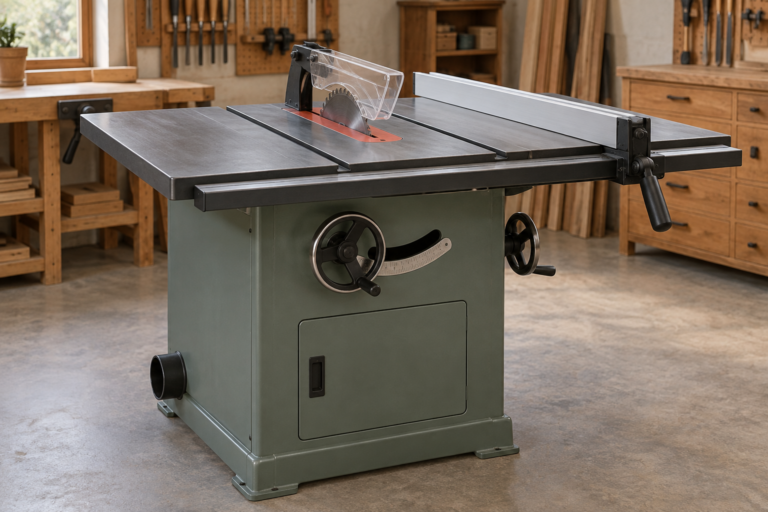
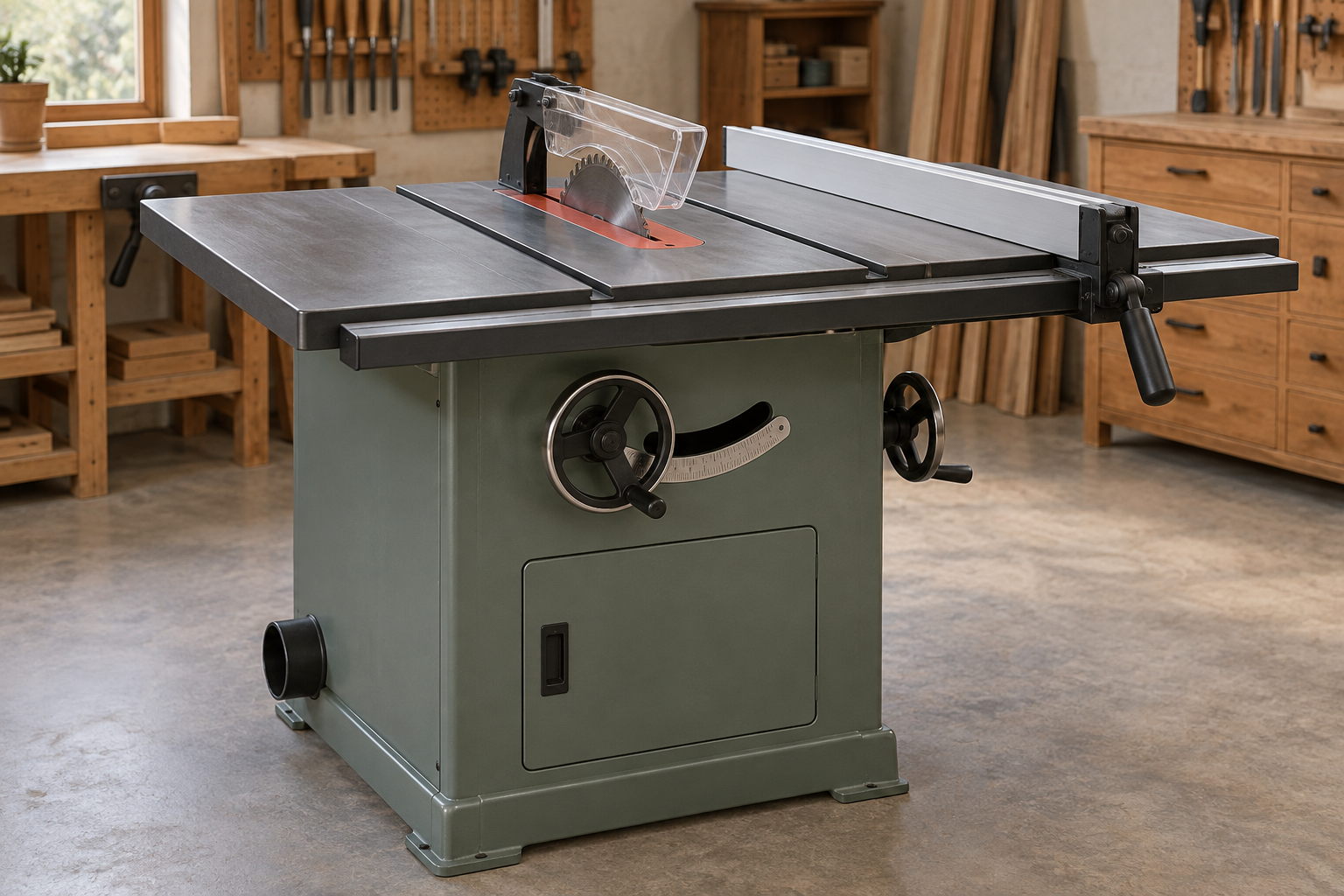
A cabinet saw is the strongest option when you are ripping many boards or processing dense species such as hard maple, hickory, or Brazilian cherry. The enclosed base supports a heavier trunnion assembly and usually provides better dust collection than an open contractor-saw stand. A 3-hp motor is a practical target; 5-hp machines are useful for very heavy production but can be excessive for a small shop.
Look for a cast-iron top, a robust rip fence, a riving knife that remains aligned through blade-height changes, and at least 4-inch dust collection. A 3-hp cabinet table saw is worth considering when the saw will be used weekly or when you routinely work with stock thicker than 1 inch.
The drawbacks are real. These saws can weigh 400 pounds or more, and many need a 240-volt circuit. If your shop has limited floor space or you only cut a few replacement boards each year, buying this class of machine may not improve your results enough to justify the cost.
Contractor and Hybrid Saws: The Value Options
A quality contractor or hybrid saw is the sensible middle ground for many homeowners and small flooring shops. It can rip standard 3/4-inch flooring stock accurately, particularly when paired with a solid outfeed table and a well-tuned fence. The cheaper option is fine if you process short runs, use properly dried lumber, and do not expect the saw to power through thick rough stock all day.
Choose a model with a fully enclosed or partially enclosed base if possible. Better dust collection keeps the blade path visible and reduces the fine dust that collects around the motor. A sturdy mobile base is useful, but avoid a setup that rocks when the saw is locked in position. A hybrid table saw can be a good fit for a dedicated home shop where cabinet-saw power is unnecessary.
Contractor saws reveal their limits when feeding long, heavy boards. If the outfeed side is unsupported, the board can lift or twist during the last 12 inches of the cut. Use roller support or a large outfeed table, but keep it level with the saw top. A support that is even 1/8 inch high can push the work into the blade or away from the fence.
Blades and Flooring-Specific Cuts
Use a sharp, full-kerf carbide blade for the main work. A 40-tooth combination blade handles general ripping and crosscutting; a 24-tooth ripping blade feeds faster but leaves a rougher edge. For visible component edges, a 50- or 60-tooth crosscut or combination blade reduces tear-out, though it removes more material and can feed slowly in thick hardwood.
Burn marks usually indicate a dull blade, a fence that is pinching the work, too slow a feed rate, or insufficient motor power. A featherboard can help hold narrow stock against the fence, but never place one where it forces the work sideways into the rear teeth of the blade. For narrow strips, use a push block or push shoe and keep your hands well away from the blade.
If you need tongues or grooves, a table saw can remove material with a dado set where the saw, arbor, and local rules permit it. Make test cuts in scrap and measure with calipers rather than relying on the dial. A groove that is 1/16 inch too deep or too wide can weaken the edge and prevent a tight flooring fit. In many cases, a router table or shaper is better for repeated profile work, while the table saw should handle the straight sizing cuts.
Buying Checklist
Prioritize fence accuracy over advertised rip capacity. The fence should lock without shifting more than a few thousandths of an inch and remain parallel to the miter slot. Check that the blade reaches at least 3-1/8 inches above the table at 90 degrees, the arbor accepts common blade sizes, and replacement riving knives are available.
A table saw for flooring woodworking should also have a reliable blade guard, accessible controls, and a dust port compatible with your collector. Plan for an outfeed surface at least 24 inches deep and side support for boards longer than 6 feet. Accuracy comes from the entire setup—not just the saw—and a modest machine with proper support will often outperform a powerful saw sitting on an unstable floor.