Best Circular Saw: Sidewinder, Worm Drive or Cordless?
Key takeaways
- The most-used saw on any site, and the one people buy worst. Base plate quality beats every other spec.
What's inside
As an Amazon Associate I earn from qualifying purchases. This post may contain affiliate links at no extra cost to you.
Almost everyone’s first saw is a circular saw, and almost everyone buys it on price. That is a shame, because the difference between a cheap one and a good one is felt on every single cut. A circular saw is a flat plate, a fence, a guard and a motor, and how those four are made decides whether your cuts land on the line or wander a sixteenth over an eight-foot rip.
The first fork in the road is layout — where the motor sits relative to the blade — which cascades into weight, balance, torque character and whether you can see the cut line at all. The second is build quality in the parts you can inspect at the bench. Neither shows up in the amp rating printed on the box, which is why so many first saws disappoint.
As an Amazon Associate we earn from qualifying purchases at no extra cost to you. Product prices and availability are accurate as of the date shown and are subject to change.


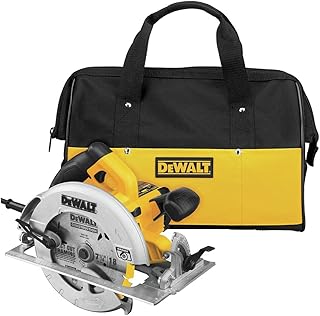

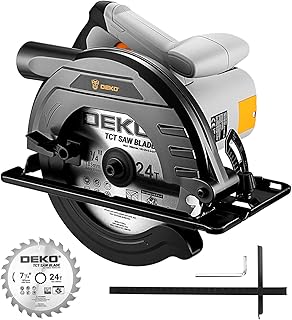


| Type | Motor position | Weight | Best for |
|---|---|---|---|
| Sidewinder (in-line) | Beside blade | Lighter | General use, DIY, most people |
| Worm drive | Behind blade | Heavier | Framing, wet lumber, pros |
| Rear-handle cordless | Behind blade | Heavy | Site framing without cords |
| Compact cordless | Beside blade | Light | Sheet goods, trim, one-handed |
What Actually Matters
Base plate rigidity. A thin stamped base flexes as you push, and a flexing base means a wandering cut. Cast or thick-gauge bases stay flat. This is the single biggest quality difference between a $50 saw and a $150 one. Twist a front corner of the shoe with your thumb before you buy — if it moves in your hand, it moves under load.
Sight line and blade visibility. Left-blade saws suit right-handed users for line visibility; right-blade saws are more common and cheaper. Try before committing if you can. Cut-line windows and notched shoes are how right-blade saws compensate; the good ones genuinely work, the bad ones give you a plastic slot that lines up with nothing.
Depth and bevel adjustment. Should lock hard and not creep. Test by tightening and pushing. Detents at 0 and 45 degrees should feel positive rather than approximate, and the zero stop needs to be adjustable, because sooner or later it drifts.
Blade-to-base squareness. Set zero bevel, drop the blade, and hold a square against the plate and the blade body. A saw you cannot bring back to square cannot cut a joint, and no accessory fixes that.
Guard action. The lower guard should swing freely and snap shut on its own, bevelled or not. Sticky guards get propped open with a thumb or a zip tie, and that is how people get hurt.
Vibration and balance. Run the saw off the wood at full speed. Buzz in the handle means a rough arbor or tired bearings, and it will wear your hand out long before the battery does.
Blade quality. As always, the included blade is the first thing to replace. Factory blades are specified to hit a price, and a good aftermarket blade on an average saw beats a stock blade on a better one.
How To Rank Those Criteria
They do not carry equal weight, and treating them as if they did is how buyers pay for features and miss fundamentals.
- Base flatness and squareness first. They set a permanent ceiling on accuracy and cannot be added later.
- Sight line second. Freehand work is most of what this saw does, unless you always cut against a guide.
- Torque and depth third. Match them to your stock, not to the spec sheet.
- Weight and balance fourth. They decide how long you can work, and matter far more overhead than on sawhorses.
- Brake, light and rafter hook last. All welcome; none rescues a saw with a soft shoe.
Matching The Layout To Your Work
The table sorts the four layouts. The harder question is which one fits the work you actually do — most people buy for one weekend of framing, then spend five years cutting plywood.
A 7-1/4″ brushless saw on a battery platform you already own suits almost everyone: it clears a 2×4 at 45 degrees and goes wherever the work is. Skip it if your only packs are the small ones from a drill kit, or if you frame all day.
Cordless circular saws
Brushless, 7-1/4″, on a platform you already own. Modern cordless saws with high-capacity packs cut like corded ones for everything except all-day framing.
Worm drive suits wet 2x stock, thick beams, long rips and anyone who wants that left-blade sightline for hours at a time. Skip it if you mostly cut sheets on sawhorses, where the weight that steadies a rip in framing lumber only tires you out.
Worm drive saws
Heavier, more torque, better in wet lumber. Framers swear by them; hobbyists usually find them tiring.
A compact 6-1/2″ saw suits sheet goods, trim and remodel work, where control beats capacity. Skip it if you bevel through 2x material, which is the one cut it cannot finish in a single pass.
Compact cordless circular saws
6-1/2″ saws are lighter and easier to control on plywood. Enough depth for anything under 2 inches.
Cordless Or Corded In 2026?
Cordless has won for most users. A brushless saw on a high-capacity pack will cut a day’s worth of sheet goods and trim without complaint. Corded still wins for all-day framing and for shop use where a cord is not in the way — and corded gives more saw per dollar.
What changed was the pack more than the motor. Big cells hold voltage under load instead of sagging, which is exactly what used to make cordless saws feel gutless halfway through a rip. On small batteries the old reputation still holds, and two large packs will improve your cutting more than a better saw would.
What Each Price Band Buys
At the bottom you are buying a motor and little else: a stamped shoe that flexes, a bevel scale to verify rather than trust, a guard that needs a thumb, and a blade destined for the bin. Such a saw will cross-cut framing lumber and fight you on anything that has to be accurate. It earns its keep as a second saw for demolition and dirty work.
The middle band is where the fundamentals arrive — rigid shoe, positive detents, squarable blade, electric brake, and enough motor to hold blade speed through a rip. Most people should shop here, because the extra money buys accuracy rather than convenience.
Above that you pay for durability and ergonomics more than capability: castings instead of stampings, better bearings, sealed switches, smoother guards, gearboxes meant to be serviced. Worth it if you cut daily, hard to justify for weekends, since the mid band already makes every cut the expensive saw makes.
The Guide Rail Trick
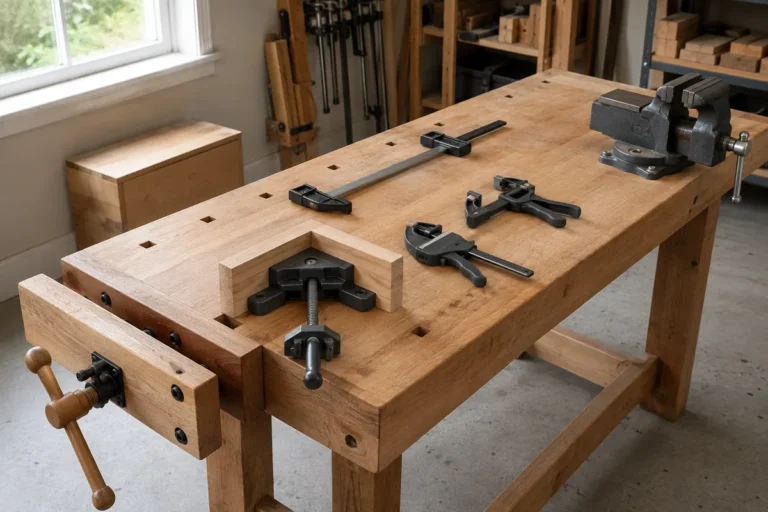
Clamp a straight edge and run the saw base against it, and you have a poor man’s track saw. Cut a piece of plywood as a permanent jig with the offset already built in, and you can line it up directly on your cut mark. It is the cheapest accuracy upgrade in woodworking.
Two details separate a jig that works from one that quietly lies to you. Measure the offset on the side of the shoe you will actually reference, since it differs left to right, and label that side. Then hold the shoe against the fence for the whole cut, and support the sheet along its full length — an unsupported offcut sags, closes the kerf and binds the blade.
Clamp-on saw guides
Turns a $120 saw into a straight-line cutting tool for sheet goods.
Blade Selection, Quickly
- ✔ 24-tooth framing blade — fast rips in construction lumber
- ✔ 40-tooth combination — general purpose, good compromise
- ✔ 60-tooth fine finish — plywood and veneer, less tear-out
- ✔ Diamond blade — masonry and tile, with the right saw only
Tooth count trades speed for finish, and it matters more than anything else printed on the blade. More teeth take smaller bites, leave a cleaner edge and make more heat, so a fine blade burns and bogs in thick lumber. Thin-kerf versions ask less of the motor and the battery, which makes them the default on cordless.
Tear-out appears where the teeth exit, and the blade climbs upward through the work, so cut sheet goods good face down and score the line first on veneer. Change blades on feel rather than on schedule: when a rip that used to go by itself starts needing a push, the blade is telling you before the motor does.
Mistakes That Cost You Cuts
- Cutting between two supports. The offcut sags, the kerf closes and the saw comes back at you. Support the whole sheet and let both halves fall away flat.
- Running full blade depth. More exposed teeth means harder kickback and a rougher edge; a quarter inch below the work is about right.
- Forcing a bogging saw. Pushing harder glazes the carbide. Ease off, let blade speed recover, then ask whether the blade is dull or simply the wrong one.
- Standing in line with the cut. Stand to the side, and keep your free hand and the cord clear of the return path.
- Shopping on amps and no-load rpm. Neither number tells you whether the shoe is flat, and both are what a maker leans on when the rest of the saw is unremarkable.
FAQ
7-1/4″ or 6-1/2″? 7-1/4″ for depth and blade availability; 6-1/2″ for weight and control on sheets. The decider is whether you ever bevel through 2x stock, which the smaller saw cannot manage in one pass.
Do I need a brake? Electric brakes are standard on decent saws now and worth having. A blade that stops in a second or two lets you lift the saw and check your line instead of waiting on it.
Left or right blade? Personal preference and handedness. Left-blade gives right-handers a better view of the cut line. The trade is a blade sitting nearer your body, so grip and stance have to be deliberate.
Is a track saw the better buy? For repeatedly breaking down sheets with finish-ready edges, yes — but it costs several times as much and is worse at framing and rough work. A saw plus a shop-made guide covers most of that ground.
Compare circular saws →