Best Circular Saw Under $200
Key takeaways
- An editorial buying guide to the best circular saw under 200, judged on shoe flatness, fence rigidity, guard action, dust collection and vibration rather than spec-sheet numbers.
What's inside
As an Amazon Associate I earn from qualifying purchases. This post may contain affiliate links at no extra cost to you.
Shopping for the best circular saw under 200 dollars puts you in the most crowded part of the market, and that is exactly where the marketing gets loudest. Amp ratings, no-load RPM and “max cutting capacity” all look impressive on the box, and almost none of it tells you whether the saw will track a straight line through a sheet of three-quarter plywood. In our editorial view, the parts that decide the outcome of a cut are boring: a flat shoe, a rip fence that does not wander, a lower guard that retracts without a fight, a bevel detent that returns to a true ninety, and a motor that does not buzz your wrist numb after twenty cuts.
We approach this category the way we approach any tool that has to reference a workpiece. The blade is a consumable. The cord is replaceable. The stamped or cast shoe, the depth and bevel adjustments, and the housing’s rigidity are what you live with for the life of the tool. Below we lay out the mechanical criteria that separate a competent budget saw from a frustrating one, then map those criteria onto the categories of saw you will actually find at this price.
As an Amazon Associate we earn from qualifying purchases at no extra cost to you. Product prices and availability are accurate as of the date shown and are subject to change.




What Two Hundred Dollars Buys in a Circular Saw
At this budget, you are choosing between four distinct classes of tool, and the tradeoffs are real. Corded sidewinders give you the most motor for the money. Worm drives give you torque and a left-blade sightline but eat the whole budget. Cordless bare tools are excellent value if you already own batteries and a poor value if you do not. Cordless kits at this price generally mean a smaller blade, a brushed motor, or a compact battery.
| Saw Type | What You Gain | What You Give Up | Best Suited To |
|---|---|---|---|
| Corded sidewinder (7-1/4 in) | Most power per dollar, light head | Cord management, no jobsite mobility | Shop use, sheet goods, general framing |
| Corded worm drive or hypoid | Torque under load, left-blade sightline, long shoe | Weight, price crowds the ceiling, higher noise | Framing, wet lumber, repetitive rip cuts |
| Cordless bare tool (18V/20V class) | Full-size performance if you own batteries | Batteries and charger cost extra | Existing platform owners |
| Cordless kit (compact or 6-1/2 in) | Complete out of the box, easy one-hand work | Smaller depth of cut, runtime limits | Punch lists, remodel work, occasional DIY |
One clarification on blade diameter, because it drives more buying regret than anything else. A 7-1/4 inch blade will cross-cut a nominal two-by at forty-five degrees. A 6-1/2 inch blade generally will not, or will only just manage it with the shoe scraping. If you plan to cut rafters, stair stringers or any beveled framing member, the smaller saw is a compromise you will notice on the first job.
The Mechanical Criteria We Judge On
Shoe flatness and material. Lay a straightedge across the underside of the shoe, front to back and corner to corner. A twisted or dished shoe will steer the blade no matter how carefully you follow a line. Thin stamped steel is the norm at this price and can be perfectly acceptable when it is well braced; cast magnesium is stiffer and lighter but usually signals a higher tier. Watch for shoes that flex visibly under hand pressure near the front nose, since that is where you load the tool at the start of a cut.
Bevel and depth mechanisms. The bevel pivot should clamp with a lever you can reach without moving your grip, and the zero-degree stop should return to square repeatably. Check squareness with a small engineer’s square against the blade body, not the teeth. Depth adjustment should be a smooth slot with a positive lock, ideally with a scale you can actually read. Loose depth locks that creep mid-cut are the most common failure mode in cheap saws.
Lower guard action. This is the single most underrated feature. A well-designed lower guard swings back with light pressure from the workpiece and snaps closed cleanly when the saw leaves the cut. A sticky guard tempts users to hold it open by hand, which is how people get hurt. Test it dry, repeatedly, at several bevel angles before you trust it.
Dust port and line of sight. Most saws in this range have a simple chute that throws chips away from the operator. Some offer a port for a hose or a vacuum adapter. Neither approach is truly clean, but a directed chute keeps your cut line visible, which matters more than capture efficiency when you are freehanding to a pencil mark.
Vibration and balance. Run the saw with no load and note whether the buzz lives in the handle or stays in the housing. Excess vibration usually means a cheap arbor bearing or a poorly balanced fan, and it shows up as wander in long rips and as fatigue in your forearm.
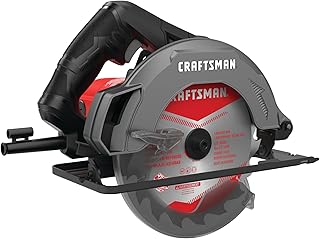
Corded 7-1/4 in Sidewinder Circular Saw
If the saw will spend most of its life on a shop bench or a cut station, corded is still the honest answer under two hundred dollars. You get a full-diameter blade, no runtime anxiety and a lower purchase price than any comparable cordless kit. Prioritize models with a well-braced shoe, a readable depth scale and a bevel lever you can operate one-handed, and budget twenty to thirty dollars for a quality thin-kerf blade on day one.
Why the Best Circular Saw Under 200 Is Usually the One With the Better Fence
Ask a group of woodworkers what ruins circular saw cuts and most will say the blade. In our experience the more frequent culprit is the reference edge. A rip fence that racks in its slot, or a shoe edge that is not parallel to the blade, produces a cut that drifts a sixteenth over four feet and then compounds when you try to correct.
Two practical consequences follow. First, when comparing saws, slide the rip fence out and try to twist it. Any play you can feel with your hands is play the tool will translate into your cut. Second, treat the included fence as a rough-cut accessory and plan on a guide. A shop-made plywood straightedge or a commercial track clamp will do more for your accuracy than upgrading from a mid-tier saw to a premium one. Also confirm that the shoe has a usable kerf indicator on both sides of the blade, and that the indicator actually corresponds to the blade you intend to run, since kerf width varies between framing and finish blades.
- ✔ Full 7-1/4 in blade clears a beveled two-by in one pass
- ✔ Corded models deliver consistent power for long rips in hardwood
- ✔ Braced shoes and stiff housings hold a line better than high RPM claims
- ✔ A twenty dollar blade upgrade transforms cut quality on any budget saw
- ✘ Stamped shoes at this price can arrive slightly twisted, so inspect on delivery
- ✘ Dust collection is limited even where a port is provided
- ✘ Compact 6-1/2 in saws often cannot cross-cut framing lumber at 45 degrees
- ✘ Cordless kits under two hundred typically pair a smaller blade with a compact battery
Matching the Saw to the Work
For sheet goods, the deciding factors are shoe length, blade projection and how comfortably you can see the line. Longer shoes ride guide rails more predictably. A left-blade layout suits right-handed users cutting to a line, though it puts the motor over the offcut, which changes how you support the panel.
For framing and deck work, torque under load matters more than free-running speed. Worm drive and hypoid saws earn their weight here, but they push against the two hundred dollar ceiling, and at that point a strong corded sidewinder plus a good blade often makes more sense.
For remodel and punch-list work, cordless wins on convenience even with a smaller blade. If you already own batteries on a mainstream platform such as DeWalt XR, Milwaukee FUEL or Makita LXT, buying a bare tool is the highest-leverage move available in this price band, because your whole budget goes into the tool rather than into a second charger.
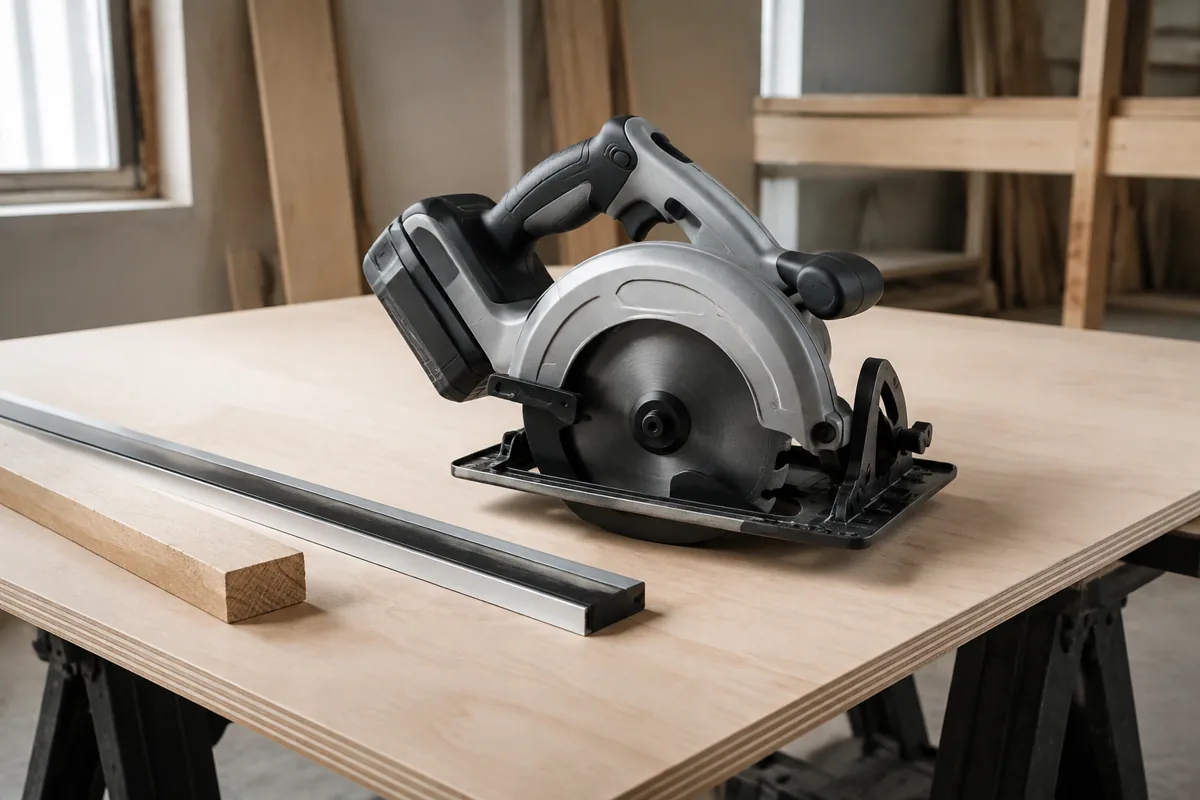
Cordless Circular Saw Bare Tool (18V/20V Class)
Bare tools are where the value hides. Skipping the battery and charger frees up enough of the budget to move into brushless motors, magnesium shoes and electric brakes that would otherwise sit above two hundred dollars. Confirm the platform matches your existing packs, and pair the saw with a high-capacity battery rather than a compact one if you plan to rip sheet goods.
Setup Steps That Cost Nothing
Before the first cut, do four things. Check the shoe against a straightedge and note any twist while the return window is open. Square the blade to the shoe at zero bevel and set the stop. Verify the depth lock holds by clamping it, then pushing firmly on the shoe. Cycle the lower guard a dozen times at zero and at forty-five degrees.
Then replace the blade. Factory blades in this price class are usually thin, coarse and adequate only for rough carpentry. A quality thin-kerf blade in a forty-tooth range for plywood, or a twenty-four tooth framing blade for lumber, changes the character of the tool more than any specification on the box. Support your work so the offcut cannot pinch the blade, keep the shoe on the supported side, and let the saw reach full speed before it touches the wood.
Frequently Asked Questions
Is a corded or cordless circular saw better under $200? Corded gives you more motor for the money and no runtime limits, which suits shop work and long rips. Cordless is worth it if mobility matters or if you already own compatible batteries, in which case a bare tool stretches the budget considerably further.
Do I need a 7-1/4 inch blade, or will 6-1/2 inch do? If you cut framing lumber, especially at a bevel, choose 7-1/4 inches. A 6-1/2 inch saw is lighter and easier to handle one-handed and is fine for sheet goods, trim and general remodel work, but it will struggle with beveled two-by cuts.
What upgrade should I make first? The blade, then a straightedge guide. Together they typically cost less than fifty dollars and improve cut quality more than moving up one tier in saw price.
The Verdict
Under two hundred dollars, the winning saw is the one with the fewest mechanical compromises in the places you cannot fix later: a flat, well-braced shoe, a bevel stop that returns to square, a depth lock that does not creep, and a lower guard that moves freely. Spec-sheet amperage and no-load RPM are weak predictors of results. If the saw lives in a shop, buy corded and put the savings into blades and a guide. If it travels, and you already own batteries, buy the best bare tool the platform offers. If you are starting from nothing and need cordless, accept the smaller blade rather than the weaker mechanics, because you can work around cutting depth but you cannot work around a shoe that will not sit flat.
Check prices on Amazon →