Best Circular Saw For Beginners
Key takeaways
- A criteria-led guide to choosing a beginner circular saw, judged on shoe flatness, guard action, fence quality and cut-line visibility rather than spec-sheet numbers.
What's inside
As an Amazon Associate I earn from qualifying purchases. This post may contain affiliate links at no extra cost to you.
Most people who buy a first circular saw discover the same thing within the first ten minutes: the saw is fine, and the cut still wanders. The blade binds, the offcut pinches, the line drifts a quarter inch by the end of a four-foot rip, and the natural conclusion is that the tool was a bad purchase. Usually it wasn’t. What separates the best circular saw for beginners from a frustrating one has very little to do with amps or maximum RPM, and almost everything to do with mechanical fundamentals: whether the shoe is flat, whether the depth and bevel adjustments lock where you set them, whether the lower guard retracts smoothly instead of snagging, and whether you can actually see the cut line without craning your neck.
We judge saws on those criteria because they are the ones a new user cannot compensate for with technique. An experienced carpenter can make a mediocre saw behave. A beginner cannot, and a saw with a twisted base or a sticky guard teaches bad habits that take months to unlearn. This guide sorts the category by the mechanical features that matter, explains which trade-offs are worth accepting at entry-level pricing, and names the tool lines worth searching. We have not run instrumented bench tests on the current model year, and we are not going to pretend otherwise; what follows is criteria-led guidance you can apply in a store aisle or against a spec listing.
As an Amazon Associate we earn from qualifying purchases at no extra cost to you. Product prices and availability are accurate as of the date shown and are subject to change.


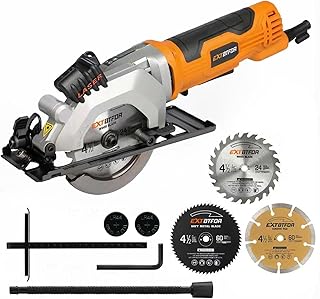

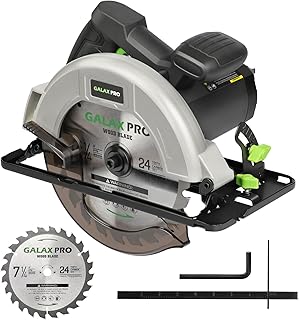

Sidewinder, Worm Drive, or Cordless: Pick the Format First
Format decides more about your experience than brand does. The three practical choices behave differently in the hand, and the right answer depends on what you cut and where.
| Format | Typical blade | Best for a beginner because | Main drawback |
|---|---|---|---|
| Corded sidewinder (in-line) | 7-1/4 in | Lightest of the corded options, lowest price of entry, blade on the right of the motor | Cord management, right-blade saws hide the line for right-handed users |
| Worm drive / rear-handle | 7-1/4 in | Blade-left visibility, more torque in thick stock, very stable in long rips | Heavy, expensive, overkill for sheet goods and 2x framing |
| Cordless 7-1/4 in brushless | 7-1/4 in | No cord to snag mid-cut, full depth of cut, electric brake standard | Battery and charger cost, added weight at the handle |
| Cordless 6-1/2 in compact | 6-1/2 in | Lightest to control, easiest one-handed setup, plenty for plywood and 2x | Reduced bevel depth capacity, fewer blade choices at retail |
For a first saw used mostly on plywood, shelving, deck boards and light framing, a 6-1/2 inch cordless is the most forgiving thing you can buy. It weighs less, it starts and stops predictably with an electric brake, and the reduced depth capacity almost never matters because a 6-1/2 inch blade still clears a 2×4 at 90 degrees. Step up to 7-1/4 inch cordless or corded if you expect to bevel through 2x material, where the smaller blade runs out of depth at 45 degrees.
The Five Mechanical Criteria We Judge On
Base flatness and material
The shoe is the reference surface for every cut. Stamped steel bases are common at the low end and they are acceptable when flat, but they dent if the saw gets dropped on a slab, and a dented shoe rocks. Cast or extruded aluminum and magnesium bases hold their geometry better and cost more. Check flatness with a straightedge across the shoe in two directions and look for a crisp, square outer edge, because that edge is what you will run against a guide.
Depth and bevel lock quality
Levers should have real cam action with a wide throw, not a stubby tab you have to pinch. Set the depth, lift the saw, and try to push the base: any movement means the lock is marginal and it will creep under vibration. Bevel detents at 45 and a positive stop at 90 are worth more than a bevel scale you can read to the degree.
Lower guard action
This is the criterion most reviews skip and the one beginners feel most. Retract the guard by hand a dozen times. It should sweep back with light, even resistance and snap closed without hesitation. A guard that catches at the start of the cut causes the saw to kick sideways before the blade engages, which is exactly the moment a new user is least prepared for it.
Cut-line visibility and the fence interface
Blade-left saws show a right-handed user the cut directly. Blade-right saws require leaning over the tool. Neither is wrong, but know which you are buying. Also look at the front notch: a wide, open sight notch with clear 0 and 45 degree reference marks beats a narrow slot. Most included rip fences are thin stamped guides that flex; treat them as a bonus, not a feature.
Dust port and airflow direction
Trim-quality saws duct chips into an actual port that accepts a hose. Budget saws just fling debris out an open chute, sometimes across your sight line. If you will cut indoors or in a shared garage, a saw with a real port and an included hose adapter is worth the premium.
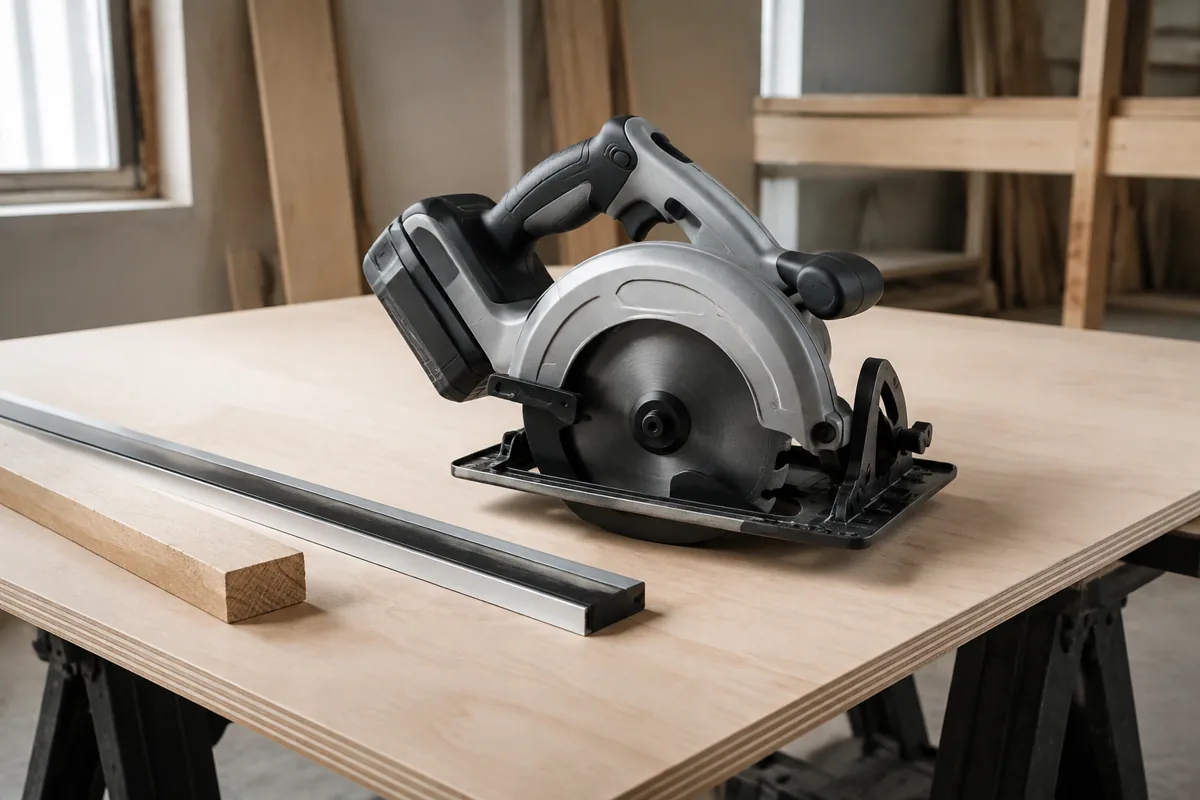
Compact 6-1/2 in Cordless Circular Saw (Brushless)
If you already own batteries in one system, this is the shortest path to good cuts. The lighter head is genuinely easier to keep on a line, and the electric brake removes the coast-down that makes new users flinch. Filter listings for brushless motors, a magnesium or aluminum shoe, and a stated dust port, then buy the platform you can grow into rather than the single lowest price.
What the Best Circular Saw for Beginners Actually Costs
Entry-level corded sidewinders occupy the lowest price tier and remain the cheapest way to get a functional 7-1/4 inch saw. The compromises are predictable: stamped shoe, plastic-heavy adjustment hardware, no brake, an open chip chute. If your budget is fixed and small, a corded saw from a recognized brand plus a good thin-kerf blade will outperform a bargain cordless kit every time, because the blade does more for cut quality than the motor does.
The mid tier is where mechanical quality changes noticeably. Expect a cast or magnesium base, cam-action locks with proper throw, a smoother guard, an electric brake on cordless models, and a usable dust port. Established cordless lines such as DeWalt XR, Milwaukee FUEL, Makita LXT and Ryobi ONE+ all field saws in this band, and choosing among them is mostly a question of which battery ecosystem you want to be locked into for the next decade. That decision matters more than the saw itself, because you will buy four or five more tools on the same platform.
Above that sits rear-handle and worm drive territory, plus track saws, which solve the straight-line problem differently by riding a rail. A track saw is a legitimate answer for someone who mainly breaks down sheet goods, but it is a specialized purchase and a poor only-saw.
- ✔ Blade-left layout puts the cut line in plain view for right-handed users
- ✔ Cast or magnesium shoe keeps its flatness after inevitable drops
- ✔ Electric brake stops the blade before you lift the saw
- ✔ Real dust port that accepts a shop-vac hose
- ✔ Cam-action depth and bevel levers that lock without creeping
- ✘ Included rip fences are usually thin and flexible
- ✘ Stamped-steel shoes dent and then rock
- ✘ Sticky lower guards cause sideways kick at cut entry
- ✘ Laser guides and LED gimmicks add cost without improving accuracy
- ✘ Cordless weight sits high, which changes balance on narrow stock
Setup Habits That Matter More Than the Saw
Three practices fix the majority of beginner cut problems, and none of them cost anything. First, set blade depth so the teeth project roughly a quarter inch past the underside of the workpiece. Full depth increases the blade area exposed to binding and makes kickback more likely. Second, support the work so the offcut cannot pinch the blade: rigid foam insulation on the floor or a set of sacrificial cross sticks on sawhorses lets you cut all the way through with both sides supported. Cutting between two sawhorses with the offcut hanging is how blades get pinched.
Third, stop trusting your hands to steer a straight line. Clamp a straightedge, a factory-edge plywood strip, or a purpose-made saw guide and run the shoe against it. A twenty-dollar guide turns a modest saw into a reliably straight one, and it is the single highest-return accessory in this category. While you are shopping, replace the stock blade: a 24-tooth thin-kerf blade for framing and a 40 to 60 tooth blade for plywood and finish cuts will change the tool’s behavior more than any upgrade to the motor.
Circular Saw Guide Rail and Straightedge Clamp
Buy this at the same time as the saw, not later. A clamped guide removes freehand tracking error entirely, which is the actual source of most disappointing first cuts. Look for an extruded aluminum body long enough to cross a 48-inch sheet, integrated clamps at both ends, and a low profile that will not foul the saw’s motor housing.
Verdict
For most first-time buyers, a mid-tier compact 6-1/2 inch brushless cordless saw from an established battery platform is the best circular saw for beginners, because low weight, an electric brake and a flat cast shoe address the three things that actually cause bad cuts. If budget is the binding constraint, buy a corded 7-1/4 inch sidewinder from a known brand and put the savings into a quality blade and a clamped guide rail. If you mostly break down plywood and accuracy is the whole point, look seriously at a track saw instead of trying to make a conventional saw behave like one.
What we would not do is chase amp ratings, laser guides or LED work lights. Inspect the shoe, work the guard, test the locks, confirm the dust port, and check which side the blade sits on. A saw that passes those five checks will still be serving you in ten years.
Frequently Asked Questions
Is a 6-1/2 inch saw big enough, or should a beginner start with 7-1/4 inch? A 6-1/2 inch blade cuts through nominal 2x lumber and all common sheet goods at 90 degrees with room to spare, and the lighter saw is easier to control. The limitation shows up in bevel cuts through thick stock, where depth capacity drops. If you rarely bevel 2x material, the compact size is the better learning tool.
Corded or cordless for a first saw? Cordless if you already own or plan to build out a battery platform, because a cord that snags mid-cut is a real safety and accuracy problem. Corded if the saw is a one-off purchase and budget is tight, since you get more mechanical quality per dollar and unlimited runtime for long cutting sessions.
Why does my saw burn the wood and bind halfway through a cut? Usually one of three causes: blade depth set too deep, inadequate support letting the offcut pinch the blade, or a dull or wrong-tooth-count blade. Check depth first, then support, then swap the blade. Binding is almost never a motor problem on a saw that spins up normally.
Check prices on Amazon →