DeWalt ATOMIC Review: The Compact Line That Gets Used Most
Key takeaways
- DeWalt's ATOMIC line is built for the compact tools you actually reach for all day, judged here on chuck quality, shoe rigidity and detent feel rather than spec-sheet numbers.
What's inside
As an Amazon Associate I earn from qualifying purchases. This post may contain affiliate links at no extra cost to you.
Every shop settles into a hierarchy that has nothing to do with torque ratings. There is the tool you buy for the worst job of the year, and there is the tool that stays within arm’s reach of the bench and gets picked up forty times a day because it is short, light and already charged. This DeWalt ATOMIC review is about the second kind, since that is what the line was built to be. ATOMIC is DeWalt’s compact 20V MAX family, and it addresses something spec sheets tend to skip: full-size cordless tools are often too large for the work in front of you, while dropping to a 12V platform means buying into a second battery system you probably do not want to own.
Brushless motors changed the math on this category. Compact once meant underpowered, so shops bought one big drill and lived with the bulk. A compact housing now carries enough motor for most woodworking and remodel work, which means output is no longer the interesting question. The question is whether the parts that govern accuracy and control, meaning the chuck, the shoe, the collar detents and the trigger, were held to a standard that matches the motor. We are looking for the tool that gets used, not the one that impresses on a shelf.
As an Amazon Associate we earn from qualifying purchases at no extra cost to you. Product prices and availability are accurate as of the date shown and are subject to change.


| DeWalt line | Best suited to | What you give up |
|---|---|---|
| ATOMIC compact 20V MAX | All-day drilling, driving, trim work, tight access | Reserve for heavy stock and long continuous cuts |
| XR and XR brushless | Framing, decking, hole saws, structural drilling | Weight, nose length, price |
| 20V MAX brushed kits | Occasional homeowner use, low entry cost | Runtime, brake and control refinement |
| XTREME 12V subcompact | Cabinet hardware, electrical, overhead work | A second battery ecosystem, top-end power |
What a DeWalt ATOMIC review should actually measure
Cross-shopping inch-pounds and amp-hours tells you very little. Brands measure differently, and the figures describe a peak you seldom reach. We judge a compact line on what you can assess in the first ten minutes at the bench.
Chuck quality and runout. Compact drills live on small bits. If the jaws wander or creep loose, 1/8 in. pilot holes drift and countersinks chatter. Chuck the shortest bit you own and watch the tip as the motor spins up.
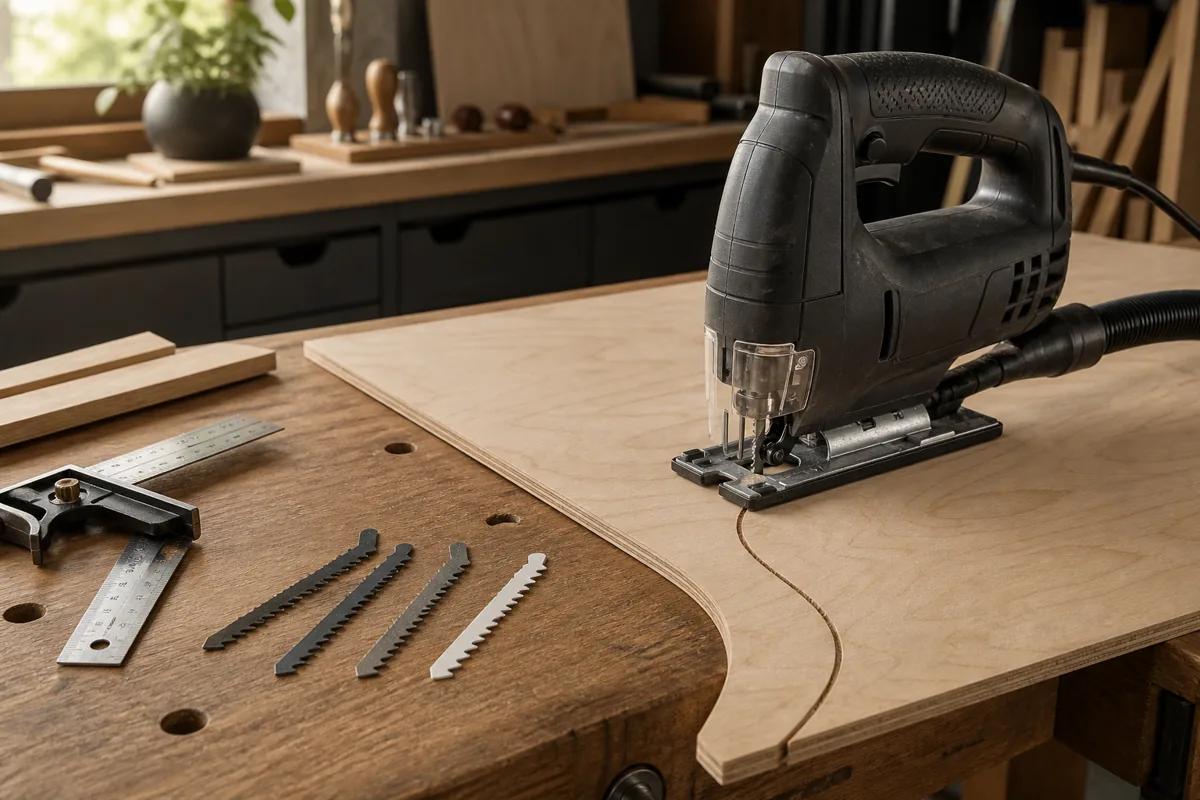
Shoe and base plate rigidity. On compact saws this is where cost gets removed. Set the front of the shoe on the bench and lean into the handle. Flex there becomes a cut that wanders off your straightedge, and no blade upgrade fixes it.
Detent and collar feel. Speed collars, clutch rings and the blade-orientation detents on an oscillating tool should land with a defined click rather than a soft mush. Vague detents let settings creep while you work.
Trigger modulation and brake. The difference between seating a brass screw in figured walnut and snapping its head off lives in the bottom fifteen percent of trigger travel.
Nose length and head height. Access is the whole reason to own the tool. Measure chuck face to the back of the housing, then hold it inside a face frame or a finished carcass.
The drill and impact driver: where the line earns its keep
The compact brushless drill/driver and impact driver are the core of ATOMIC, and for most buyers they justify the line by themselves. The work that eats a woodworking day is pilot holes, pocket screws, hinge hardware, shelf pins, drawer slides and knockdown fittings. Every one of those rewards a short nose and a light head, and none of them needs the reserve of an XR hammer drill. Across a day of cabinet installation the weight difference stops being a footnote and starts showing up in your shoulder.
The compact impact driver is the tool we would expect to log the most hours in any kit from this line, because driving screws is where a short head pays off constantly and where lower top-end output costs least. The honest limit is mass: compact impacts have less of it to absorb hammering, so long structural fasteners are slower going than with a FUEL or XR class driver.
DeWalt ATOMIC Compact Brushless Drill/Driver Kit
The sensible first purchase in the line if you are already on 20V MAX. Buy it for access and weight, not for hole saws, and pair it with a compact battery rather than the largest pack in your case.
DeWalt ATOMIC Compact Impact Driver
The strongest value case in the family. Short head, light enough for overhead work, and more than adequate for cabinet screws, ledger board fasteners and general assembly. Check the collet and belt hook placement before buying a bare tool.
Saws, oscillating tools and the honest limits of compact
The line has grown well past drills, and this is where buyers get disappointed if they read the badge as a shrunken full-size tool. The compact circular saw runs a smaller blade than the 6-1/2 in. and 7-1/4 in. standards, which caps depth of cut. Treat it as a sheet goods and trim saw for breaking down plywood on horses and one-handed work on a ladder, not as a framing saw. Check shoe flex first, and plan on guiding it along a clamped straightedge instead of trusting the line indicator.
The compact reciprocating saw is a stronger argument, because in demolition size limits access more than power does, and a short saw reaches into joist bays and under cabinets. Judge the shoe and the tool-free blade clamp, since those parts fail first. The oscillating multi-tool is the best case of all for a compact platform: the work is detail work by definition, and detent quality matters more than motor size.
DeWalt ATOMIC Compact Circular Saw
A good second saw and a poor only saw. Worth it for plywood breakdown, scribes and ladder work, provided you accept the depth of cut limits that come with a smaller blade.
- ✔ Short nose and low head height that genuinely improve access
- ✔ Brushless efficiency in a housing light enough for all-day use
- ✔ Runs the same 20V MAX packs as XR and FLEXVOLT tools
- ✔ Combo kits are discounted often, so entry cost stays low
- ✘ Compact saws trade depth of cut and shoe rigidity for size
- ✘ Less reserve for hole saws, self-feed bits and long fasteners
- ✘ Some kits include chargers and packs you already own
- ✘ Retail listings blur the difference between this line and XR
Batteries, kits and how to buy into the line
Pair these tools with compact packs. A high capacity battery works electrically and adds runtime, but it also adds height and mass at the base and cancels the balance you paid for. Two compact packs on rotation beat one heavy pack for this kind of work. FLEXVOLT mounts and turns a compact tool into an awkward one.
Combo kits in this family are among the more heavily discounted cordless offerings in the US market, and pricing swings around spring promotions and the November holiday period. If you already own packs and a charger, price bare tools against the kit, because a two-tool kit with two batteries is frequently the cheaper path anyway. Read the listing closely, since charger, case and battery count vary between bundles that look identical in photos.
Frequently asked questions
Is ATOMIC the same as XR? No. Both are brushless 20V MAX tools on the same battery, but ATOMIC prioritizes compact size and weight while XR prioritizes output and durability under sustained load. If your work is mostly assembly, trim and access, ATOMIC fits better. If you drill large holes in framing or run a saw all day, buy XR.
Do ATOMIC tools use my existing DeWalt batteries? Yes. Any 20V MAX pack fits, including FLEXVOLT in 20V mode, though compact 2.0 or 3.0 amp-hour packs suit these tools best.
Should I buy ATOMIC or 12V XTREME? Choose ATOMIC if you already own 20V MAX batteries or expect to add larger tools later. Choose XTREME only if minimum size for cabinet and electrical work outweighs running a separate battery system.
Verdict
ATOMIC is not DeWalt’s best line and was never meant to be. It is the line that quietly accumulates hours, because the tools are short enough to reach the work and light enough that you never set them down for long. For anyone already on 20V MAX, the compact drill/driver and impact driver are an easy recommendation and often become the two most used tools in the shop. The saws are worth owning as second saws, judged on shoe rigidity rather than capacity, and the oscillating tool is a straightforward yes. The mistake to avoid is making this your only platform and then asking it to do XR work.
Check prices on Amazon →