How to Maintain a Stationary Drill Press Spindle and Quill
What's inside
As an Amazon Associate I earn from qualifying purchases. This post may contain affiliate links at no extra cost to you.
Contents
What the spindle and quill do
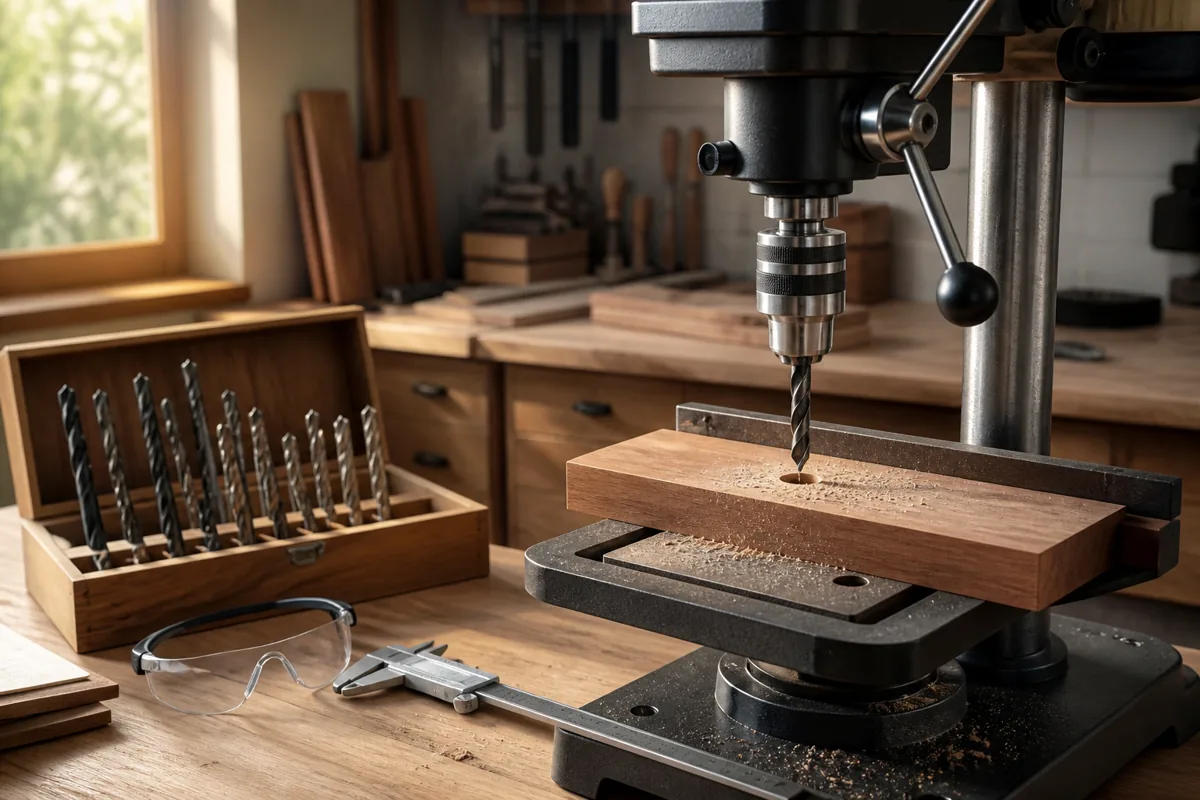
The spindle holds and turns the chuck; the quill is the sliding sleeve that lets the spindle move down and up. On a woodworking drill press, both need to move freely without noticeable side play. Dust, dried lubricant, rust, a loose return spring, or worn bearings can make the quill stick, retract unevenly, or let a bit wander.
Before servicing anything, unplug the machine. Remove the bit and chuck key, lower the table if it gives you working room, and consult the manual for your press’s quill lock, depth stop, and return-spring setup. Designs differ, especially around the spring housing. Don’t open that housing casually: a wound spring can release with enough force to injure you.
Diagnose before cleaning
With the press unplugged, move the quill through its full travel by hand. It should descend smoothly and return without catching. A little resistance from the return spring is normal; gritty, jerky movement is not. Check for a consistent return at several quill positions rather than judging it from one short stroke.
To check for play, lower the quill a few inches and gently push the chuck side to side. A small amount of movement may be normal on an older or inexpensive press, but visible rocking, a clunk, or a change in movement as you rotate the spindle can point to worn bearings or a loose assembly. If the chuck wobbles while the quill itself stays firm, the chuck or arbor may be the problem instead.
Run the machine briefly only after guards are in place and the bit is removed. A new growl, squeal, or vibration that changes with speed can indicate a bearing, belt, pulley, or chuck issue—not just a dirty quill. Stop if the spindle heats up, smells burnt, or makes a sharp knocking sound.
Cleaning and lubrication
Brush or vacuum sawdust from the quill, the exposed spindle area, and the rack-and-pinion feed mechanism. Wipe the quill with a clean, lint-free cloth. If there is sticky residue, use a small amount of mineral spirits on the cloth, keeping solvent away from the motor, belt, wiring, and bearing seals. Dry the surface before applying lubricant.
Use a thin film of light machine oil or a lubricant specified by the manufacturer on the quill���s sliding surface and exposed feed rack. Work the quill through its travel, then wipe off the excess. Heavy grease can collect fine dust and turn into abrasive paste; spraying a general-purpose lubricant into the spindle is not a substitute for bearing service. Avoid getting oil on belts, pulleys, the chuck taper, or the inside of the quill where it could migrate into bearings.
For routine cleaning, a lint-free cloth and light machine oil are usually enough. A press used in a dusty shop may need its quill wiped and checked every few weeks; in a cleaner shop, checking every few months may be adequate. The right interval depends on use, not a fixed calendar.
Choose the right maintenance
| Symptom | Likely area to check | Practical next step |
|---|---|---|
| Quill sticks or moves roughly | Dust, dried oil, surface rust, feed rack | Clean, dry, and apply a thin lubricant film |
| Quill drops but will not retract | Return spring or spring adjustment | Check the manual; adjust only with the spring controlled |
| Chuck wobbles with quill steady | Chuck, arbor, or taper seating | Inspect and clean mating tapers; replace damaged parts |
| Noise or heat during operation | Bearings, belt, pulley, or motor | Stop use and inspect; seek service if bearing failure is likely |
| Quill rocks noticeably | Quill fit, bearings, or head assembly | Check adjustments and wear; do not mask it with thicker oil |
When the chuck or arbor is removed for inspection, keep the tapers clean and dry. Oil or grease on a taper can reduce its grip and let the chuck loosen during use. Use the manufacturer’s removal method; striking the chuck sideways can damage the quill or bearings. If you need a replacement, compare the taper type and capacity before buying a drill press chuck or arbor. A new chuck will not fix worn spindle bearings.
Return spring and adjustments
If the quill fails to rise, first make sure the depth stop is not holding it down and the quill lock is fully released. If those are clear, the return spring may need adjustment or replacement. Follow the press manual and keep a firm grip on the spring cover while loosening its fasteners. Spring housings vary; if the manual is missing or the cover is corroded, a repair shop is safer than improvising.
Some presses allow adjustment of quill or spindle play. Make only small changes, then test full travel by hand. Tightening an adjustment until all movement disappears can make the quill bind, especially as parts warm up. If the mechanism remains rough after cleaning, or the spindle has clear radial play, adjustment is unlikely to restore worn bearings.
When to repair or replace parts
Cleaning and lubrication are inexpensive and often solve a sticky quill. Bearing replacement takes more work: the spindle may need to come out, and the correct bearing dimensions and fit matter. If you can identify the bearing from the manual or markings and have suitable pullers or a press, a replacement spindle bearing may be a reasonable repair. Otherwise, get a repair estimate before buying parts. On a low-cost press, bearing labor can approach the cost of replacement; on a heavier machine with available parts, repair often makes better sense.
Do not keep drilling through severe vibration, a hot spindle, or a quill that binds under load. Those symptoms can damage the workpiece and worsen the machine’s condition. After maintenance, reinstall the chuck securely, check that the quill returns freely, and make a test hole in scrap at a low feed rate. If the bit still wanders, investigate chuck runout, bit condition, table alignment, and workholding rather than adding more lubricant.