Circular Saw With Dust Collection
Key takeaways
- A criteria-led guide to choosing a circular saw with dust collection, judged on port geometry, shroud sealing, base flatness and real vacuum compatibility.
What's inside
As an Amazon Associate I earn from qualifying purchases. This post may contain affiliate links at no extra cost to you.
Most saws sold as a circular saw with dust collection are really just a saw with a plastic elbow bolted to the upper guard. Cut a sheet of MDF indoors with one and you will still find a gray film on every horizontal surface in the shop. The reason is mechanical, not marketing: a standard sidewinder or worm drive throws chips off the front of the blade into an open, unsealed guard cavity, and a 1-1/4 inch port at the back of that cavity has no chance of capturing material that has already escaped sideways and downward through the shoe opening.
That does not mean dust collection on a circular saw is a fiction. It means the difference between a saw that captures 20 percent of the debris and one that captures the large majority comes down to a handful of design decisions you can evaluate before you buy. This guide is our editorial breakdown of those decisions: how the shroud is shaped, where the port sits relative to blade rotation, whether the shoe seals against the workpiece, and whether the port actually mates to the hose you own. We do not publish fabricated capture percentages, and we do not claim to have run a particle counter on a specific numbered model. What we can do is tell you what geometry works and what does not.
As an Amazon Associate we earn from qualifying purchases at no extra cost to you. Product prices and availability are accurate as of the date shown and are subject to change.




| Saw type | Realistic capture | Best use case | Port notes | |
|---|---|---|---|---|
| Track saw | Highest of the group | Sheet goods, cabinet work | Enclosed blade housing, tangential port, sized for 27-36mm hose | |
| Cordless sidewinder with port | Moderate, vacuum dependent | Trim, remodel, occasional indoor cuts | Small adapter port, often needs a step-down cuff | |
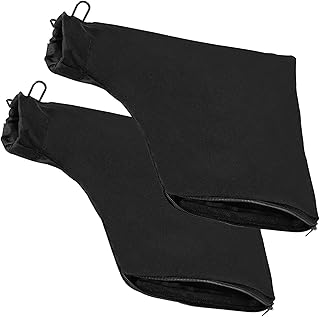
| Worm drive / hypoid | Low to moderate | Framing, wet lumber, structural | Port is an afterthought on most | bag options are weak |
| Compact 6-1/2 in. saw | Moderate | Plywood breakdown, one-person work | Shorter shroud path, less internal turbulence | |
| Corded sidewinder, no port | Effectively none | Rough carpentry outdoors | Retrofit shrouds exist but rarely seal well |
Why a circular saw with dust collection succeeds or fails
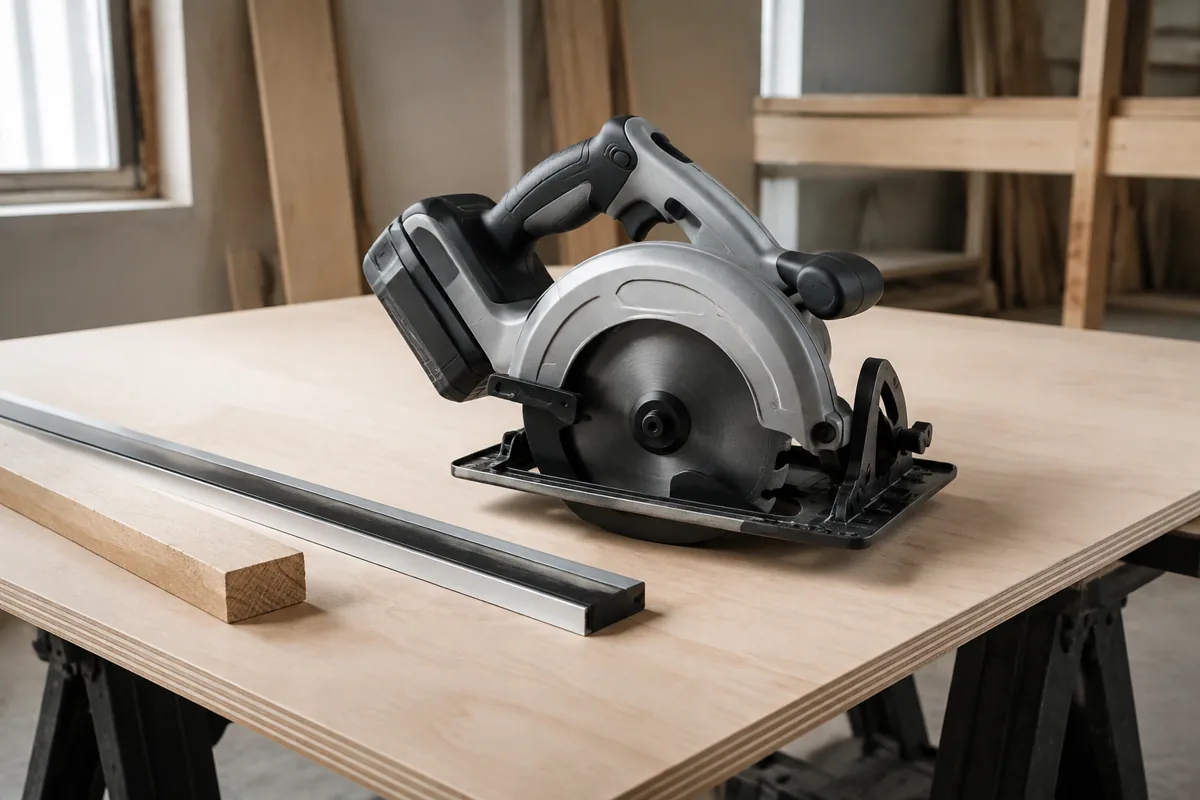
A circular saw blade rotates so the teeth climb up through the workpiece on the far side of the shoe and eject chips forward and upward inside the upper guard. If the guard is a closed volume with one exit, that airflow becomes usable. If the guard is open on the trailing side, has a wide gap around the arbor, or has a large slot where the lower guard retracts, the chips find atmosphere before they find your hose.
The single best predictor of performance is whether the port is tangential to blade rotation rather than perpendicular to it. A port that continues the direction chips are already traveling collects far more than one that asks the debris to make a 90 degree turn. Look at the casting from the side. If the outlet leaves the guard on a smooth curve that matches the blade circle, the engineer thought about it. If it sticks straight out the back of a flat guard wall, it is a place to attach a hose, not a dust collection system.
Second predictor: the shoe. Track saws capture well partly because the blade is enclosed on both faces and the housing rides tight against the track and the panel, so the whole cavity is nearly sealed. A conventional saw has an open throat under the shoe that vents to the room. No hose can overcome that leak, which is why the same 1-1/4 inch port that gives mediocre results on a sidewinder gives strong results in an enclosed plunge housing.
The six criteria we judge on
Port geometry and internal path. Tangential outlet, smooth interior with no sharp steps, and a cross section that does not neck down below your hose diameter. Internal ridges and mold flash cause chip packing, and once the elbow packs, capture drops to zero until you clear it.
Port diameter and fitment. This is the most common frustration and the easiest to check. Many saws use a proprietary nub sized for the maker’s own bag or a metric hose. Before buying, decide which extractor you will use and confirm you can get a solid friction fit without wrapping tape around a mismatched cuff. A loose joint that pops off mid cut is worse than no port, because it dumps into the cut line.
Base flatness and rigidity. Stamped shoes flex, and a flexing shoe changes the seal between housing and workpiece as you push. Extruded or cast bases hold their reference. Set the shoe on a known flat surface and check for rock at the corners. On the bevel detents, look for positive stops with a solid lockdown lever rather than a thumbscrew that creeps under vibration.
Blade guides, riving knife and lower guard action. A riving knife or anti-kickback splitter keeps the kerf open, which keeps the exhaust path from being pinched shut by closing stock. The lower guard should retract smoothly and snap back positively. A sticky guard both is a safety issue and leaves the cavity open longer than it should be.
Fence and guide interface. Freehand cuts wander, and a wandering cut means the housing lifts off the workpiece. Whether it is an edge guide, a shop-made straightedge with a clamp, or a proper track, a saw that tracks true is a saw that collects better. Check whether the shoe has machined guide rib slots and whether the maker sells a track that fits without a bolt-on adapter plate.
Vibration. Vibration loosens hose connections, opens gaps at the shroud, and makes you fight the guide. Brushless motors with electronic braking and a well balanced blade flange run noticeably calmer than older brushed designs. Spin the saw up off the cut and feel the handle.
Track saw with sealed blade housing
If your real goal is breaking down plywood or MDF indoors without coating the shop, a plunge-cut track saw is the honest answer rather than a conventional saw with a port added. The enclosed housing, tangential outlet and track-referenced base do the work. Budget for the track and a compatible hose, since neither is always included, and check that the port accepts your extractor’s cuff.
Matching the saw to a vacuum, not a bag
The dust bag included with many saws is a courtesy item. It fills in a few cuts, restricts airflow as it fills, and does nothing for fine respirable particles. Treat it as a chip catcher for outdoor work and plan on a vacuum for anything else.
What matters in the extractor is airflow at the tool, which means hose diameter and hose length as much as motor rating. A long, narrow, corrugated hose kills capture. Keep the run short, use the largest diameter the port accepts, and if your vacuum offers automatic tool activation through an outlet on the housing, use it. Anti-static hose is worth the upcharge for sheet goods; without it you will get static shocks and a dust-coated hose that attracts more dust.
A HEPA-rated filter is the piece people skip. A shop vacuum with a standard cartridge captures the chips and passes the fine fraction straight through the exhaust into your breathing air. If you are cutting MDF, treated lumber or anything with a coating, the filter class matters more than the port design.
Cordless brushless sidewinder with dust port
For remodel work where you cut in a finished room and then cut on a sawhorse outside, a brushless cordless sidewinder on a platform you already own is the sensible pick. Lines like DeWalt XR, Milwaukee FUEL and Makita LXT all offer models with a molded port. Verify the port diameter against your hose before you commit, and expect moderate rather than track-saw capture.
- ✔ Enclosed or tangential shrouds capture the majority of chips at the source
- ✔ Cleaner cut line means more accurate tracking against a guide or track
- ✔ Far less cleanup, which matters most in finished interiors
- ✔ Pairs with a HEPA extractor to address fine respirable dust, not just visible chips
- ✘ A hose adds drag and can snag on the workpiece edge mid cut
- ✘ Small proprietary ports often need adapters that leak or fall off
- ✘ Ported saws cost more than the equivalent bare model
- ✘ No conventional saw seals the open throat under the shoe, so some leakage is unavoidable
Setup details that change results more than the saw does
Blade choice is the quietest variable. A high tooth count fine-finish blade produces smaller, lighter particles that a vacuum moves easily; an aggressive framing blade produces large chips that ballistically escape the guard. For sheet goods, a thin-kerf blade with more teeth improves both edge quality and capture.
Support the panel fully on foam or a sacrificial grid so the offcut does not sag and pinch the kerf. A pinched kerf closes the exhaust path and increases kickback risk at the same time. Set the blade depth so the gullets clear the underside by a small margin rather than running the blade at full depth; less exposed blade below the work means less debris flung under the shoe.
Manage the hose deliberately. Route it over your shoulder or through a support so it pulls straight back rather than sideways, and give it enough slack for the full length of the cut before you start. Most mid-cut hose disconnections we see happen because the hose reached its limit and yanked the port.
Frequently asked questions
Can I add dust collection to a circular saw that has no port? Sometimes, but manage your expectations. Aftermarket and shop-made shrouds that clamp to the upper guard can catch a portion of the rearward throw, and they help most on fine-tooth cuts in sheet goods. They rarely seal well enough to approach a factory ported housing, and anything you bolt on must not interfere with lower guard retraction or bevel travel.
Is a track saw always better than a ported circular saw? For capture and cut quality on panels, yes, because the blade housing is enclosed and the base rides on a track. For framing, roof work, wet lumber, demolition and awkward positions, a conventional saw or worm drive is the right tool and the track saw is the wrong one. Many shops end up owning both for that reason.
Do I need a HEPA extractor or will a shop vacuum work? A standard shop vacuum will move chips. The fine fraction, which is the part that matters for your lungs, largely passes through a standard cartridge filter and back into the room. If you cut MDF, plywood or coated material with any regularity, a HEPA-class filter with a proper fleece bag is the upgrade to prioritize, ahead of any change in saw.
Verdict
If the primary job is breaking down sheet goods with minimal mess, the honest recommendation is a plunge-cut track saw paired with a HEPA extractor and a short, large-diameter anti-static hose. The enclosed housing and tangential outlet are doing real work that no bolt-on shroud replicates. If the job is mixed carpentry with occasional indoor cuts, buy a brushless ported sidewinder on the battery platform you already own, confirm the port fits your hose before you commit, and accept moderate capture as a genuine improvement over none.
Whichever direction you go, judge the saw with your hands on it. Check the shoe for flatness and rock, work the lower guard through its full travel, look at the outlet from the side to see whether it leaves the guard tangentially, and test the hose fit. Those four checks separate a real dust-collecting saw from one that merely has a hole in the guard.
Check prices on Amazon →