Jointer vs Drill Press for Creating Mortise References
What's inside
As an Amazon Associate I earn from qualifying purchases. This post may contain affiliate links at no extra cost to you.
Contents
What a mortise reference is
A mortise reference is a dependable line or surface that tells you where a mortise starts, how long it is, and how deep to cut. For a standard mortise-and-tenon joint, you usually need marks for both ends and both sides of the mortise, plus a consistent way to register the workpiece while drilling or chopping.
A jointer and a drill press do different parts of that job. A jointer makes a board’s face flat and one edge square to that face. A drill press makes repeatable holes at a controlled angle and depth. Neither machine, by itself, lays out a complete mortise. The right choice depends on whether your problem is unreliable stock or inaccurate holes.
As an Amazon Associate we earn from qualifying purchases at no extra cost to you.


What each machine contributes
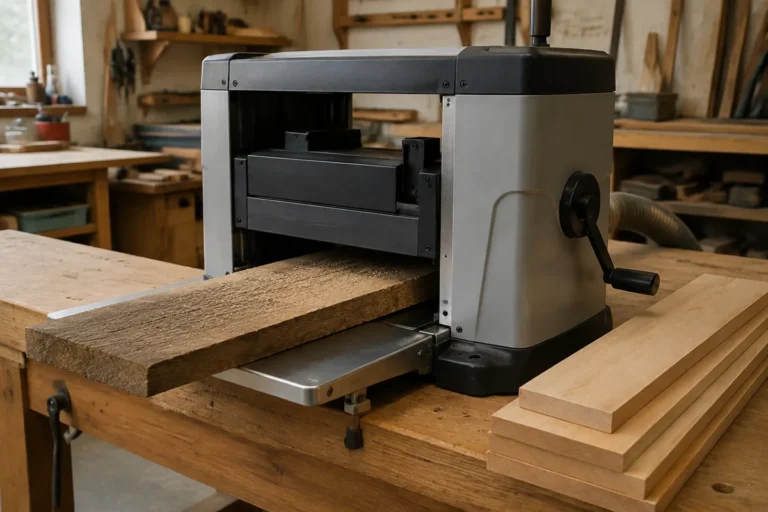
Use a jointer to establish a trustworthy reference face and edge before marking. If a board rocks on the bench or has an edge that is not square to its face, marks taken from it can drift, and a mortise may end up out of alignment. A typical jointer can remove that problem, but it does not cut mortises or set their length and position. You still need a marking gauge, square, and pencil or knife.
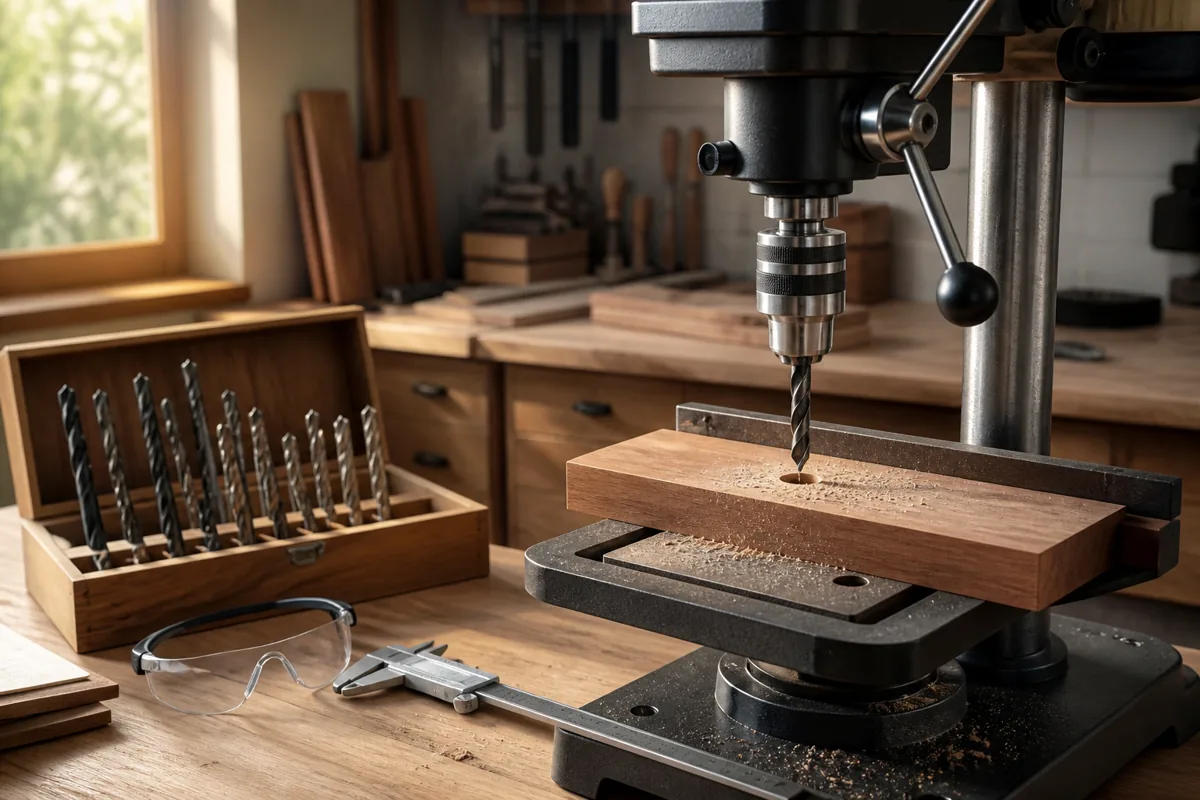
A drill press helps when you make a mortise by drilling a row of overlapping holes. Set a fence or stop so each hole is the same distance from the reference edge, and set a depth stop to control depth. Then square the walls with a chisel. A drill press is useful for this method, but it does not automatically prevent the bit from wandering, and overlapping holes can leave ridges that take time to clean up.
For a drill-press mortise, use a Forstner bit or brad-point bit sized appropriately for the mortise width. A Forstner bit leaves a relatively flat-bottomed hole; a brad-point bit starts accurately but leaves a pointed center. Drill a test piece first. On a narrow mortise, even a small amount of bit wander or fence movement can make the finished slot visibly uneven.
Jointer vs. drill press
| Question | Jointer | Drill press |
|---|---|---|
| Best contribution | Flat face and square reference edge | Repeated holes at controlled spacing and depth |
| Does it make the mortise? | No | Partly; chiseling usually finishes the slot |
| Most useful when | Stock is bowed, cupped, or has an unreliable edge | You already have flat, square stock and need to remove mortise waste |
| Common failure | Jointing short or unstable stock unsafely; removing too much thickness | Bit wander, holes that overlap poorly, or a loose fence changing the offset |
| Cheaper workaround | Buy straight, surfaced stock or flatten by hand | Use a brace and bit, or drill by hand and pare to the lines |
Which machine should you buy?
If you routinely prepare rough lumber, a jointer can be the more important purchase—not because it makes mortises, but because flat, square stock improves nearly every later layout and machining step. A jointer is only one part of milling: you generally also need a planer to bring the opposite face parallel and reach final thickness. If your lumber is already surfaced and stable, a jointer may not solve your current mortise problem.
If your stock is already flat and square, a drill press is the more direct choice for drilling mortise waste. Look for a model with a depth stop, a table that can be secured firmly, and enough throat depth for your workpieces. A fence or clamped stop is often more important than extra motor power for this task. Browse woodworking drill presses with a depth stop, but check the table size and usable capacity against the parts you actually make.
For occasional small joints, neither machine may be necessary. A marking gauge, square, sharp chisels, and a hand drill can produce sound mortises, especially in softwood or modest quantities. A basic bench drill press is a reasonable step up if you want more consistent drilling without buying a floor model.
A repeatable setup for mortise references
First, choose one face and one edge as your references. If the stock is rough or twisted, flatten one face and square one edge on a jointer—or have the lumber surfaced. Mark every mortise from the same face and edge. Do not switch reference faces halfway through a batch; small differences in thickness or squareness can accumulate into joints that sit proud or out of alignment.
Set a marking gauge to the mortise width and scribe both sides from the reference edge. Use a square to mark the ends and a knife line where accuracy matters. For a drill-press method, clamp the work securely, set a fence to the same edge, and make a test cut in scrap of matching thickness. Drill overlapping holes inside the layout lines, stopping short of the end marks, then remove the remaining waste and pare to the knife lines. A 1-inch-deep mortise, for example, needs a depth setting that accounts for the bit’s cutting geometry and any cleanup—not just an untested scale reading.
Safety and common mistakes
On the drill press, never hold a small workpiece by hand. A bit can catch and spin the stock; clamp it to the table or use a properly secured drill-press vise. Keep the fence and table locked, clear chips when needed, and avoid forcing the bit. If the piece is long, support it so its weight cannot pull it off the table.
On a jointer, use push blocks and follow the machine’s minimum-length and minimum-thickness limits. Do not try to flatten a short, narrow piece that cannot be guided safely. A jointer can also remove material quickly: repeated passes may make a reference face flat but leave the part too thin for the intended joint. Measure before and after milling, and test the full layout and drilling setup on scrap when a visible fit matters.