Best 10 Inch Miter Saw
Key takeaways
- A criteria-led guide to choosing a 10 inch miter saw, judged on fence squareness, table flatness, detent feel, dust collection and real cut capacity.
What's inside
As an Amazon Associate I earn from qualifying purchases. This post may contain affiliate links at no extra cost to you.
A 10 inch miter saw is the size most woodworkers actually need and the size most buyers get wrong. The temptation is to shop by blade diameter and price, then discover that the fence flexes when you clamp against it, the detents overshoot at 45 degrees, or the saw cannot cross-cut a 2×8 in a single pass. Choosing the best 10 inch miter saw is less about horsepower claims and more about whether the machine holds a square cut after the tenth adjustment, the hundredth, and the thousandth.
We judge miter saws the way you would judge a jointer or a table saw: on mechanical fundamentals. Is the table flat? Does the fence sit square to the table and stay there? Does the head have detectable slop in the pivot? Can you empty the dust port into a shop vac without redesigning the shroud? Those things determine your joinery quality far more than a marketing figure on the motor housing. What follows is a framework for evaluating any 10 inch saw on a store shelf or a product page, plus the categories of saw worth your attention.
As an Amazon Associate we earn from qualifying purchases at no extra cost to you. Product prices and availability are accurate as of the date shown and are subject to change.


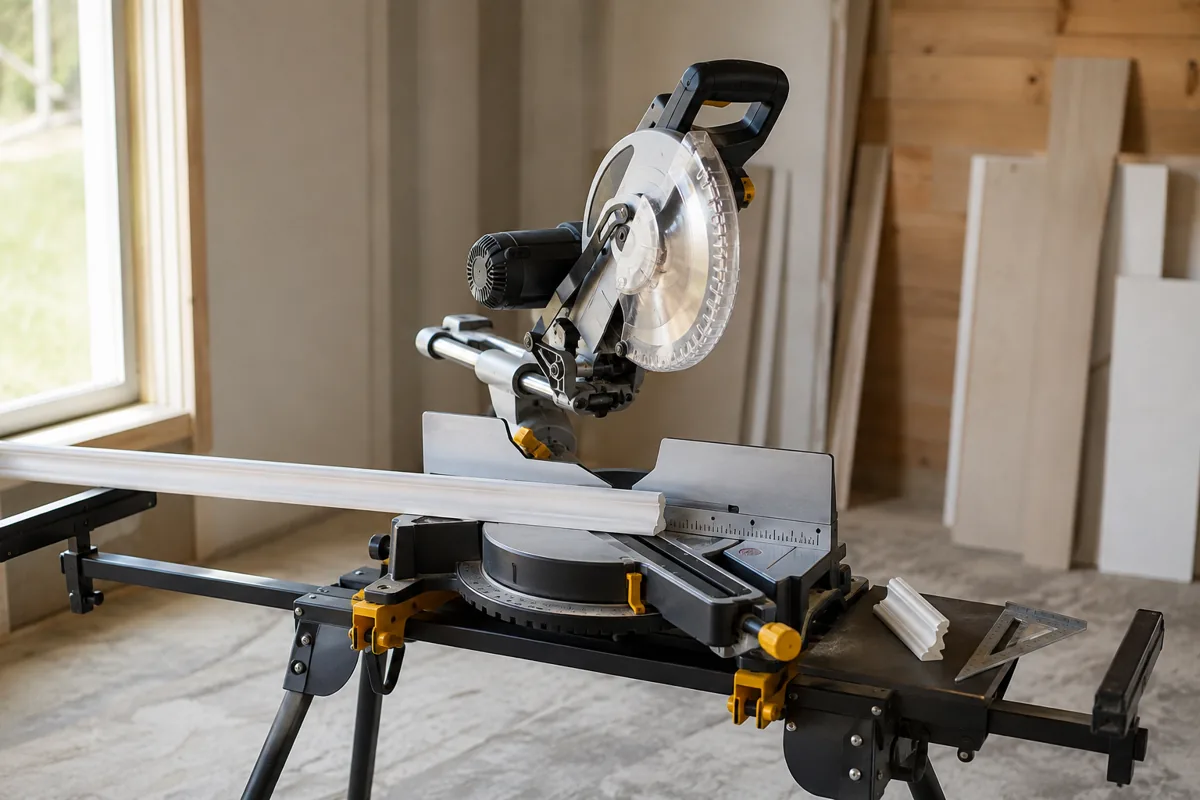
10 Inch Miter Saw Classes at a Glance
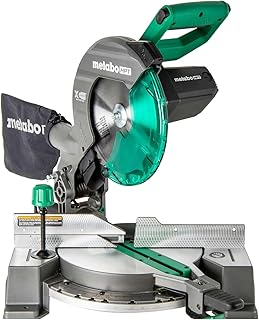
Before comparing brands, get clear on which class of saw fits your work. The differences in capacity and price between these four types are larger than the differences between competing models within a type.
| Class | Typical Cross-Cut Capacity | Best Suited To | Trade-Off |
|---|
| Class | Typical Cross-Cut Capacity | Best Suited To | Trade-Off | ||
|---|---|---|---|---|---|
| Standard chop (non-slide) | About 2× | 6 at 90 degrees | Trim, small furniture parts, tight shops | No wide boards or shelving stock | |
| Single-bevel slider | Roughly 2× | 10 to 2× | 12 | General furniture and remodeling | Bevel cuts only in one direction |
| Dual-bevel slider | Roughly 2× | 10 to 2× | 12 | Crown, casework, production trim | Heavier, costs noticeably more |
| Cordless slider (18V/20V class) | Comparable to corded sliders | Job sites, garages without good outlets | Battery cost, added head weight |
Two practical notes on that table. First, quoted cross-cut capacity is measured against the fence at 90 degrees; at a 45 degree miter the number shrinks substantially, so if you regularly miter wide baseboard, check the angled capacity specifically. Second, cordless sliders in the DeWalt XR, Milwaukee FUEL and Makita LXT lines now cut convincingly in 10 inch form, but the batteries add mass exactly where you least want it, at the head, which changes how the saw feels through a slow finish cut.
The Mechanical Criteria That Decide the Best 10 Inch Miter Saw
Every claim a manufacturer makes is downstream of five physical things. Check them in this order.
Fence design and squareness. The fence is the reference surface for every cut you make. Look for a tall, two-piece aluminum or cast fence with machined faces, adjustable in slots rather than fixed by rivets. Sight along the face; a fence that is not coplanar left to right will pinch a long board and open your miters. Sliding upper fence sections that can be removed or slid outward matter if you ever cut crown nested or stand tall stock vertically. Cheap stamped-steel fences flex under a clamp, and no amount of careful technique fixes that.
Table and base flatness. Set a straightedge across the two table wings and across the throat area. Cast aluminum bases machined after casting stay flatter than thin die-cast bases with unmachined ribs. A dished table tilts your workpiece and produces a cut that measures square at the fence and out of square at the far edge, which is the single most common cause of gaps in a mitered frame.
Detent quality and miter lock. The saw should drop into common angles (0, 15, 22.5, 31.6, 45) with a positive click, and the lock should hold without shifting the head as it tightens. A good miter lock is a cam or lever that clamps the table into the base, not a friction screw pressing on a plastic scale. Override or bypass mechanisms are useful when you want 44.5 degrees and the detent keeps snatching the head to 45.
Slide rails and head play. On a slider, grab the head and try to move it side to side at full extension. Linear-bearing rails on hardened steel show far less deflection than bushings on plain tube. Rear-rail designs need clearance behind the saw; front-mounted or hinged rail systems let you push a bench against the wall, which is worth real money in a small shop. Also check the bevel pivot: a single trunnion bolt with a long lever tends to hold better than a plastic-handled cam.
Dust collection and blade guard. No miter saw collects dust well, but the difference between 30 percent and 70 percent capture is the difference between sweeping once and sweeping constantly. Prefer a shroud that wraps close to the blade with a straight, large-diameter port that accepts a standard 2.5 inch hose without an adapter tower. A clear lower guard that retracts smoothly and a laser or shadow-line indicator that can be calibrated (not just switched on) round out the package.
10 Inch Sliding Compound Miter Saw
For most furniture and remodeling work, a 10 inch slider is the sweet spot: it crosscuts shelving and 2×10 framing stock while using cheaper, thinner-kerf blades than a 12 inch saw. Filter listings for machined cast bases, dual-rail linear bearings and a removable upper fence, then read the one-star reviews specifically for complaints about fence squareness out of the box.
Where 10 Inch Beats 12 Inch, and Where It Loses
The 12 inch saw exists for depth of cut, and it earns its keep on crown molding standing tall and on 4×4 posts. But blade diameter is not free. A 10 inch blade is stiffer for its size, deflects less at the rim, spins faster at the tooth, and costs meaningfully less to replace in a quality thin-kerf, high-tooth-count configuration. If your joinery depends on glue-ready end grain, the smaller blade generally gives a cleaner cut with less wander.
The honest limitation is vertical capacity. A 10 inch chop saw will not nest large crown, and it will not cross-cut a 4×4 in one pass. If those are weekly tasks, buy the 12. If they are occasional, a 10 inch slider plus a two-pass technique on the rare post covers it.
- ✔ Cheaper, stiffer blades with better finish quality
- ✔ Lighter head means easier control on slow finish cuts
- ✔ Smaller footprint on a bench or portable stand
- ✔ Wide model selection at every price tier
- ✘ Limited vertical capacity for tall crown and 4×4 stock
- ✘ Angled cross-cut capacity drops off quickly on non-sliders
- ✘ Budget models often ship with a fence that needs squaring before first use
Setup and Blade Choices That Change the Result
Assume any new saw needs an hour of setup, regardless of price. Square the fence to the blade with a machinist square, then set the 90 degree bevel stop, then calibrate the miter scale so the pointer agrees with the detents. Verify with a five-cut test on a scrap panel rather than trusting the factory scale. Replace the stock blade if fine work matters: a 60 to 80 tooth thin-kerf crosscut blade with a negative or low positive hook angle is the standard upgrade, and a zero-clearance auxiliary fence or sacrificial table insert will kill most of the remaining tear-out.
The other upgrade nobody budgets for is support. A miter saw with an unsupported eight-foot board is a saw that cuts inconsistent angles because the stock lifts mid-cut. Wing supports, a pair of roller stands set to table height, or a shop-built station with a stop block system will improve your accuracy more than moving up one model tier.
10 Inch Compound Miter Saw (Non-Slide)
If your work is baseboard, casing, picture frames and small furniture parts, a non-sliding 10 inch compound saw costs far less, weighs far less and has fewer places to develop play. You give up the ability to cross-cut wide boards, but you gain a machine that stays in adjustment because there are no slide rails to deflect.
Cordless Versus Corded in the 10 Inch Class
Cordless miter saws stopped being a compromise a few generations ago in the brushless flagship lines. The practical questions are not about power but about logistics: whether you already own the battery platform, whether you can tolerate a swap mid-project, and whether the added head weight bothers you. Corded saws remain the better shop choice, since a saw bolted to a station does not benefit from portability, and a soft-start corded motor with electronic brake gives consistent behavior all day. Reserve the cordless premium for saws that actually leave the shop.
One more caution regardless of power source: check whether the model ships with a work clamp and whether the clamp holes are positioned where you can actually use them with a tall fence installed. It is a small thing that reveals how much attention the designers paid to real use.
Cordless 10 Inch Miter Saw Kit
Worth the premium only if you are already invested in a battery platform and genuinely work away from outlets. Look for brushless motors, an electronic brake, and a bare-tool option if you own batteries. Confirm the kit includes the rail lock and clamp, since kit contents vary by retailer listing.
Frequently Asked Questions
Is a 10 inch miter saw big enough for framing? A 10 inch slider handles 2×10 and often 2×12 cross-cuts at 90 degrees, which covers most framing lumber. The exception is 4×4 and 6×6 post work, which needs a 12 inch saw or a flip-and-finish second pass.
How do I know if the fence is square without special tools? Cut a piece of wide, flat stock, flip one half over, and butt the two cut edges together against a straightedge. Any gap at the top or bottom is double your error. It is faster and more revealing than reading the factory scale.
Do I need a dual-bevel saw? Only if you cut crown or long trim runs where flipping heavy stock is impractical. For furniture parts and small work, single bevel plus flipping the piece is entirely workable and saves both money and weight.
The Verdict
For the majority of woodworkers, a 10 inch sliding compound saw with a machined cast base, a tall two-piece adjustable fence, linear-bearing rails and a straight 2.5 inch dust port is the right buy. If your work lives in trim and small parts, the non-sliding version of that same specification is the smarter, more rigid machine at a lower price. Skip any model where the fence is stamped sheet metal or the miter lock presses on plastic, regardless of the motor rating. Then spend what you saved on a good crosscut blade and real infeed support, because those two items change your cut quality more than any spec on the box.
Check prices on Amazon →