Band Saw vs Drill Press for Cutting and Drilling Small Joinery Parts
What's inside
As an Amazon Associate I earn from qualifying purchases. This post may contain affiliate links at no extra cost to you.
Contents
Choosing the Right Machine for Small Joinery
A band saw and a drill press solve different problems. The band saw removes material along a line, while the drill press makes controlled holes. For small joinery parts—drawer pulls, splines, tenons, wedges, brackets, and small boxes—the better purchase depends on whether your work is mainly shaped by cuts or located by holes.
Neither machine is a safe substitute for the other. A band saw can cut a slot or curved profile, but it cannot drill a clean, accurately located hole. A drill press can bore holes and use sanding drums, but it is a poor choice for cutting out parts. Trying to use a drill press like a milling machine risks grabbing the work, bending the bit, and damaging the chuck or spindle.
As an Amazon Associate we earn from qualifying purchases at no extra cost to you.


Where a Band Saw Has the Advantage
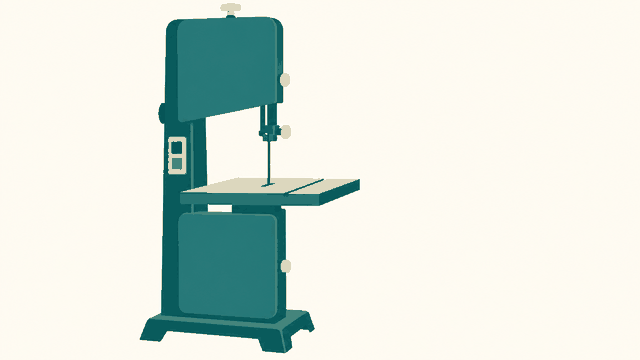
A band saw is the more useful machine when small parts need to be cut from stock. It handles crosscuts, curves, tapers, resawing, and irregular shapes with less waste than a table saw. A 9- or 10-inch benchtop machine is generally adequate for small joinery, provided it has a rigid table, a functional fence, and guides that can be adjusted close to the blade.
For joinery parts, blade choice matters more than maximum horsepower. A 1/4-inch blade with roughly 6 to 10 teeth per inch works well for tight curves in wood. A 1/2-inch blade with 3 to 6 teeth per inch is better for straight cuts and resawing. A narrow blade can turn a tighter radius, but it is easier to deflect and harder to guide accurately.
The main band saw failure mode is drift or blade deflection. Pushing a small part too quickly can make the cut wander by 1/16 inch or more, which is enough to ruin a loose tenon or matching spline. Use a sharp blade, let the teeth cut without force, and leave a small amount of waste for a sanding or trimming pass.
Small workpieces need special attention. Keep fingers at least several inches from the blade and use a push stick, carrier board, or shop-made sled for pieces too small to grip safely. A narrow offcut can catch between the blade and insert, so use a zero-clearance throat insert when practical. Never hand-hold a tiny part while making a cut that ends near the blade.
If cutting parts is the primary task, compare machines in the benchtop band saw category. The cheaper option is fine for occasional pine, plywood, and hardwood parts, but very light machines often have small tables, weak fences, and limited blade tension. Those shortcomings show up quickly when resawing or cutting dense stock.
Where a Drill Press Has the Advantage
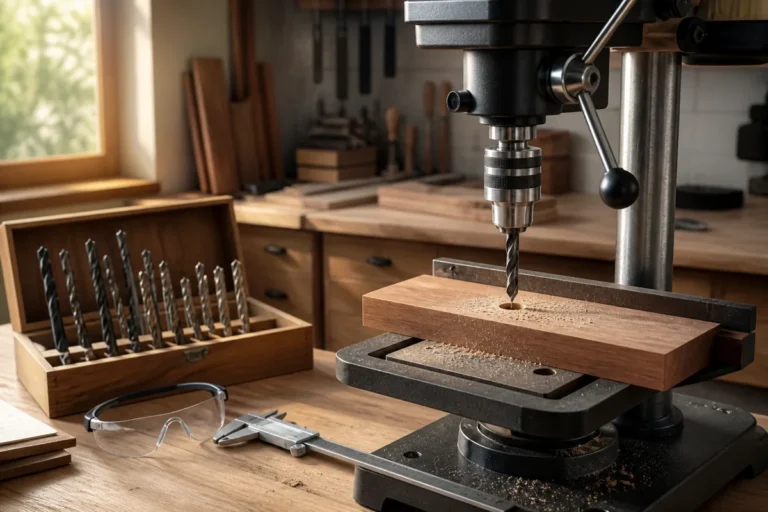
A drill press is the better buy when joinery depends on accurate, repeatable holes. It keeps the bit square to the table, provides a stable platform for a fence or stop, and allows the same hole to be duplicated across multiple parts. That is valuable for dowels, loose-tenon alignment holes, hardware, hinges, and small mortises made by overlapping drilled holes.
For small woodworking, a 10- or 12-inch benchtop drill press is usually enough. Look for a speed range that reaches about 500 rpm for larger Forstner bits and can run near 2,500 to 3,000 rpm for small twist bits. A quill travel of 2 to 3 inches covers most small joinery. A depth stop is more important than extra motor power because it keeps holes consistent.
Drill presses fail most often through poor workholding. A small part can spin violently if a bit catches, especially with a Forstner bit or hole saw. Clamp the work to the table or hold it in a drill-press vise. Do not rely on your hand to resist rotation. Back up through-holes with scrap to reduce blowout, and retract the bit occasionally to clear chips from deep holes.
A drill press can also sand edges with a sanding drum and make overlapping holes for a rough mortise. It should not be used for side-cutting with a standard bit, and ordinary drill bits are not milling cutters. A router or dedicated mortising setup is safer and more accurate for frequent mortise work.
For a machine centered on accurate holes, see a benchtop drill press. A low-cost model is perfectly reasonable for occasional dowel holes and hardware installation if the quill has limited side play and the table locks firmly. Cheap presses often have inaccurate depth stops and flexing columns, so check those before buying.
Band Saw vs. Drill Press
| Task or characteristic | Band saw | Drill press |
|---|---|---|
| Primary job | Cutting profiles, curves, strips, and stock to size | Drilling square, repeatable holes |
| Best joinery uses | Splines, wedges, tenons, curved parts, resawn pieces | Dowels, hardware, alignment holes, overlapping-hole mortises |
| Typical accuracy | About 1/32 inch with a good setup and a finishing pass | Hole location can be repeatable within a few thousandths with a stop and fence |
| Main risk | Blade deflection, drift, and contact with the exposed blade | Workpiece spinning or bit grabbing |
| Useful accessories | Fine blade, resaw fence, push sticks, zero-clearance insert | Drill-press vise, depth stop, brad-point bits, Forstner bits |
| Cheaper machine is acceptable when | You cut thin stock and do not need long resaw cuts | You drill small holes occasionally and can verify the table and quill are rigid |
Which One Should You Buy First?
Buy the band saw first if you make parts from rough boards, need curved profiles, or regularly cut pieces smaller than a table saw can handle safely. It expands what shapes you can produce and makes resawing practical. A table saw can handle many straight cuts, but it is not a comfortable tool for tiny irregular parts.
Buy the drill press first if your projects involve dowel joints, repeated hardware holes, box hinges, or precise perpendicular drilling. It is also the better choice when you already own a table saw or hand tools for cutting parts. For many small shops, the drill press fills a larger accuracy gap than a small band saw.
If the budget allows only one machine and your work is evenly split, choose based on the operation that is hardest to do safely with tools you already own. A handheld drill can make acceptable holes with a guide and careful layout, but it cannot match a drill press for repeatability. A jigsaw can cut curves, but it usually leaves more tear-out and less control than a band saw.
Using Both Machines on One Part
Many joinery parts benefit from both machines. Cut the blank oversize on the band saw, then drill the hole on the drill press while the part still has a flat reference face. Use a fence and stop for repeated pieces. After drilling, return to the band saw for the final profile, leaving about 1/16 inch of waste where the cut must meet a hole or shoulder.
That sequence reduces tear-out and makes parts easier to hold. It also prevents a finished, tiny workpiece from becoming difficult or unsafe to clamp. Mark the reference face, use identical stops for every part, and test the setup on scrap before committing good hardwood.