How to Improve Table Saw Dust Collection Below the Blade
What's inside
As an Amazon Associate I earn from qualifying purchases. This post may contain affiliate links at no extra cost to you.
Most table saws collect dust reasonably well above the blade and poorly below it. The open space around the blade lets chips escape before the cabinet port can draw them in. Improving that collection usually takes two steps: give the saw a closer capture point and make sure the dust collector can move enough air through the whole system.
Contents
Check the existing setup first
Unplug the saw before opening the cabinet. Look for a clogged port, packed sawdust around the blade tilt mechanism, gaps in the cabinet, and a hose that is crushed or sharply bent. A blocked 4-inch port can make an otherwise adequate collector seem useless. Clear the cabinet and check that the blade guard’s dust hose, if fitted, is connected and unobstructed.
Then check the collector’s actual arrangement, not just its advertised horsepower. Long runs, narrow hoses, elbows, and small fittings restrict airflow. A 4-inch hose is a sensible starting point for many cabinet saws; reducing it to 2½ inches for a long run can noticeably weaken collection. Keep the hose as short and direct as your shop allows, and avoid stacking tight bends near the saw.
Add a below-blade capture point
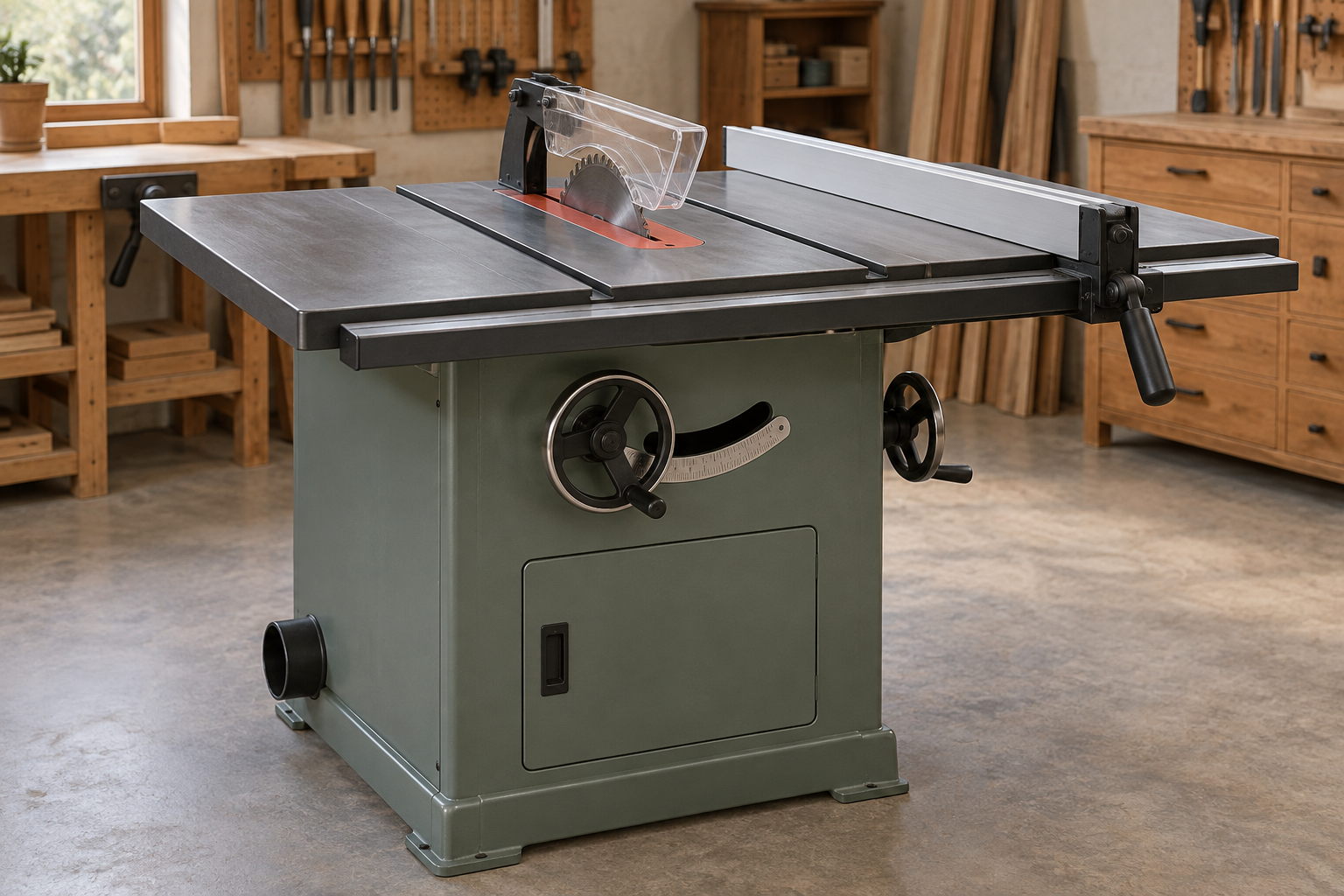
A cabinet saw’s lower blade opening is often the main escape route. A shroud or close-fitting dust hood around the blade can guide falling chips toward the cabinet port. Depending on the saw, that may be a manufacturer-made part, an aftermarket shroud, or a simple sheet-metal or plywood baffle. Before buying or building one, check the saw’s manual and inspect the blade’s full travel at both bevel limits.
The shroud must clear the blade, arbor, trunnions, and tilt mechanism. Leave room for the blade to rise and tilt without rubbing. A tight enclosure that interferes with adjustment is not an improvement. Also avoid sealing the cabinet completely: a collector needs replacement air to flow through the saw. If a shroud blocks too much of the cabinet opening, collection can get worse rather than better.
For a straightforward upgrade, compare table saw dust-collection shrouds with the dimensions and blade arrangement of your saw. Fit varies, so measure before ordering. Some saws have little clearance around the trunnions, making a universal hood difficult to install.
Seal the cabinet with care
Sealing large, unintended gaps can help direct airflow to the blade area and port. Use foam gasket, brush strip, or a removable panel where practical. Pay attention to openings around access doors and the motor, but do not cover cooling vents or moving parts. Keep the door accessible for blade changes and maintenance.
Do not assume that sealing every gap improves suction. A cabinet with too little makeup air may collect poorly, and airflow can pull fine dust through places you did not intend. Make changes in stages: seal one obvious leak, run a short test cut, and inspect both the cabinet and the floor. If chips begin accumulating elsewhere, revise the baffle or leave a controlled air opening.
Choose the right collector and hose
A shop vacuum can be adequate for a compact saw with a small port and occasional use, especially when connected to the blade guard as well as the cabinet. It is less suited to a large cabinet saw producing heavy chip volume. A dust collector with a 4-inch connection generally moves more air through a larger duct, while a shop vacuum typically provides stronger suction through a smaller hose. Neither specification alone tells the whole story; restrictive fittings and filters matter.
| Option | Best fit | Trade-off |
|---|---|---|
| Shop vacuum, often with 2½-inch hose | Small saws, short hose runs, occasional cutting | Easy to move, but can clog with chips and may not capture as much cabinet dust |
| Dust collector with 4-inch hose | Cabinet saws and regular use | Moves more air through larger duct, but takes more space and costs more |
| Dedicated lower shroud plus upper guard pickup | Capturing dust from both sides of the blade | Better coverage when compatible, but adds hoses and setup complexity |
If you need a collector, shop by port size, filter arrangement, and the duct length you can support; a 4-inch woodworking dust collector is a common starting point for a stationary saw. For a small shop vacuum setup, a shop-vac dust separator can keep larger chips out of the vacuum filter. A separator does not increase airflow, though, and adds another container and connection that can leak.
Test and troubleshoot
Run the saw with the collector on and make a short cut in scrap. Keep the guard installed whenever the cut allows it. Check the floor, cabinet, and workpiece afterward. A visible stream of chips from the cabinet door usually points to a leak, blocked port, or shroud that is not directing debris. Fine dust on nearby surfaces can also come from the blade’s upper side; a lower cabinet upgrade will not replace an upper blade-guard pickup.
If performance is weak, check the system in this order: collector filter, hose blockage, port obstruction, loose joints, and excessive hose reduction. A full filter can cut airflow substantially. Confirm that any blast gate is fully open and that the collector is designed for the hose diameter you are using. Avoid relying on a cheap airflow meter or horsepower label as proof of capture; the practical test is whether debris is being pulled into the hood without restricting safe blade movement.
Keep the saw safe
Dust modifications must not obstruct the blade, riving knife, guard, motor cooling, or bevel and height adjustments. Do not reach into the cabinet while the saw is connected to power, and do not use a loose baffle that could contact the blade. Recheck clearance after every change, at 0 and 45 degrees and through the blade’s full height range. If a retrofit makes access awkward or requires removing a safety device, it is the wrong retrofit.