Best Wood Routers for Beginners in 2026
What's inside
As an Amazon Associate I earn from qualifying purchases. This post may contain affiliate links at no extra cost to you.
Contents
Best Wood Routers for Beginners in 2026: Quick Picks
The best wood router for beginners is a variable-speed, 1/4-inch trim router with a clear base, comfortable two-handed control, and tool-free depth adjustment; for most first projects, choose the Makita RT0701C, while the Bosch 1617EVSPK is the better starter kit if you expect to work with larger bits or need both fixed and plunge bases.
Those picks suit different jobs. A compact router is easier to guide along an edge and less tiring for rounding corners, trimming laminate, and cutting shallow grooves. A full-size router offers more power and plunge depth for joinery and larger cutters, but demands a steadier grip and a more secure workpiece. Start with the router that fits the work you expect to do—not simply the one with the highest horsepower.
As an Amazon Associate we earn from qualifying purchases at no extra cost to you.
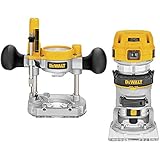

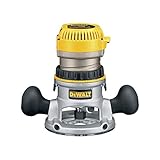

Compare the beginner-friendly options
Specifications below are manufacturer-stated figures; configurations and included accessories can vary by kit. Prices are general U.S. market ranges and may change.
| Router | Collet and speed | Approx. weight | Base and control | Best fit | General price range |
|---|---|---|---|---|---|
| Makita RT0701C | 1/4 in.; 10,000–30,000 rpm | About 3.9 lb | Fixed-base trim router; rack-and-pinion depth adjustment | Edge profiles, flush trimming, light grooves | $100–$160 |
| Bosch PR20EVS Colt | 1/4 in.; 16,000–35,000 rpm | About 3.3 lb | Compact fixed base; microfine depth adjustment | Small workpieces and frequent edge routing | $100–$170 |
| DeWalt DWP611 | 1/4 in.; 16,000–27,000 rpm | About 4.6 lb | Fixed-base trim router; dual LEDs and clear base | Visible edges and controlled trimming | $150–$220 |
| Bosch 1617EVSPK | 1/4 and 1/2 in.; 8,000–25,000 rpm | About 10.8 lb, motor only | Fixed and plunge bases; variable speed | Joinery, deeper cuts, and broader bit choices | $250–$350 |
Choose by the work you actually plan to do
Mostly rounding edges or trimming panels: Makita RT0701C
This corded trim router is a practical all-around starting point for small projects. Its speed range lets you slow down for larger-diameter bits, and its rack-and-pinion mechanism makes it easier to set a repeatable depth than a simple sliding adjustment. The compact body is manageable for edge work, but use both hands where possible and keep the base flat against the work.
Want fine depth adjustments in a small package: Bosch PR20EVS
The Colt is another lightweight corded option for trimming and basic profiling. Its microfine adjustment is useful when a cutter should remove only a thin amount of material, such as when bringing a laminate edge flush. It is not the pick for large cutters, heavy stock removal, or jobs that need a plunge base; buy it for controlled, shallow work.
Prioritize visibility and a well-lit cut: DeWalt DWP611
The DWP611’s clear fixed base and dual LEDs help you see the cutter area, especially when following a template or working near an edge. That visibility can make setup easier, though it does not replace a careful test cut. Its fixed base is straightforward for edge profiles but cannot plunge into the middle of a panel without a suitable plunge base or another safe method.
Expect to make joinery or use 1/2-inch bits: Bosch 1617EVSPK
This full-size kit includes fixed and plunge bases, making it more versatile for dadoes, mortises, and other work that starts within a board. Its 1/2-inch collet accepts a wider range of larger-shank bits than trim routers. The tradeoff is weight: it is more tiring to hold and less forgiving on small pieces. Clamp the work securely and learn on modest cuts before attempting deeper joinery.
Control, safety, and setup matter more than raw power
A router can grab the work and move unexpectedly if the bit engages too much material, the workpiece shifts, or the feed direction is wrong. Before switching on, secure the board, check that the bit is seated and tightened, and confirm the base is locked at the intended depth. Wear eye and hearing protection, connect dust collection when practical, and keep hands away from the cutter path. Unplug a corded router before changing bits or making adjustments.
For ordinary outside-edge routing, feed the router against the bit’s rotation: viewed from above, this generally means moving counterclockwise around the outside of a workpiece. This helps the router resist pulling away from the edge. Make a shallow test cut in scrap of the same material, and take multiple passes rather than forcing a deep cut in one go. Follow the router and bit manufacturers’ instructions, particularly for speed limits and maximum cutting depth.
Base stability is easy to overlook. A broad, flat base is less likely to tip at an edge, while a clear base can improve visibility. On narrow stock, a router base may not have enough support; use a wider auxiliary base or a safer setup rather than balancing the tool partly off the board. A plunge base helps control entry into a panel, but still needs a stable, clamped workpiece.
Bit changes, dust, and ownership costs
Most trim routers use 1/4-inch-shank bits. That is adequate for common round-over, chamfer, and flush-trim work, and the smaller cutters suit a compact tool. Full-size routers that accept 1/2-inch shanks can use many larger cutters, but the shank size must match the collet—never try to force a bit into an incompatible collet. Tighten the collet as instructed, avoid burying the bit’s shank all the way to the bottom, and verify the bit is secure before every cut.
Dust collection is a real difference between models and setups. Some bases accept a dust port or adapter; others may require an accessory or leave more debris at the cut. Fine dust can obscure the line and gets into the router’s vents. A shop vacuum with a compatible port helps, but it will not capture everything, so use suitable respiratory protection and keep the work area clean.
Common ownership issues are often preventable: resin and dust build up around the collet, cutters dull, and loose base adjustments can spoil repeatability. Clean the collet and base periodically, inspect bits for damage, and replace dull cutters rather than compensating by pushing harder. Avoid spraying lubricant into the motor or using solvents unless the manufacturer specifies them. For a router used occasionally, a small set of quality bits is usually a better first purchase than a large assortment of inexpensive cutters.
Decision matrix: match the router to your situation
| Your situation | Best starting choice | Why |
|---|---|---|
| First router, modest budget, mostly edge work | Makita RT0701C | Variable speed and adjustable depth in a compact, corded package |
| Small projects; fine trimming is the priority | Bosch PR20EVS | Lightweight body and fine depth adjustment |
| Work where seeing the cut line is especially important | DeWalt DWP611 | Clear base and built-in LEDs |
| One router for edge work and plunge joinery; room for a larger tool | Bosch 1617EVSPK | Fixed and plunge bases, plus 1/2-inch collet capacity |
Bottom line
For most beginners making shelves, boxes, and small furniture, the Makita RT0701C is the balanced first choice: light enough for edge work, adjustable for different bits, and capable of common shallow cuts. Choose the Bosch 1617EVSPK if you already expect to cut joinery or use larger bits and can accommodate a heavier tool. Whichever you buy, start with a sharp, modest-sized bit, a clamped scrap test, and shallow passes; good setup makes more difference than extra power.