Best Table Saws with Low-Vibration Motor Mounts
What's inside
As an Amazon Associate I earn from qualifying purchases. This post may contain affiliate links at no extra cost to you.
A table saw can have a powerful motor and still cut poorly if vibration reaches the blade. It shows up as a rough edge, rattling inserts, drifting cuts, and a fence that slowly moves out of square. The motor mount is only one part of the problem, but a rigid, accurately machined mount helps keep belt tension and pulley alignment consistent.
For most stationary shops, the best low-vibration setup is a belt-driven induction motor mounted to a heavy cabinet or a hinged motor plate. These saws are quieter and smoother than universal-motor machines, though they cost more and need more floor space. The following choices focus on motor mounting, cabinet mass, serviceability, and realistic value rather than horsepower alone.
Contents
What Makes a Table Saw Low-Vibration
Look for a motor mount that holds the motor squarely while allowing belt tension to be adjusted without twisting the motor. A hinged or slotted steel mount is preferable to a thin stamped bracket. The mount should not flex noticeably when you press on the motor or when the blade enters hardwood.
A heavy cast-iron trunnion assembly also matters. The trunnions control blade tilt and height, and loose or lightly built trunnions can transmit vibration directly into the table. A cast-iron top, enclosed cabinet, and substantial base add mass that absorbs the small pulses produced by the belt and motor.
Even an excellent mount cannot compensate for a damaged belt, bent arbor, dirty pulley, or blade with missing or uneven teeth. A vibration problem that suddenly appears is usually a maintenance issue, not a reason to replace the saw immediately.
Best Saw Types for Low Vibration
| Saw type | Typical motor | Vibration potential | Best use |
|---|---|---|---|
| Cabinet saw | 3 to 5 hp induction | Lowest when properly aligned | Frequent hardwood work and accurate milling |
| Hybrid saw | 1-3/4 to 2 hp induction | Low to moderate | Small shops and serious hobby work |
| Contractor-style belt-drive saw | 1-1/2 to 2 hp induction | Moderate, depending on stand and mount | Lower-cost stationary setups |
| Portable jobsite saw | Universal motor | Usually highest | Mobility and occasional construction work |
Best Overall: Cabinet Saw with Hinged Motor Mount
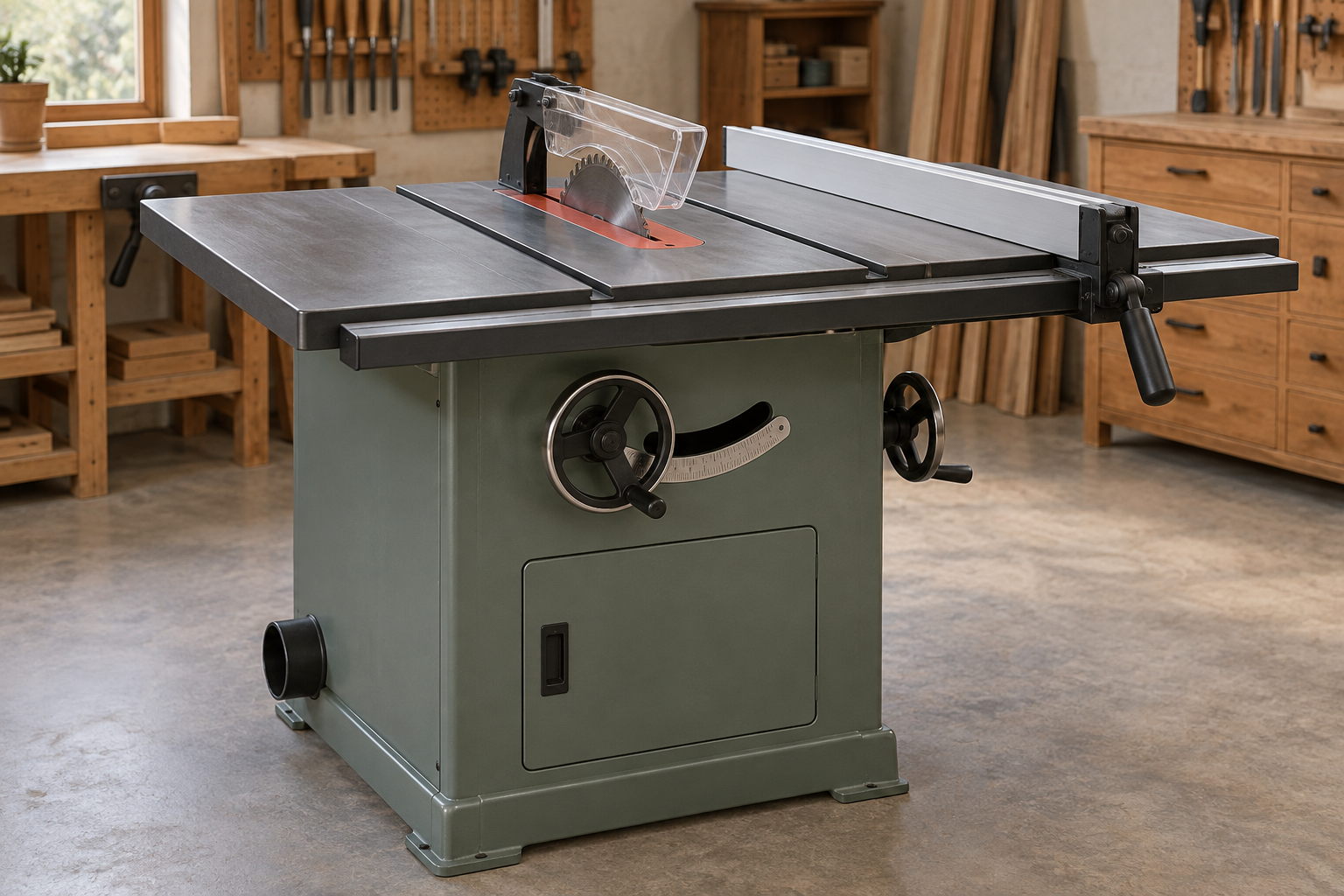
A cabinet saw with a 3 hp induction motor is the strongest choice when low vibration is the priority. The motor is commonly mounted inside the cabinet on a hinged or pivoting plate. Its weight helps maintain belt tension, while the cabinet gives the whole assembly a stable base.
Choose a 3 hp cabinet table saw with an induction motor if you regularly cut thick maple, oak, or plywood panels. A 3 hp saw typically runs on 240 volts and draws roughly 12 to 14 amps, depending on the motor. That circuit requirement is a real installation cost, but it avoids the voltage drop that can make a large motor start sluggishly.
The trade-off is price, weight, and limited portability. A cabinet saw can weigh 400 to 600 pounds, and moving it may require a mobile base or lifting equipment. It is also less forgiving of a poor floor. If the base rocks, the saw can still vibrate even when the motor mount is excellent.
Best Value: Hybrid Saw with a Belt-Drive Motor
A hybrid saw is usually the sensible choice for a home shop. It offers an enclosed or semi-enclosed cabinet, a cast-iron table, and an induction motor without the cost of a full cabinet saw. Many use a 1-3/4 or 2 hp motor and run on a standard 120-volt circuit.
Look for a hybrid table saw with a cast-iron top and induction motor that uses a standard V-belt or link belt and has an accessible motor plate. A good hybrid saw should start without excessive shaking and should not make the cabinet buzz at idle.
This is where the cheaper option is often fine. If you cut mostly 3/4-inch plywood, softwood, and boards under 2 inches thick, a 2 hp hybrid saw can deliver clean, steady cuts. You give up some feed-rate capacity and may find the trunnions less convenient to adjust from above, but the finished cut can be just as good after alignment.
When a Contractor-Style Saw Is Enough
A belt-drive contractor-style saw can be a good buy when budget matters. Its motor is often mounted at the rear, exposed beneath the table, with the motor weight providing belt tension. This arrangement can run smoothly, but the open stand is less effective at damping vibration than a cabinet.
Choose a belt-drive contractor table saw with a cast-iron table if you need a stationary saw but do not process hardwood all day. Replace a thin factory stand with a rigid base or add leveling feet. A stand that twists can create more vibration than the motor itself.
Do not choose this type solely by horsepower. A smooth 1-1/2 hp motor with a properly aligned belt is preferable to a nominally stronger motor on a flexible bracket. Contractor saws also tend to transmit more noise and dust because the motor and pulley are exposed.
Setup and Maintenance That Prevent Vibration
Before judging a new saw, remove the blade and spin the arbor by hand. It should turn freely without tight spots. Install the blade, run the saw empty, and check for movement at the blade plate and fence. A visible wobble greater than about 1/32 inch at the blade rim deserves investigation.
Check that the motor and arbor pulleys are in the same plane. A straightedge laid across the pulley faces should contact both without a noticeable gap. Set belt tension according to the manufacturer’s instructions; as a rough check, a conventional V-belt should deflect slightly under moderate finger pressure, not hang loose or feel guitar-string tight.
Clean pitch and sawdust from the pulleys, inspect the belt for glazing or cracks, and tighten cabinet fasteners after the first few hours of use. Replace a damaged belt rather than trying to compensate by over-tightening it. Excess tension can damage arbor bearings and make the saw louder.
Finally, use a blade suited to the material and keep it sharp. A dull blade forces the motor to work harder, increases vibration at the cut, and can make a well-mounted saw appear defective.