Best Table Saws with Low-Vibration Belt Drives
What's inside
As an Amazon Associate I earn from qualifying purchases. This post may contain affiliate links at no extra cost to you.
Contents
What a belt drive does—and doesn’t—tell you
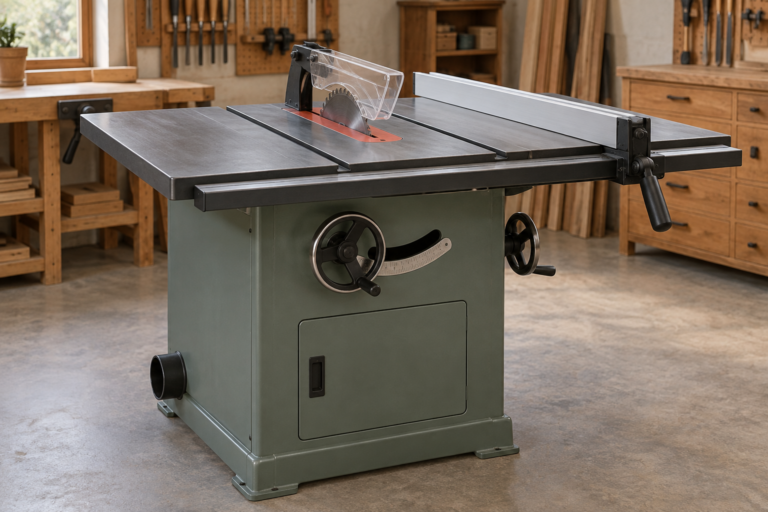
A belt-drive table saw uses a motor mounted separately from the arbor, transmitting power through one or more belts. That arrangement is common on cabinet saws and some contractor saws. It can help isolate motor vibration from the blade, but it does not guarantee a quiet, smooth-running saw. A poorly aligned pulley, worn belt, bent arbor, or unbalanced blade can still make the whole machine shake.
For low vibration, look at the complete setup: a heavy, rigid cabinet; sound bearings; aligned pulleys; a suitable belt; and a flat, balanced blade. A belt drive is most useful when you want a stationary saw with enough power for frequent ripping and room to service or replace drive components. If you make occasional cuts in a small shop, a direct-drive jobsite saw may be cheaper and perfectly adequate.
As an Amazon Associate we earn from qualifying purchases at no extra cost to you.

How to choose a steady saw
Check the arbor and motor specifications before comparing marketing claims. Many full-size saws use a 10-inch blade and a 5/8-inch arbor, but verify the manual for any saw you consider. A 3-horsepower cabinet saw typically needs 220–240-volt power and a suitable circuit; a 1½-horsepower saw may run on a standard 120-volt circuit, depending on the model. Do not assume a plug can be changed to match your outlet.
Mass helps resist movement, but it cannot correct a misaligned machine. A heavy cabinet saw on an uneven floor can rock; level its feet and anchor or stabilize it as the manufacturer directs. For vibration troubleshooting, first unplug the saw, then inspect the blade, arbor flange, belt condition, and pulley alignment. Never reach near a moving belt or blade to diagnose a shake.
Choose a fence and table that fit your work, too. A stable fence that locks parallel to the blade matters more for accurate ripping than an extra fraction of horsepower. For large sheet goods, plan for outfeed support and enough floor space to handle the material safely.
Belt-drive options compared
| Category | Best fit | Typical trade-off |
|---|---|---|
| Cabinet saw | Frequent ripping, hardwood work, and a permanent shop | Heavy, expensive, and often requires 220–240-volt power |
| Contractor-style belt-drive saw | Smaller shops that need a stationary saw without a full cabinet-saw footprint | Less mass and usually less capacity or power than a cabinet saw |
| Direct-drive jobsite saw | Occasional work, portability, or a tight budget | More motor noise and generally less isolation from motor vibration |
A cabinet saw is the straightforward choice when the saw will stay installed and handle long ripping sessions. Compare belt-drive cabinet table saws by motor voltage, fence quality, available parts, and the footprint you can accommodate—not by weight alone.
Belts, adjustment, and common problems
Many belt-drive saws use a V-belt; some use link-style belts. A link belt can sometimes reduce vibration compared with an old, stiff belt, but it is not an automatic upgrade for every saw. Use the belt type and tension specified by the manufacturer. An overtightened belt can load motor or arbor bearings; a loose belt can slip under a heavy cut, heat up, and wear quickly.
Common clues point to different faults. A thump once per blade revolution may indicate a blade problem or debris on the arbor flange. A steady buzz that changes with motor speed can come from the motor, belt, or pulleys. Vibration that appears mainly during cutting may be caused by a dull blade, feed pressure, or a binding workpiece rather than the drive. Stop the saw if the blade wobbles visibly, a belt smokes, or the cabinet moves during a cut.
Before a first cut, follow the manual’s setup procedure: verify the blade is secure, check that the fence locks reliably, and confirm the riving knife and guard fit the blade. Disconnect power before removing covers or adjusting the drive. Replace cracked or glazed belts rather than trying to compensate by increasing tension.
When a less expensive saw is enough
If you cut plywood, trim, or occasional softwood parts, you may not benefit enough from a cabinet saw to justify its cost, electrical work, and space. A well-adjusted jobsite saw can produce accurate results with a sharp, appropriate blade and a solid stand. Its lighter frame may transmit more vibration, but careful setup and sensible cut depth help; use a push stick and support long stock rather than forcing a cut.
For a stationary middle ground, consider a belt-drive contractor table saw. It can suit a one-car shop where a cabinet saw is too large, though fence travel, table support, and motor capacity vary substantially. If portability matters more than belt isolation, compare 10-inch jobsite table saws instead.
Before buying any used saw, run it only after checking its safety equipment and condition. Listen for rough bearing noise, watch for blade runout, and inspect the belt and pulleys with the power disconnected. A low price is less attractive if the fence is damaged, replacement parts are unavailable, or the saw needs electrical work. Choose the lightest, least expensive machine that can handle your stock safely and repeatedly; buy more saw only when the work demands it.