Best Table Saws with Low-Vibration Cast-Iron Bases
What's inside
As an Amazon Associate I earn from qualifying purchases. This post may contain affiliate links at no extra cost to you.
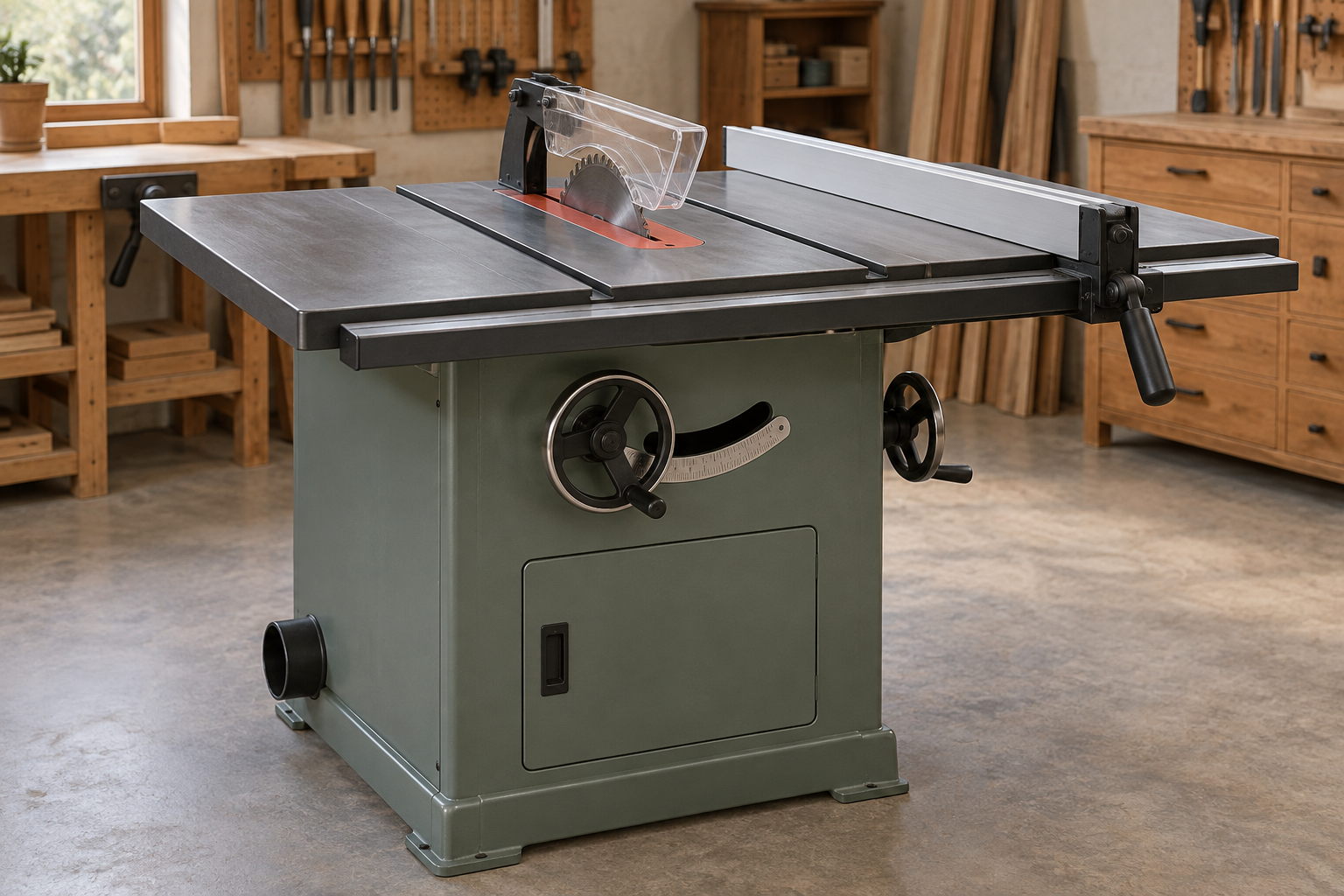
A low-vibration table saw is easier to control, produces cleaner cuts, and is less tiring to use for long periods. It also makes fewer demands on dust collection and blade alignment. The important detail is that “cast-iron base” is often used loosely in product listings. Most quality stationary saws have a cast-iron table and cast-iron trunnions, while the cabinet or stand underneath is usually welded steel. That combination is what provides useful mass and stiffness.
For a shop saw, look for a heavy cast-iron top, enclosed steel cabinet, substantial trunnions, and a motor mounted so vibration does not transfer directly into the work surface. A thin stamped-steel stand can still support a good saw, but it will not damp vibration as well as a fully enclosed cabinet.
Contents
What Makes a Table Saw Low-Vibration?
Weight is the starting point. A saw weighing roughly 250 to 400 pounds is usually much steadier than a 100-pound jobsite machine, especially when ripping hardwood or cutting thick stock. The mass resists movement, but it does not fix every vibration problem. A bent arbor flange, poorly balanced blade, loose belt, or misaligned pulley can make a heavy saw shake.
Cast-iron trunnions matter because they hold the arbor assembly in a rigid position as the blade is raised, lowered, or tilted. Look for trunnions that are bolted securely to the cabinet or table, not thin brackets that flex when the blade encounters resistance. A serpentine or multi-rib drive belt is generally smoother than a narrow, poorly tensioned V-belt, although belt condition and pulley alignment matter more than the marketing term.
The floor is part of the system. A saw placed on an uneven concrete floor can rock even when the machine itself is well built. Level the feet, tighten every cabinet and motor bolt, and check that the extension wings sit flush with the main table. Do not use soft foam or thick rubber under a heavy saw; it can make the machine feel unstable and allow the cabinet to move during a cut.
Best Table Saw Types for Low Vibration
| Type | Typical weight | Vibration control | Best use | Main compromise |
|---|---|---|---|---|
| Cabinet saw | 250–450 lb | Excellent when properly assembled | Frequent hardwood work and furniture making | Cost, space, and installation |
| Hybrid saw | 200–350 lb | Very good for most small shops | Serious hobby work and remodeling | Less powerful or rigid than premium cabinet saws |
| Contractor saw with cast-iron top | 120–250 lb | Good if the stand is braced | Limited-space shops and moderate workloads | More exposed motor and greater sensitivity to stand movement |
| Jobsite saw | 50–100 lb | Fair to poor compared with stationary saws | Portable work and occasional cuts | More noise, movement, and smaller work support |
For the lowest vibration, start with cabinet table saws with cast-iron tables. These are the most stable choice when the saw will remain in one location and you regularly rip 8/4 lumber, sheet goods, or long hardwood boards.
Cabinet Saws: The Most Stable Choice
A cabinet saw is the right category when vibration control is more important than portability. Its enclosed base lowers the center of gravity and protects the motor from loose offcuts and dust. A 3-horsepower motor is useful for repeated thick hardwood cuts, but a 1-3/4 to 2-horsepower saw is adequate for many home shops, especially with a sharp blade and a sensible feed rate.
Expect to spend time setting one up. The table must be level, the blade must be parallel to the miter slot, and the fence must lock without shifting. Check alignment at the front and rear of the blade with a dial indicator or a reliable straightedge. A difference of more than about 0.003 to 0.005 inch is worth correcting. Misalignment can cause burning, wandering cuts, and kickback; it is not a vibration issue alone.
Cabinet saws are not automatically quiet. A damaged belt, loose arbor nut, or blade with resin buildup can produce a rhythmic vibration at several hundred revolutions per minute. If the blade wobbles, remove it and inspect the blade, washers, and arbor flange before using the saw again.
Hybrid Saws: The Sensible Middle Ground
A hybrid table saw usually combines a cast-iron top and enclosed or partly enclosed cabinet with a smaller motor. It is often the best value for a home woodworker who wants stationary-saw stability without paying for industrial capacity. Search for hybrid table saws with cast-iron tops when comparing options.
The cheaper option is fine when you cut mostly 3/4-inch plywood, pine, poplar, and occasional hardwood. You may not notice a practical difference between a midrange hybrid and a premium cabinet saw for short cuts. The difference becomes clearer during long rips, repeated thick-stock work, or when the saw is used several hours a week.
Check the stand carefully. Some hybrid saws have a light cabinet with thin access panels that resonate like a drum. Adding properly fitted panels, tightening fasteners, and keeping the dust port sealed can reduce noise, but it will not turn a flexible cabinet into a commercial saw.
Setup and Maintenance That Prevent Vibration
Install a blade suited to the material rather than using a cheap general-purpose blade for everything. A dull blade forces the motor to work harder and increases the chance of burning and kickback. Clean pitch from the blade periodically, and replace belts that are glazed, cracked, or stretched.
After moving the machine, recheck the fence, miter slot, and blade alignment. Lubricate height and tilt mechanisms with a dry lubricant that does not attract sawdust. Keep the cabinet clear of offcuts, because a small piece trapped near the belt can create an intermittent knock.
If portability matters more than absolute stability, a braced contractor saw with a heavy-duty mobile base is a reasonable compromise. Lock the casters before cutting and avoid thin, springy stands. For a permanent shop, however, a properly leveled hybrid or cabinet saw remains the safer low-vibration choice.