Best Table Saws with Adjustable Outfeed Support
What's inside
As an Amazon Associate I earn from qualifying purchases. This post may contain affiliate links at no extra cost to you.
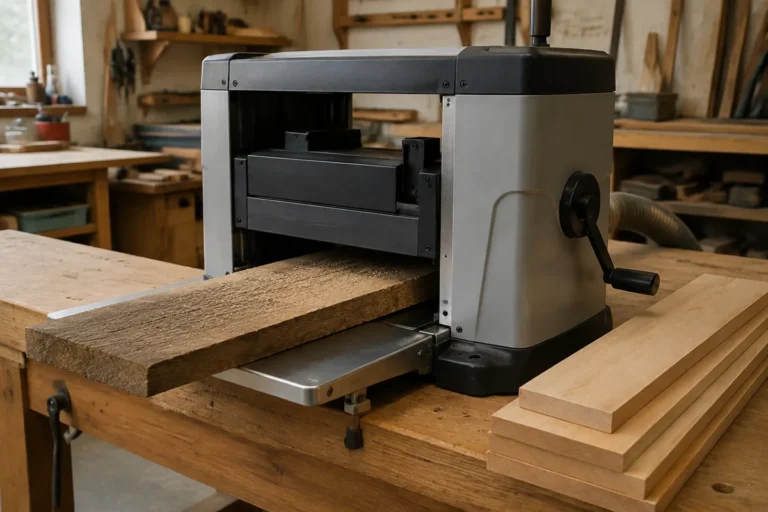
A table saw’s outfeed support has one job: keep a long or heavy workpiece from tipping as it clears the blade. That matters most when ripping sheet goods, long boards, or thick stock alone. The support must be level with the saw table, stable under load, and positioned so it does not snag the workpiece.
Some saws include a folding or telescoping outfeed table; others rely on a separate roller stand or shop-built extension. The best choice depends on how often you cut large stock, how much floor space you can spare, and whether you need support that moves with the saw.
Contents
Quick comparison
| Setup | Best for | Main trade-off |
|---|---|---|
| Cabinet saw with integrated outfeed table | Frequent, accurate cutting in a permanent shop | High cost and a large footprint |
| Contractor saw with folding outfeed support | Regular work in a space that must be cleared | Support area and rigidity vary by design |
| Portable jobsite saw with a separate stand | Occasional long cuts or mobile work | Stand setup takes time; rollers can steer the stock |
| Fixed saw with a shop-built extension | Woodworkers comfortable measuring and adjusting | Requires space and careful alignment |
What adjustable outfeed support should do
“Adjustable” can mean a folding table, a sliding extension, or a stand with height adjustment. In each case, the support surface should be set close to flush with the saw table. A small difference matters: a support set too low lets the board dip, while one set too high can catch the trailing edge and interrupt the feed.
For a fixed table, aim for flush or just a fraction below the saw surface. Check it with a straightedge across the joint, then feed a scrap board through with the saw unplugged. The board should move without rocking or catching. Recheck after moving a folding support; hinges can develop play, and locking hardware can leave the surface slightly out of level.
Width and depth matter as much as height. A narrow support may steady a board but do little for a full 4-by-8-foot sheet. Outfeed support also does not replace infeed help: long stock needs control before it reaches the blade, and a helper or suitable infeed support may be necessary.
Best for permanent shops: cabinet saws with integrated support
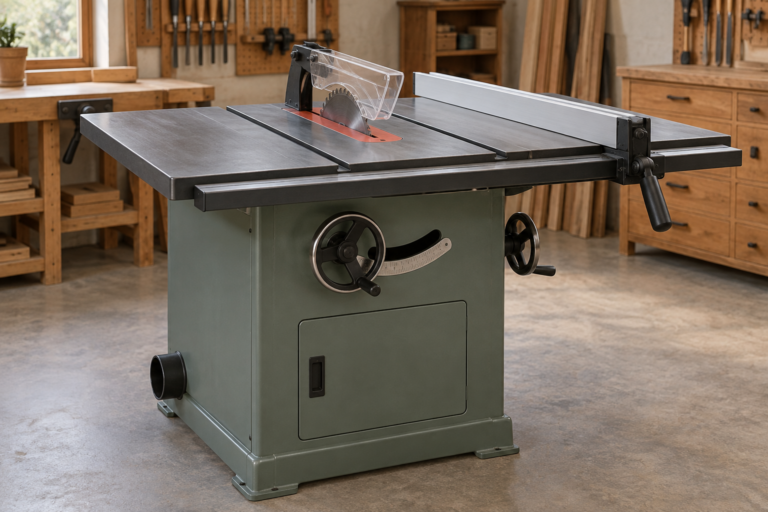
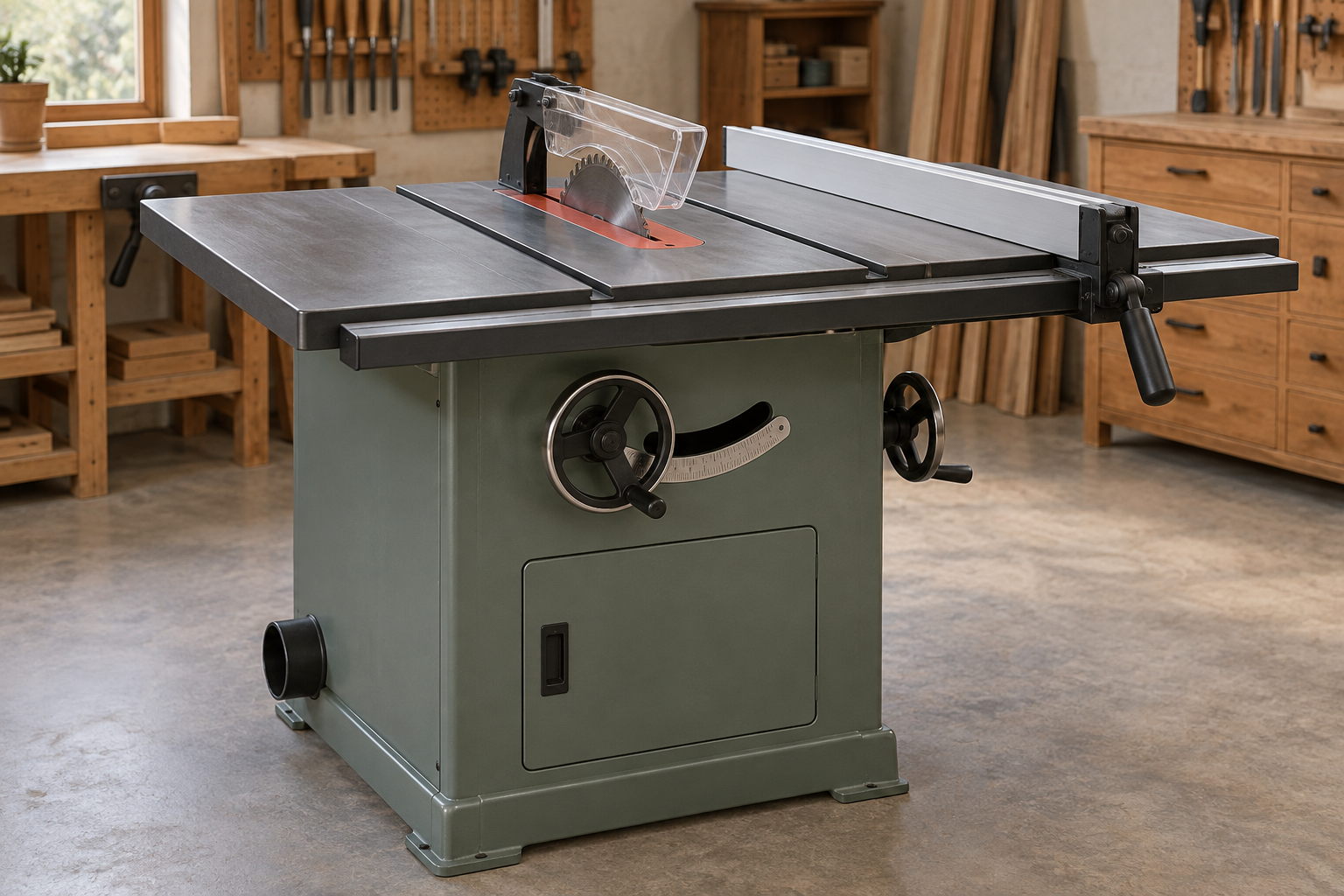
Cabinet saws make sense when the saw stays in one place and large work is routine. Their mass helps resist movement, and an attached extension can give you a continuous surface behind the blade. Look for a support that locks firmly and has adjustment points accessible without dismantling the saw. A larger table costs more and consumes floor space, but it is usually more stable than a light roller stand.
Before buying, check the actual extension dimensions and the total footprint with the support open. A table that looks generous in a product photo may still leave a long board unsupported. For a permanent setup, compare cabinet table saws and outfeed tables. Do not assume an extension is included; package contents differ.
Best space-saving choice: folding outfeed support
A folding support suits a small shop where the saw must be stored or the floor cleared. It is quicker than setting up a separate stand each time, and it stays in a known position relative to the saw. The compromise is usually a smaller support surface and a hinge or latch that needs periodic checking.
When comparing saws, inspect how the support locks and whether it can be adjusted independently. A latch that is hard to reach encourages people to leave the table partly deployed or use it unlocked. Also check the folded footprint and whether the support blocks access to the fence, dust port, or storage. A contractor table saw with folding outfeed support is a reasonable middle ground for regular shop work without room for a full extension.
Portable saws: when a separate stand is enough
If you cut long stock only occasionally, a portable saw and a stable stand can be the better value. The saw is easier to move, and you can store the support separately. Adjustable roller stands are inexpensive, but their rollers can turn a board sideways, especially if the stand is not square to the feed path. A broad, flat support is often easier to control for sheet goods.
Set the stand on a firm floor and adjust its height under the actual load. A lightweight stand may sag when a heavy board lands on it; a stand that is level unloaded can end up low under pressure. For a mobile setup, compare portable table saws and outfeed stands. If you already own a saw, buying a separate support is often cheaper than replacing it.
Shop-built extensions: low cost, but measure carefully
A shop-built outfeed table can be a good option for a saw that rarely moves. A flat plywood top on a rigid frame is simple to make, and its width and depth can be tailored to the work. The critical details are a level joint with the saw table, solid attachment, and clearance for the blade guard, fence, and dust collection.
Do not build the support so high that it lifts the workpiece off the saw table, or so wide that it catches the board’s edge. Check for sag across the span; a top that deflects under a 20-pound board can cause a cut to bind or wander. Keep the saw’s safety features accessible, and never use an outfeed table as a reason to reach over the blade to retrieve stock.
Buying and setup checklist
Measure the longest and heaviest stock you commonly cut, then check the support’s open dimensions and load stability. Confirm that the support locks securely, can be adjusted to the saw table, and does not obstruct normal controls. In use, keep the workpiece moving at a steady pace, stand out of the likely kickback path, and use a push stick or push block when the cut requires one. If the stock still tips, shifts, or binds, stop and correct the support or add a helper rather than trying to muscle it through.