Best Table Saws for Cutting Full Sheets of Plywood Safely
What's inside
As an Amazon Associate I earn from qualifying purchases. This post may contain affiliate links at no extra cost to you.
Cutting a full 4-by-8-foot sheet on a table saw is mainly a support and control problem. A table saw can make accurate cuts, but the sheet is awkward, heavy, and large enough to tip or pull away from the fence. For most shops, the safest purchase is not simply the saw with the most horsepower: it is a saw paired with a reliable outfeed setup and enough infeed support to keep the panel level.
As an Amazon Associate we earn from qualifying purchases at no extra cost to you.

Contents
What to buy for sheet goods
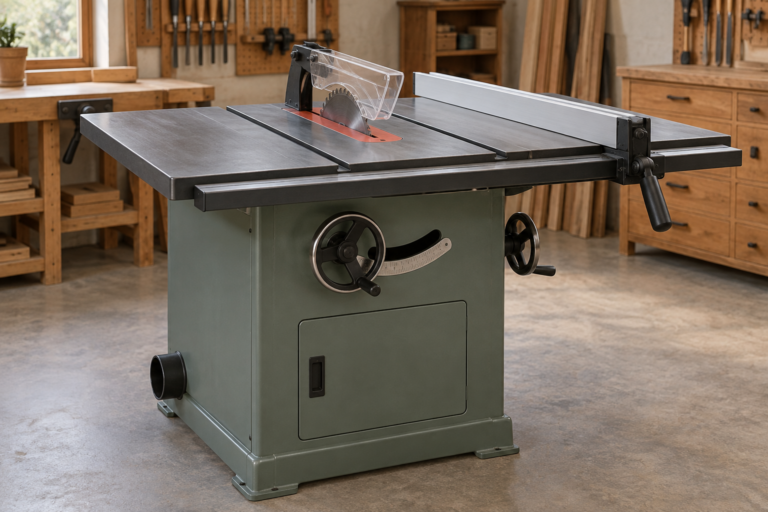
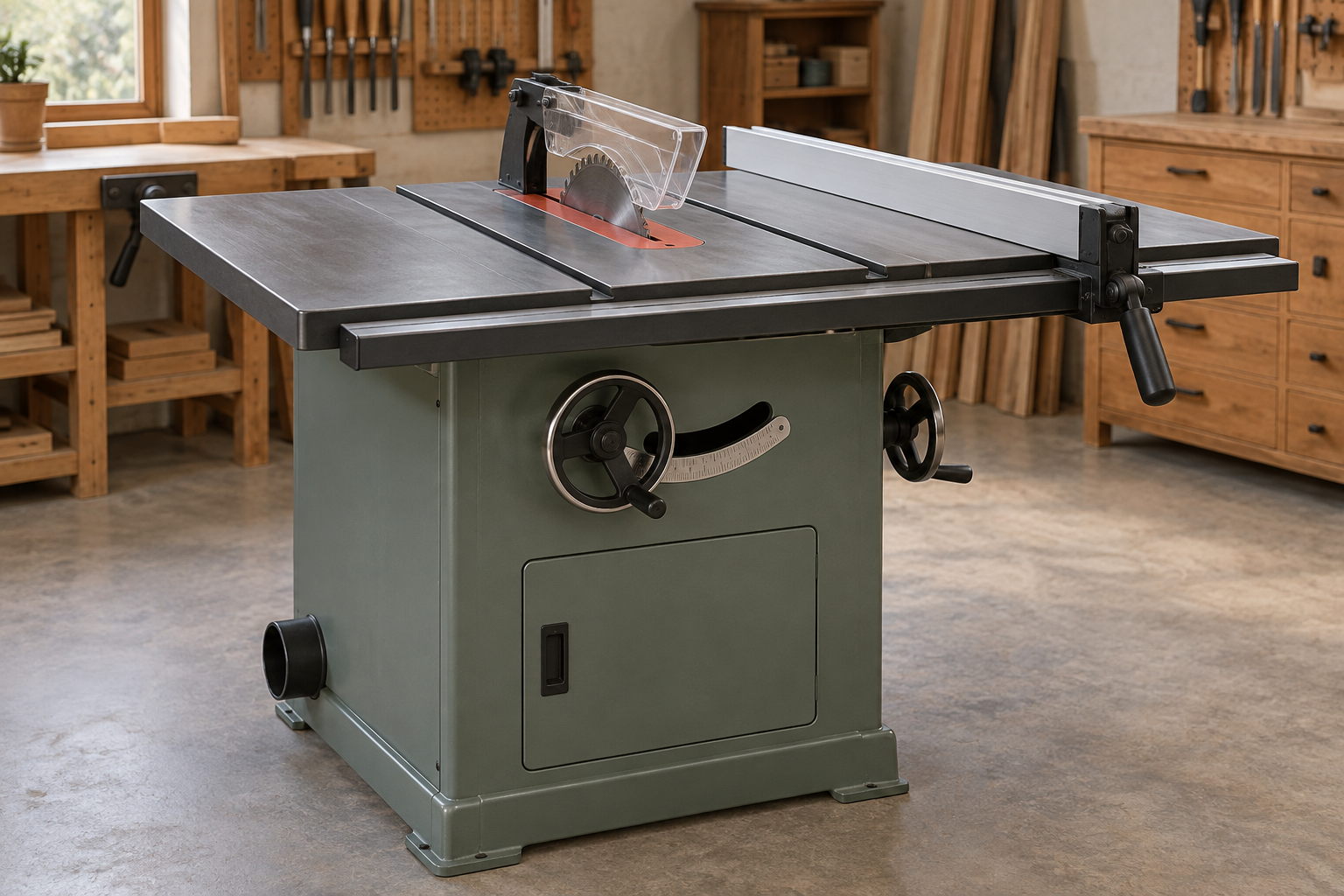
A cabinet saw with a 50-inch rip capacity offers a solid mix of stability, power, and room for common sheet cuts. Its cast-iron top and heavier base are less likely to shift under a large panel than a lightweight jobsite saw. The trade-off is price, floor space, and the need for a suitable electrical supply; many cabinet saws require 240-volt power.
A hybrid saw is a sensible middle ground for a home shop. It generally has more mass and a larger working area than a portable saw without the cost and power requirements of many cabinet saws. Check the actual rip capacity and fence extension: a large table does not automatically mean the saw can rip a 48-inch-wide panel in one pass.
A jobsite saw can work if budget and storage space matter most. It is typically lighter and easier to move, but the smaller table makes full sheets harder to control, and its stand or tabletop may flex or shift. For this job, plan on adding solid support and using a helper or a different breakdown method. Compare hybrid table saws with long rip fences and jobsite saws with rolling stands against your available space, power, and support equipment.
Compare saw types
| Saw type | Typical advantage | Sheet-cutting limitation | Best fit |
|---|---|---|---|
| Cabinet | Mass, power, and stable table | High cost, heavy, often 240 V | Frequent work in a dedicated shop |
| Hybrid | Good balance of capacity and footprint | Capacity and motor vary by model | Regular home-shop use |
| Jobsite | Lower cost and portability | Small support area; may need a helper | Occasional cuts or limited space |
Rip capacity is the maximum distance from the blade to the fence, usually measured on the right side. A 50-inch capacity is useful for ripping a 48-inch panel, but the fence setting alone does not make that operation safe. You still need to support the material before, during, and after the cut.
Features that matter more than horsepower
Look for a fence that locks parallel to the blade and stays put when pushed at its far end. A fence that moves or skews can pinch the workpiece against the blade and cause kickback. Check the saw’s manual for how to verify alignment; do not assume a new saw is perfectly adjusted straight out of the box.
A riving knife is essential for routine ripping. It follows the blade’s height and helps keep the kerf from closing onto the back of the blade. Keep the blade guard installed when the cut allows it. Also check that the saw has a working blade brake or other safety system only if it is important to your needs; these features do not replace sound technique or guarding.
For sheet stock, a large outfeed table or sturdy roller support can prevent the panel from dropping as it exits the blade. Rollers must be set level with the saw table and positioned so they do not steer the sheet sideways. A wide, flat support surface is often easier to manage than a narrow roller stand, which can let a panel twist.
How to cut a full sheet more safely
First, confirm the panel is flat and the saw is stable. A bowed sheet can rock on the table or bind during the cut. Set the blade only slightly higher than the material—about 1/8 inch above the top surface is a common starting point—and use a sharp, appropriate blade. A dull or unsuitable blade increases feed pressure and can burn the edge or encourage the panel to catch.
For a full sheet, use a helper who understands the cut, or break the panel down with a track saw or circular saw and a straight guide before bringing smaller pieces to the table saw. Do not try to balance a 4-by-8 sheet on a small saw alone. Arrange infeed and outfeed support so the sheet remains level, and keep the helper focused on supporting the stock rather than pushing it toward the blade.
Stand slightly to one side of the blade’s line, keep hands away from the blade path, and use a push stick or push block once the work reaches the fence. Never reach over or behind a moving blade to retrieve offcuts. Do not freehand a cut: the rip fence guides a rip, while a miter gauge or crosscut sled guides a crosscut. Using the fence and miter gauge together for a crosscut can trap the offcut and trigger kickback.
Common failure modes
The most serious mistake is allowing the far end of a sheet to sag. That can rotate the panel into the blade, pinch the cut, and pull the workpiece or operator forward. Another is forcing a sheet that has started to bind. Stop the saw, wait for the blade to stop completely, and correct the support or alignment before continuing.
Also check the fence lock, blade alignment, and guard before a long rip. If the panel is too large to control without leaning over the saw, or the shop cannot provide level support on both sides, choose a safer method. A track saw is often the more practical way to make the first cut in a full sheet; a table saw is then useful for bringing the rough-cut pieces to final width.