10-Inch vs 12-Inch Table Saw Blades for Resawing Thick Lumber
What's inside
As an Amazon Associate I earn from qualifying purchases. This post may contain affiliate links at no extra cost to you.
Contents
The short answer
A 10-inch blade is the practical choice for most table saw owners. It is widely available, relatively affordable, and gives a typical 10-inch saw enough capacity for ordinary resawing jobs—provided the board is not too thick for the saw’s stated cutting depth. A 12-inch blade can cut deeper, but only on a saw designed for it. It is not an upgrade you can safely fit to a standard 10-inch table saw.
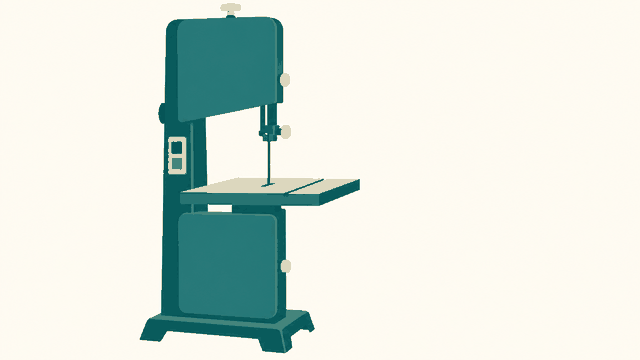
For tall, repeated resaw cuts, a band saw is usually the better machine. A table saw resaw cut puts a lot of load on the blade and motor, and the exposed blade height can make the work less forgiving. Check your saw’s manual and use a suitable fence, push devices, and a plan for controlling the workpiece before starting.
As an Amazon Associate we earn from qualifying purchases at no extra cost to you.
What resawing means on a table saw
Resawing is splitting a board lengthwise through its thickness, often to make two thinner boards. The cut is demanding because the blade stays in the wood for a long time. A dull or unsuitable blade can wander, burn the lumber, or overload the saw. Thick stock also leaves less room for error if the board twists or pinches the blade.
Before choosing blade diameter, check the saw’s maximum cutting depth at 90 degrees, the arbor diameter, and the blade diameter listed in the manual. A 10-inch blade commonly cuts about 3 to 3-1/8 inches deep, though the exact figure varies. A 12-inch blade may reach roughly 4 inches, but that figure is not universal. The saw’s design—not the blade alone—sets the usable capacity.
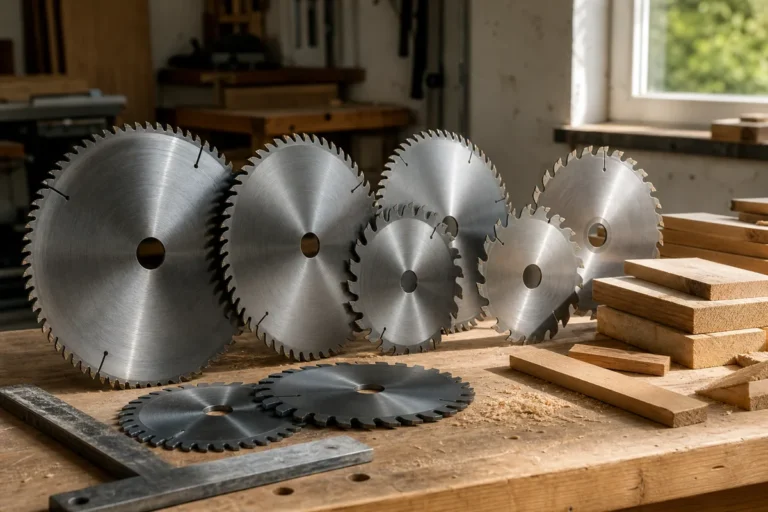
10-inch vs. 12-inch blades
| Factor | 10-inch blade | 12-inch blade |
|---|---|---|
| Typical use | Most cabinet, contractor, and jobsite table saws | Large saws specifically designed for 12-inch blades |
| Cut depth | Often around 3 to 3-1/8 inches at 90 degrees | Can approach 4 inches on compatible saws |
| Availability and cost | Broad selection; generally less expensive | Fewer choices and often higher cost |
| Compatibility | Fits saws rated for 10-inch blades | Use only when the saw manufacturer permits it |
| Best reason to buy | Routine work within the saw’s capacity | Extra depth on a saw built to handle the larger blade |
A larger blade does not automatically make a cleaner or safer cut. It needs a compatible arbor, guard, riving knife, throat plate, and enough clearance inside the cabinet. Do not install a 12-inch blade on a 10-inch saw just to gain reach. The arbor, motor, blade guard, and clearances may not be designed for it, and the blade may turn at a speed or under conditions its maker did not approve.
Choose the right blade, not just the diameter
For ripping thick lumber, look for a sharp rip blade with a low tooth count, typically around 24 teeth on a 10-inch blade. Fewer, larger teeth clear chips more readily than a fine crosscut pattern. A thin-kerf blade removes less material and can reduce load on a modest saw, but it may be more prone to deflection in a long, deep cut than a sturdy full-kerf blade. Follow the saw manufacturer’s limits for blade thickness and riving-knife compatibility.
For frequent resawing, compare 10-inch, 24-tooth table-saw rip blades by kerf, plate stiffness, and sharpening availability. A premium blade is not a cure for a saw with insufficient power or a warped board. The cheaper sharp blade is fine for occasional work if it is appropriate for ripping and runs true.
Capacity, setup, and safety
Measure the actual board thickness and compare it with the saw’s published maximum cut depth. If the piece is taller than the blade can pass through in one setup, do not improvise a second cut by flipping the board unless the saw maker’s guidance and your setup allow a controlled, repeatable cut. Misaligned cuts can leave a ridge, bind the blade, or create a dangerous trapped offcut. For stock beyond the saw’s safe capacity, use a band saw or have the lumber processed elsewhere.
Inspect the board for nails, screws, loose knots, twist, and bow. A board that will not sit flat against the table and fence is a poor candidate for a table-saw resaw cut. Use a tall auxiliary fence when needed to support the board, and keep the workpiece pressed firmly against both the table and fence. Do not freehand the cut or stand directly behind the board where kickback would travel.
Use the riving knife and blade guard when they can be fitted for the operation. If the guard cannot be used, follow the saw manual’s procedure and use appropriate push blocks or push sticks; keep hands away from the blade path. Make sure the fence is parallel to the blade as specified by the manufacturer. If the motor slows sharply, the blade burns the wood, or the cut begins to close, stop the saw and investigate rather than forcing the feed.
When a band saw is the better buy
A band saw is generally more suitable for regularly splitting thick boards. Its narrow blade wastes less wood, and it can handle cuts deeper than most table saws, subject to the machine’s capacity. The trade-off is that blade drift and surface finish need attention: you may have to resaw slightly oversize and flatten the faces on a planer or with hand tools. If resawing is an occasional task and your table saw already has enough capacity, a suitable rip blade is the lower-cost route. For recurring work above about 3 inches, compare a capable band saw and blade against the cost and limitations of a larger table saw; a woodworking band saw for resawing may be the more useful investment.
A straightforward buying decision
Choose a 10-inch rip blade if your saw is a standard 10-inch model, the lumber fits its rated depth, and resawing is occasional. Choose a 12-inch blade only when the saw was designed and rated for that size and you have a real need for the extra capacity. If thick-board resawing is frequent, a band saw is usually a better tool for the job. In all three cases, a sharp blade, stable stock, correct setup, and a cut within the machine’s stated limits matter more than the diameter printed on the blade.