Best High-Quality Router Bits for Clean Woodworking Cuts
What's inside
- Quick picks by woodworking situation
- What separates high quality router bits from ordinary ones
- Bearing quality is part of cutting quality
- Profile accuracy and material-specific performance
- How to choose a bit that will last
- Setup and maintenance that protect the investment
- Are premium router bits worth the cost?
- Bottom line
- Related Guides
- Quick picks by woodworking situation
- What separates high quality router bits from ordinary ones
- Bearing quality is part of cutting quality
- Profile accuracy and material-specific performance
- How to choose a bit that will last
- Setup and maintenance that protect the investment
- Are premium router bits worth the cost?
- Bottom line
- Related Guides
As an Amazon Associate I earn from qualifying purchases. This post may contain affiliate links at no extra cost to you.
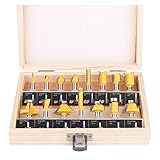
The best high quality router bits for clean woodworking cuts are carbide-tipped or solid-carbide bits from established makers such as Whiteside, Freud, Amana Tool, CMT, or Bosch, selected with the correct shank size and profile for your material and router.
For most serious woodworking, prioritize a sharp, fine-grain carbide cutter, clean silver brazing, a properly ground profile, and a 1/2-inch shank whenever your router accepts one. A premium bit is not automatically better if its bearing is rough, its profile is inaccurate, or it is run at the wrong speed.
As an Amazon Associate we earn from qualifying purchases at no extra cost to you.


Contents
- Quick picks by woodworking situation
- What separates high quality router bits from ordinary ones
- Bearing quality is part of cutting quality
- Profile accuracy and material-specific performance
- How to choose a bit that will last
- Setup and maintenance that protect the investment
- Are premium router bits worth the cost?
- Bottom line
- Related Guides
Quick picks by woodworking situation
| Situation | Best choice | Why it fits | Typical market range |
|---|---|---|---|
| Occasional trim work with a compact router | 1/4-inch-shank carbide flush-trim or round-over bit | Lower cost, light weight, and compatible with many compact routers | $15–$35 |
| Frequent solid-wood furniture work | 1/2-inch-shank premium carbide profile bit | Lower vibration and better resistance to deflection during deep cuts | $30–$90 |
| Plywood edge treatment | Compression or upcut/downcut spiral bit, preferably 1/2-inch shank | Reduces veneer breakout when feed direction and depth are controlled | $35–$120 |
| MDF shelving and cabinetry | Fine-grain carbide spiral or straight bit with dust extraction | MDF is abrasive and produces fine dust that quickly dulls ordinary cutters | $25–$100 |
| High-volume production | Replaceable-insert or solid-carbide industrial bit | Consistent geometry and economical sharpening or insert replacement | $70–$250+ |
What separates high quality router bits from ordinary ones
Carbide grade and grain structure
Router-bit carbide is harder and more wear-resistant than high-speed steel, but carbide quality varies. Fine- or micrograin carbide uses smaller tungsten-carbide particles, allowing a sharper edge and a more durable cutting corner than coarse, inexpensive carbide. A typical premium grade may use carbide with roughly 0.5–1.0 micrometre grain size and around 10–15% cobalt binder, although manufacturers do not always publish the exact formulation.
For solid pine or occasional softwood work, standard carbide may be adequate. For oak, maple, plywood, and MDF, fine-grain carbide is a better investment. MDF contains adhesive and mineral filler that can dull a budget cutter quickly. A polished solid-carbide spiral bit generally lasts longer in abrasive sheet goods than a cheap straight bit, provided it is not overheated.
Brazing quality
On carbide-tipped bits, the joint between the carbide and steel body is a critical failure point. Good brazing produces a continuous, even joint without visible gaps, excessive filler, or a misaligned tooth. The carbide should sit squarely on the body, and adjacent cutters should have matching height and spacing.
Weak or overheated brazing can lead to a loose insert, especially after repeated heavy cuts. Never use a bit with a cracked carbide tip, a visibly open braze line, or a cutter that moves when touched. Solid-carbide bits eliminate the brazed joint, but they are more brittle and can be damaged by dropping or hitting a clamp.
Shank size and rigidity
A 1/2-inch shank is stiffer than a 1/4-inch shank of the same general design. That matters because vibration leaves washboard marks, increases bearing wear, and makes a profile less accurate. Use the largest shank your collet and router support, but never force a 1/2-inch bit into a 1/4-inch collet or use a reducer sleeve as a substitute for the correct collet.
| Shank | Approximate cross-sectional area | Best use | Main limitation |
|---|---|---|---|
| 1/4 inch | 0.049 square inches | Compact routers, light trimming, small profiles | More deflection and vibration in deep cuts |
| 8 mm | 0.077 square inches | Routers and accessories designed for metric tooling | Not interchangeable with 1/4 or 1/2 inch |
| 1/2 inch | 0.196 square inches | Large profiles, pattern work, hardwood, and production use | Requires a compatible router and collet |
The area comparison explains why a 1/2-inch shank is not merely twice as rigid as a 1/4-inch shank. It has about four times the cross-sectional area, although actual performance also depends on cutter length, body diameter, steel quality, and router setup.
Bearing quality is part of cutting quality
Flush-trim, pattern, round-over, and rabbeting bits often rely on a small bearing. A quality bearing should rotate smoothly, have minimal side play, and remain concentric with the cutter. Shielded or sealed bearings help keep resin and dust out, but they are still consumable parts.
Before use, spin the bearing by hand. A gritty sound, a pause, or visible wobble is a reason to replace it. Lubricating a sealed bearing is usually less effective than installing a correctly sized replacement. Do not spray general-purpose oil onto the bearing before routing; it can attract dust and contaminate the workpiece.
Bearings commonly wear before the carbide. If a bit starts leaving a changing cut depth, burning one section of an edge, or wandering against a template, inspect the bearing before blaming the router.
Profile accuracy and material-specific performance
Solid wood
Solid wood rewards a rigid bit and a controlled feed rate. Large round-overs, ogees, and raised-panel cutters place considerable load on the router, so a 1/2-inch shank and multiple shallow passes are preferable. High quality bits should produce a consistent profile without chatter, but grain direction still determines tear-out. Rout end grain first on framed parts, then rout long grain so any breakout is removed by the final pass.
Plywood
Plywood has alternating grain directions and glue layers, so it can chip at the face veneer and dull cutters faster than softwood. A compression spiral bit is useful on a CNC router or where the bit geometry suits the machine, because its opposing shear directions help hold the top and bottom veneers. For a handheld router, a sharp flush-trim bit, shallow passes, and a sacrificial backing board are often more important than buying the most aggressive spiral geometry.
MDF
MDF cuts cleanly when the bit is sharp, but its adhesive and mineral content are abrasive. Use dust extraction, avoid dwelling in one location, and reduce cutting depth rather than forcing the feed. A dull bit often shows itself through brown edges, fuzzy fibers, smoke, or a finish that refuses to absorb evenly. MDF dust also settles on bearings and collets, so cleaning after each session matters more than it does with clean softwood.
How to choose a bit that will last
- Choose 1/2-inch shanks for deep cuts, hardwood, large profiles, and repeated use when the router supports them.
- Look for fine-grain carbide and clean, uniform brazing rather than relying only on a polished package or attractive coating.
- Prefer a replacement-bearing system for bits used frequently.
- Match cutter diameter and speed to the router manufacturer’s limits; larger cutters generally require lower RPM.
- Buy a dedicated bit for the job instead of extending a short bit dangerously far from the collet.
- Use a brand with published dimensions and replacement parts when profile consistency matters.
Setup and maintenance that protect the investment
Insert the shank fully into the collet, then withdraw it slightly—about 1/16 inch—to prevent the end from bottoming out. Tighten the collet with the proper wrench, not an impact tool. Excessive extension increases leverage and vibration; too little engagement can allow the bit to slip.
Take several passes when removing more than about 1/4 inch of material in hardwood. For example, removing a 1/2-inch rabbet in two 1/4-inch passes reduces the load per pass and gives the bearing and carbide less heat to shed. The exact depth depends on the bit diameter, router power, and workpiece, but a slower, steady feed is safer than forcing a deep cut in one attempt.
After routing, brush resin and dust from the body with a soft nylon brush. Do not scrape carbide with steel, strike the bit against a bench, or use a grinder unless you are equipped to maintain the original geometry. Store bits so carbide edges cannot touch one another. If a premium bit becomes dull, professional sharpening is often worthwhile; sharpening that removes unequal amounts from the cutters can ruin profile accuracy.
Are premium router bits worth the cost?
For occasional softwood trimming, a reputable mid-range bit may be sufficient. For hardwood, plywood, or MDF, the cost difference is easier to justify because a bit that lasts twice as long costs less per use even when its purchase price is higher.
For example, a $20 bit lasting 12 useful projects costs about $1.67 per project. A $55 fine-grain carbide bit lasting 45 projects costs about $1.22 per project, before considering the time saved by fewer replacements and cleaner sanding. Longevity is not guaranteed: hitting a hidden nail, overheating the edge, or running a dirty bearing can destroy either bit immediately.
Bottom line
For the broadest woodworking capability, buy a 1/2-inch-shank, fine-grain carbide bit from a reputable manufacturer, with a smooth replacement bearing where applicable and clearly specified dimensions. Use compact 1/4-inch bits for light trimming, choose spiral or compression designs selectively for plywood and MDF, and judge quality by carbide, brazing, concentricity, and serviceability—not by appearance alone. The right bit, shallow passes, correct RPM, and clean bearings have more influence on a clean cut than brand prestige by itself.