Best Block Planes for Woodworking: Reviews and Buying Guide
What's inside
- Best Block Planes for Woodworking: Reviews and Buying Guide
- Low-angle vs. standard-angle block planes
- Best low-angle block planes
- Best standard-angle block planes
- Decision matrix: which block plane fits your work?
- What to inspect before buying
- Setup and maintenance that affect performance
- Final recommendations
- Best Block Planes for Woodworking: Reviews and Buying Guide
- Low-angle vs. standard-angle block planes
- Best low-angle block planes
- Best standard-angle block planes
- Decision matrix: which block plane fits your work?
- What to inspect before buying
- Setup and maintenance that affect performance
- Final recommendations
As an Amazon Associate I earn from qualifying purchases. This post may contain affiliate links at no extra cost to you.
Contents
- Best Block Planes for Woodworking: Reviews and Buying Guide
- Low-angle vs. standard-angle block planes
- Best low-angle block planes
- Best standard-angle block planes
- Decision matrix: which block plane fits your work?
- What to inspect before buying
- Setup and maintenance that affect performance
- Final recommendations
Best Block Planes for Woodworking: Reviews and Buying Guide
The best block plane for woodworking is a low-angle model for end grain and general trimming, while a standard-angle block plane is the better choice when you mostly work with long grain, figured timber, or need a cleaner cut on difficult surfaces.
Block planes are small, one-handed planes with the bevel of the iron facing up. That layout makes blade angle, mouth adjustment, sole flatness, and handling more important than size alone. The right choice depends less on brand prestige than on whether you are trimming joinery, fitting doors, chamfering edges, or smoothing short-grain areas.
As an Amazon Associate we earn from qualifying purchases at no extra cost to you.


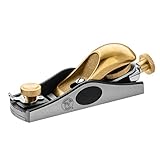
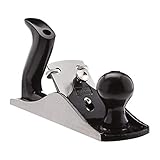
Low-angle vs. standard-angle block planes
A low-angle block plane normally has a bed angle around 12 degrees. With a blade sharpened at approximately 25 degrees, its effective cutting angle is about 37 degrees. That relatively low angle slices end grain efficiently and is well suited to shooting small parts, trimming tenons, and fitting cross-grain edges.
A standard-angle block plane usually has a bed around 20 degrees. With the same 25-degree bevel, its effective cutting angle is approximately 45 degrees. The higher angle offers more resistance to tear-out in many long-grain and figured-wood situations, although it is not a guarantee against tear-out. A steeper bevel or higher-angle blade may still be necessary for very difficult grain.
| Feature | Low-angle block plane | Standard-angle block plane | Best implication |
|---|---|---|---|
| Typical bed angle | 12 degrees | 20 degrees | Low angle favors end grain; standard angle favors general long-grain work |
| Typical blade bevel | 25 degrees | 25 degrees | Produces roughly 37- and 45-degree effective cutting angles |
| Common length | 6 to 7 inches | 6 to 7 inches | Short soles maneuver easily but do not flatten long surfaces |
| Typical width | 1-5/8 to 1-3/4 inches | 1-5/8 to 1-3/4 inches | Wide enough for most edge and end-grain work |
| Typical weight | 1.5 to 2.5 lb | 1.5 to 2.5 lb | More mass can improve stability; less mass reduces fatigue |
| Mouth adjustment | Fixed or adjustable | Fixed or adjustable | An adjustable mouth is valuable for switching between coarse and fine cuts |
| Best uses | End grain, tenons, chamfers, trimming | Long grain, figured wood, general fitting | Choose according to your most frequent operation |
Best low-angle block planes
Lie-Nielsen No. 60-1/2 Low Angle Block Plane
The Lie-Nielsen No. 60-1/2 is a premium low-angle block plane with a 12-degree bed, ductile iron body, adjustable mouth, and a blade commonly supplied at a 25-degree bevel. Its roughly 7-inch length and substantial weight give it a planted feel when trimming end grain or leveling small joints.
Its strongest feature is control. The mouth can be opened for a heavier cut or closed for a fine finishing cut, and the lateral adjustment mechanism makes it easier to correct a blade that is not perfectly square. This is a strong choice for frequent furniture work, especially if you regularly trim tenons, flush plugs, or fit drawers. Its price is high, but the body and replacement iron are serviceable for many years.
Veritas Low-Angle Block Plane
The Veritas Low-Angle Block Plane uses a low bed angle and a Norris-style blade adjustment system that controls both depth and lateral position. Its cast ductile iron body, adjustable mouth, and comfortable modern grip make it particularly appealing to woodworkers who want precise adjustment without the traditional fiddly setup.
The design is well suited to end grain and edge work, but its adjustment mechanism adds parts that should be kept clean. It is a good premium alternative to the Lie-Nielsen when repeatable blade positioning and ergonomic handling matter more than traditional Stanley-style proportions.
Stanley 60-1/2 Low Angle Block Plane
The Stanley 60-1/2 is the familiar low-angle pattern and is available in versions ranging from basic mass-market tools to more substantial premium editions. The model is compact, broadly supported with replacement blades, and usually less expensive than boutique planes.
Quality can vary between versions, so inspect the sole, mouth, and blade seating rather than assuming the model name tells the whole story. A good example can be an excellent first block plane. If the sole is not flat or the blade does not seat securely, correcting those issues may eliminate the supposed savings.
Best standard-angle block planes
Lie-Nielsen No. 9-1/2 Standard Block Plane
The Lie-Nielsen No. 9-1/2 is a premium standard-angle block plane based on the classic pattern. Its approximately 20-degree bed produces a higher effective cutting angle than a low-angle plane, making it a useful choice for general edge work and some figured or interlocked grain.
It is especially attractive as a dedicated trimming plane for hardwood furniture. The adjustable mouth gives it more range than a fixed-mouth plane, while the heavy body helps keep the sole stable against an edge. It costs substantially more than a conventional hardware-store block plane, but the design is intended for regular use and replacement parts remain available.
Stanley 9-1/2 Standard Block Plane
The Stanley 9-1/2 is one of the most recognizable standard-angle block-plane patterns. Current examples and older used examples differ considerably in casting quality, adjustment hardware, and sole condition. A sound plane can handle chamfers, edge cleanup, and general fitting at a modest cost.
For a used plane, check that the mouth adjustment moves freely, the blade cap clamps evenly, and the sole is not badly hollow or twisted. A plane with a slightly dull blade can be restored; one with a cracked casting or damaged adjustment thread is usually a poor purchase.
Decision matrix: which block plane fits your work?
| Your situation | Recommended choice | Why |
|---|---|---|
| First plane and limited budget | Sound Stanley 60-1/2 or 9-1/2 | Low entry cost and widely available replacement irons |
| Mostly end-grain trimming | Adjustable-mouth low-angle plane | Lower cutting angle reduces effort on end grain |
| Mostly figured or interlocked long grain | Standard-angle plane, or low-angle plane with a steeper bevel | Higher effective angle can reduce lifting of difficult fibers |
| Frequent professional or furniture-shop use | Premium ductile-iron low- or standard-angle plane | Better adjustment, durability, and parts support justify the cost |
| Occasional household trimming | Fixed-mouth or basic adjustable block plane | Simple construction is adequate for light cuts |
| Small hands or extended overhead work | Lighter plane with a comfortable rear grip | Reduced weight and better control limit fatigue |
What to inspect before buying
Sole flatness
The sole should be flat enough that the plane does not rock on a known-flat surface. Absolute perfection across every square inch is unnecessary for a small block plane, but the area directly ahead of and behind the mouth must support the tool consistently. Place the plane on a flat reference such as a thick piece of glass with abrasive paper, and check for rocking before attempting extensive flattening.
Mouth adjustment
A tight mouth supports fine shavings and helps prevent fibers from lifting ahead of the blade. A wider mouth permits a thicker cut but is more exposed to tear-out. For one versatile plane, an adjustable mouth is preferable. A fixed-mouth tool is simpler and can work very well when its opening matches your normal shaving thickness.
Blade and cap iron
The blade should sit firmly without rocking, and the cap or lever should clamp it evenly. Look for adequate thickness, a straight edge, and a cap screw that turns smoothly. A premium blade is useful only if it can be sharpened consistently and held securely.
Setup and maintenance that affect performance
-
Flatten only the working portion of the sole if needed. Mark it with a pencil, make a few controlled passes on abrasive paper over a flat reference, and stop when the contact pattern is even.
-
Sharpen the blade at its existing primary bevel, normally around 25 degrees. Add a small secondary bevel of approximately 30 degrees if you want a durable everyday edge.
-
Install the blade with its edge parallel to the sole. Use the lateral adjuster, if fitted, to make both corners project equally.
-
Start with a very light cut. Advance the blade gradually until it produces a continuous shaving rather than forcing a thick bite.
-
Close the mouth for finishing and open it slightly for heavier stock removal. Never compensate for a dull blade by forcing the plane.
-
After use, brush away shavings, wipe exposed steel with a light rust-preventive oil, and store the plane dry. Keep oil away from surfaces that will contact glue or finish.
The parts most likely to wear are the cutting edge, mouth edges, adjustment threads, and sole surface. Blades are consumable items, while a damaged casting or stripped adjustment mechanism can end the useful life of an inexpensive plane. Avoid setting a block plane down on its blade, levering against knots, or tightening the lever cap so aggressively that the threads are damaged.
Final recommendations
Choose a low-angle block plane if end grain, tenons, chamfers, and general trimming make up most of your work. The Lie-Nielsen No. 60-1/2 and Veritas Low-Angle Block Plane are strong premium choices; a well-inspected Stanley 60-1/2 offers a more economical route.
Choose a standard-angle plane if you primarily fit long-grain edges or work frequently with figured timber. The Lie-Nielsen No. 9-1/2 is a durable premium option, while a sound Stanley 9-1/2 can provide capable performance at a lower market price.
If you can own only one, prioritize an adjustable mouth, a flat and stable sole, a secure blade seating system, and a comfortable weight. Those characteristics matter more in daily use than a polished finish or a long list of features.