Best Benchtop Router Tables: Top Picks for Small Shops
What's inside
- Quick comparison of the leading benchtop router tables
- Our picks by workshop situation
- Kreg PRS2100: best overall for a small shop
- Bosch RA1181: best value and largest practical work surface
- Rockler Convertible Benchtop Router Table: best portable design
- Bosch RA1171: choose it for enclosure and dust collection
- What to inspect before buying
- A practical setup sequence
- Ownership costs and common wear points
- Related Guides
- Quick comparison of the leading benchtop router tables
- Our picks by workshop situation
- Kreg PRS2100: best overall for a small shop
- Bosch RA1181: best value and largest practical work surface
- Rockler Convertible Benchtop Router Table: best portable design
- Bosch RA1171: choose it for enclosure and dust collection
- What to inspect before buying
- A practical setup sequence
- Ownership costs and common wear points
- Related Guides
As an Amazon Associate I earn from qualifying purchases. This post may contain affiliate links at no extra cost to you.
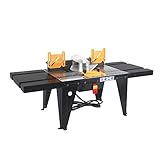
The best benchtop router table for most small shops is the Kreg PRS2100, while the Bosch RA1181 is the better value for users who want a larger laminated top and broad router compatibility; choose the Rockler Convertible Benchtop Router Table when storage and portability matter more than maximum surface area.
A benchtop router table is a compromise by design: it gives a handheld router a stable, upside-down work surface without taking up the space or cost of a full cabinet table. The important differences are not flashy accessories but tabletop flatness, fence adjustment, insert quality, mounting compatibility, and how easily the table can be stored or clamped.
As an Amazon Associate we earn from qualifying purchases at no extra cost to you.


Contents
- Quick comparison of the leading benchtop router tables
- Our picks by workshop situation
- Kreg PRS2100: best overall for a small shop
- Bosch RA1181: best value and largest practical work surface
- Rockler Convertible Benchtop Router Table: best portable design
- Bosch RA1171: choose it for enclosure and dust collection
- What to inspect before buying
- A practical setup sequence
- Ownership costs and common wear points
- Related Guides
Quick comparison of the leading benchtop router tables
| Model | Approx. tabletop size | Table material | Approx. weight | Best suited to | Typical market range |
|---|---|---|---|---|---|
| Kreg PRS2100 | 16 in. × 24 in. | MDF core with laminated surface | About 26 lb | Frequent small-shop routing and precise fence work | $250–$330 |
| Bosch RA1181 | 27 in. × 18 in. | Aluminum top | About 32 lb | Users wanting a large, rigid work area and good value | $220–$300 |
| Rockler Convertible Benchtop Router Table | About 34 in. × 25 in. when opened | Laminated MDF-style work surface | About 30 lb | Storage-conscious shops and portable setups | $250–$350 |
| Bosch RA1171 | About 25 in. × 15 in. | Laminated MDF cabinet-style enclosure | About 42 lb | Dust collection and quieter enclosed operation | $250–$350 |
Dimensions and weights can vary slightly by production version and included hardware. Treat the figures as practical comparisons rather than substitutes for the current manufacturer specifications.
Our picks by workshop situation
| Your situation | Best choice | Why |
|---|---|---|
| Limited budget and occasional use | Bosch RA1181 | Large aluminum surface, straightforward setup, and broad router compatibility |
| Most precise everyday benchtop work | Kreg PRS2100 | Sturdy stand, micro-adjustable fence, and a well-supported work surface |
| Very limited storage | Rockler Convertible Benchtop Router Table | Folds or converts for storage while providing a comparatively large open work area |
| Dust control is a priority | Bosch RA1171 | Enclosed cabinet helps contain chips and supports a dust hose connection |
| Long boards and repeated edge profiles | Kreg PRS2100 | Its stand and fence arrangement are easier to stabilize than lightweight folding designs |
Kreg PRS2100: best overall for a small shop
The Kreg PRS2100 is the strongest all-around choice when a benchtop router table will be used regularly rather than pulled out once or twice a year. Its 16-by-24-inch top is not the largest in this group, but it provides a useful balance between support for cabinet parts and a manageable footprint.
The main advantage is the fence. Its independent faces and micro-adjustment make it easier to dial in a bearing-guided profile or make a shallow second pass without repeatedly loosening and shifting the entire fence. The included support stand also raises the table to a more usable working height than many compact portable designs.
The tradeoff is weight and storage volume. The PRS2100 is portable in the sense that one person can move it, but it is not the best choice if the table must be packed away after every cut. Its laminated surface should remain flat under normal use, though it should be stored supported rather than leaned on a damp garage floor.
Bosch RA1181: best value and largest practical work surface
The Bosch RA1181 is a good fit for a first benchtop router table, especially when the priority is usable surface area per dollar. Its aluminum top is approximately 27 by 18 inches, giving long workpieces more support than many smaller tables.
The aluminum surface is durable and easy to clean. It also avoids the swollen edges that can develop when an MDF-based table repeatedly gets wet. The fence has adjustable faces and dust collection, and the table accepts a range of Bosch and other compatible routers through its mounting hardware.
Fence accuracy is adequate for general edge treatments, dados, and rabbets, but users doing fine joinery should check the fence faces with a straightedge before relying on the factory setup. A useful improvement is adding a thin sacrificial auxiliary fence, then jointing or trimming both faces together so they are coplanar.
Rockler Convertible Benchtop Router Table: best portable design
The Rockler Convertible Benchtop Router Table is aimed at shops where the router table must compete with a planer, miter saw, or assembly space. Its folding or convertible design lets it occupy a relatively large working footprint when open while becoming easier to store between projects. That is the key reason to choose this portable benchtop router table over a rigid stand-mounted model.
Its open layout gives good access around the bit and makes mounting a compatible router relatively convenient. The penalty is that every folding joint, latch, and support surface becomes another place to check for movement. Before routing, place the table on a level bench and confirm that the supports are fully locked. Even a small amount of flex can show up as a changing cut depth on a long board.
This is a sensible option for trim work, small furniture parts, and occasional pattern routing. For production-like sessions, a heavier fixed stand such as the Kreg’s is generally less tiring and easier to keep aligned.
Bosch RA1171: choose it for enclosure and dust collection
The Bosch RA1171 differs from the RA1181 by using an enclosed cabinet-style base. That enclosure can reduce airborne chips when connected to a suitable dust extractor, and it offers useful storage for bits, wrenches, and accessories.
The cabinet also makes the unit heavier and less convenient to inspect underneath. Router access matters: verify that you can reach the collet, height adjustment, and power switch without awkwardly lifting the entire table. The RA1171 makes the most sense for a shop that values containment and a more permanent benchtop setup rather than maximum portability.
What to inspect before buying
Tabletop flatness
Flatness matters more than a large advertised dimension. A hollow or crowned top changes the depth of a cut as the board moves across it. For a small table, place a known straightedge across the front-to-back and side-to-side directions. A very small gap may be acceptable, but visible rocking or a gap large enough to admit a sheet of paper consistently deserves correction or a return.
Fence accuracy and adjustment
Look for a fence with independent faces, rigid locking points, and either micro-adjustment or a simple way to add an auxiliary fence. The fence should remain parallel to the miter slot or front edge after tightening. If it shifts while locking, accurate setup becomes frustrating regardless of the table brand.
Router compatibility
Check the mounting plate and hole pattern against your specific router before ordering. A table may accept many routers but still require drilling, a different insert plate, or an adapter. Confirm that the router’s height adjustment remains accessible and that the table can accommodate the collet, switch, and dust port without interference.
Footprint and clamping
Measure the available bench, not just the tabletop. Allow at least 3 inches of clear space around the working edges for hand position and dust-port access. If the table will be clamped temporarily, include the clamp handles in the measurement. A 24-inch-wide table can require more than 30 inches of actual bench space once clamps and a dust hose are attached.
A practical setup sequence
- Level the table. Place it on a rigid bench and eliminate rocking before installing the router.
- Check the insert ring. Use the smallest opening that clears the bit. This supports the workpiece closer to the cutter and reduces the chance of a narrow edge dropping into the opening.
- Align the fence. Set both faces parallel to the intended feed direction, then lock them firmly. Check again after connecting the dust hose.
- Set bit height with a test piece. A test cut in scrap is safer and more accurate than measuring from the tabletop to a cutter edge.
- Secure the switch and extraction. Use the table’s external switch where provided, keep the power cord clear of the bit, and connect dust collection before routing.
- Feed against the cutter’s rotation. With a conventional router-table setup, feed from right to left. A climb cut can pull the workpiece unexpectedly and should be avoided except in carefully controlled, minimal passes.
Ownership costs and common wear points
The table itself is rarely the first part to wear. Insert rings can become damaged, fence faces can develop resin buildup, and MDF edges can swell after water exposure. Keep the surface dry, vacuum dust from the plate recess, and apply paste wax or a manufacturer-approved surface protectant to reduce friction. Do not use a thick coating that can transfer onto workpieces.
Router bits are the main consumable. As an example, if a $30 bit produces clean results for 40 small projects, its bit cost is about $0.75 per project. Running a dull bit to avoid replacement can cost more in burned edges, rework, and damaged stock than the bit itself. Inspect carbide for chips, clean pitch with an appropriate bit cleaner, and replace damaged cutters rather than trying to sharpen them casually.
For most space-limited shops, choose the Kreg PRS2100 for regular precision work, the Bosch RA1181 for value and surface area, and the Rockler Convertible model when storage dictates the design. The right choice is the table that stays flat, locks its fence securely, and can be set up without competing with the rest of your shop.