DeWalt Compact Router: DWP611 vs DCW600B—Which Should You Buy
What's inside
- DeWalt Compact Router: DWP611 vs DCW600B—Which Should You Buy
- At a glance: the differences that matter
- Power over a long job: why corded still has an edge
- Weight, bases, and control
- What will the complete setup cost?
- Choose by the way you work
- Ownership details that affect the decision
- The bottom line
- Related Guides
- DeWalt Compact Router: DWP611 vs DCW600B—Which Should You Buy
- At a glance: the differences that matter
- Power over a long job: why corded still has an edge
- Weight, bases, and control
- What will the complete setup cost?
- Choose by the way you work
- Ownership details that affect the decision
- The bottom line
- Related Guides
As an Amazon Associate I earn from qualifying purchases. This post may contain affiliate links at no extra cost to you.
Contents
- DeWalt Compact Router: DWP611 vs DCW600B—Which Should You Buy
- At a glance: the differences that matter
- Power over a long job: why corded still has an edge
- Weight, bases, and control
- What will the complete setup cost?
- Choose by the way you work
- Ownership details that affect the decision
- The bottom line
- Related Guides
DeWalt Compact Router: DWP611 vs DCW600B—Which Should You Buy
Buy the corded DeWalt DWP611 if you rout for long stretches, want consistent power, or need the lower-cost complete setup; choose the cordless DCW600B if you already own compatible 20V batteries and value working without a cord more than minimizing weight or upfront cost.
Both are compact, variable-speed routers built around a 1.25-horsepower motor and a 1/4-inch collet. The decision is less about raw advertised power than about how long you work, what bases you need, and whether batteries are already in your shop.
As an Amazon Associate we earn from qualifying purchases at no extra cost to you.



At a glance: the differences that matter
| Detail | DWP611, corded | DCW600B, cordless |
|---|---|---|
| Power source | 120V AC cord | 20V MAX battery platform |
| Motor rating | 1.25 HP | 1.25 HP |
| Speed range | 16,000–27,000 rpm | 16,000–25,500 rpm |
| Collet | 1/4 inch | 1/4 inch |
| Bare tool weight | About 4.1 lb | About 2.6 lb |
| Plunge-base option | Available in DWP611PK kit; also sold separately | Available separately for compatible DCW600 setups |
| Battery included | Not applicable | No—the DCW600B is a bare tool |
Weights are approximate bare-tool figures and can vary by configuration; a battery, base, and bit add to either router’s working weight. The DCW600B’s higher speed range tops out below the DWP611’s, but the difference is rarely the deciding factor for ordinary edge profiles and trimming.
Power over a long job: why corded still has an edge
The DWP611 draws power continuously from an outlet, so it can keep routing without a battery change or a pause to recharge. That makes it the more dependable choice for repeated passes, long edge treatments, and production-style work. Its cord is a trade-off: it can snag on the workpiece or cross the cutting path, so route it behind the tool and keep it clear of the bit.
The DCW600B avoids that cord and is easier to move around a large panel, jobsite, or installed work. Its practical runtime depends on the battery, bit, material, depth of cut, and how continuously you rout. A small battery keeps the tool lighter but may mean more changes; a larger one extends working time at the cost of added weight. DeWalt’s 1.25-horsepower rating does not mean the cordless router can deliver identical sustained output to the corded model under every load.
For either model, take several shallow passes rather than trying to remove too much material at once. This reduces strain on the motor and bit, improves control, and is especially useful when routing hardwood or using a larger profile bit.
Weight, bases, and control
At roughly 2.6 lb bare, the DCW600B body is lighter than the DWP611. That is useful for overhead trimming and for moving around a workpiece without managing a cord. But once a battery is attached, the gap narrows. A larger battery can make the cordless setup noticeably heavier in the hand, so compare complete configurations—not just tool-only figures—if fatigue is a concern.
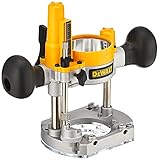
Both routers have fixed-base configurations and can be paired with a compatible plunge base. The plunge base is useful for starting a cut inside a workpiece, making controlled depth changes, or following a template from within its boundary. The fixed base is simpler for edge work and frequent bit-height adjustments. Check the exact kit contents before buying: the DWP611PK includes a plunge base, whereas a DWP611 sold as a standalone tool may not. The DCW600B listing is a bare-tool package; budget separately for any base you need.
What will the complete setup cost?
Street prices fluctuate, so use these as broad U.S. market ranges rather than fixed quotes. The key cost difference is that the DCW600B’s bare-tool price does not include a battery or charger. If you already own compatible DeWalt 20V MAX batteries and a charger, the cordless router’s added cost may be modest. If not, the battery system can make the first purchase substantially more expensive than the tool price suggests.
| Setup | Typical broad price range | What to check |
|---|---|---|
| DWP611 tool or basic package | About $120–$180 | Whether the package includes the plunge base |
| DWP611PK kit | About $180–$250 | Included bases and accessories |
| DCW600B bare tool | About $150–$220 | Battery and charger are not included |
| Battery and charger, if needed | About $80–$200 or more | Battery capacity, bundle contents, and existing platform compatibility |
Example: Suppose the DWP611 setup you want costs $160. If a DCW600B is $180 and you need a $120 battery-and-charger package, your cordless starting total is about $300 before adding a plunge base. If you already have a suitable battery and charger, that $120 is not a new purchase, and the comparison changes. Price the base and accessories you actually need on both sides before deciding.
Choose by the way you work
| Your situation | Better fit | Reason |
|---|---|---|
| New to routing; want one affordable setup | DWP611, preferably a kit with the needed base | No battery platform purchase, and power is always available near an outlet. |
| Already own DeWalt 20V MAX batteries | DCW600B | You can avoid duplicating the battery and charger cost. |
| Frequent, long sessions at a bench | DWP611 | No runtime planning or battery changes between passes. |
| On-site trim work or moving between locations | DCW600B | No extension cord to manage; especially convenient for short jobs. |
| Plunge routing is central to your work | Either, with the correct plunge-base package | Compare the full tool-and-base price, not the bare-tool price. |
Ownership details that affect the decision
Neither router accepts 1/2-inch-shank bits, so check your existing cutters before buying. Use sharp, clean 1/4-inch-shank bits and match speed to the bit maker’s guidance, particularly with large-diameter cutters. A dull bit or an overly deep pass increases heat and puts unnecessary load on the motor.
Dust and resin buildup around the collet, base, and adjustment mechanism can make setup less reliable. Unplug the DWP611 or remove the DCW600B battery before cleaning or changing bits. Brush away dust, keep the collet clean, and tighten bits securely without overtightening. Periodically inspect the cord on the DWP611 for damage, and keep the cordless router’s battery contacts clean and dry. Avoid forcing a bit into the collet or letting dust pack into the base’s sliding surfaces; both can make adjustments harder and less precise.
The bottom line
The DWP611 is the safer value for a first compact router, a dedicated bench tool, or sustained routing where uninterrupted power matters. The DCW600B is the better convenience choice for mobile work—especially when you already own DeWalt 20V MAX batteries and can use the cordless platform across other tools. If batteries are new to you, add their cost and the price of any missing base before calling the cordless model the better deal.