Best Table Saws for Cutting Hardwood Stair Components
What's inside
As an Amazon Associate I earn from qualifying purchases. This post may contain affiliate links at no extra cost to you.
Hardwood stair parts punish a table saw’s weak points. Treads are wide and heavy, risers need clean, straight edges, and skirt boards may require long rip cuts that expose poor alignment quickly. The best saw is not necessarily the most powerful one. It is the machine that keeps the blade parallel to the fence, supports long stock, and lets you make repeatable cuts without fighting vibration or limited capacity.
As an Amazon Associate we earn from qualifying purchases at no extra cost to you.


Contents
What matters for stair components
Look for a saw with at least a 1-3/4 hp motor, a rigid fence, a reliable riving knife, and a table that remains flat under heavy boards. A 10-inch blade is the practical standard. It can cut typical 1-inch to 1-1/4-inch stair tread stock in one pass and leaves enough capacity for thicker parts when you make a second pass or finish with another machine.
Hard maple, oak, and ash put more load on a blade than construction softwood. A saw that handles 8/4 hardwood occasionally may be adequate, but production work benefits from a 3 hp cabinet saw. More power reduces the tendency to slow in a long cut, which lowers the chance of burning and uneven feed pressure. It does not compensate for a dull blade or a fence that drifts.
The fence deserves as much attention as the motor. For stair work, a fence should lock squarely at both ends and stay parallel to the miter slot. A practical test is to lock it, measure at the front and rear of the blade, and confirm the difference is no more than about 0.005 inch. A few thousandths of toe-out at the back is acceptable and can reduce pinching; toe-in is dangerous.
Table saw types compared
| Saw type | Best use | Strengths | Limitations |
|---|---|---|---|
| Contractor saw | Occasional stair repairs and small shops | Lower price, often 1-3/4 to 2 hp, easier to move | Less rigid, smaller tables, more vibration and limited rip capacity |
| Hybrid saw | Serious hobbyists making several stair parts | Better dust control and stability than portable saws; reasonable cost | Usually slower under thick hardwood than a true cabinet saw |
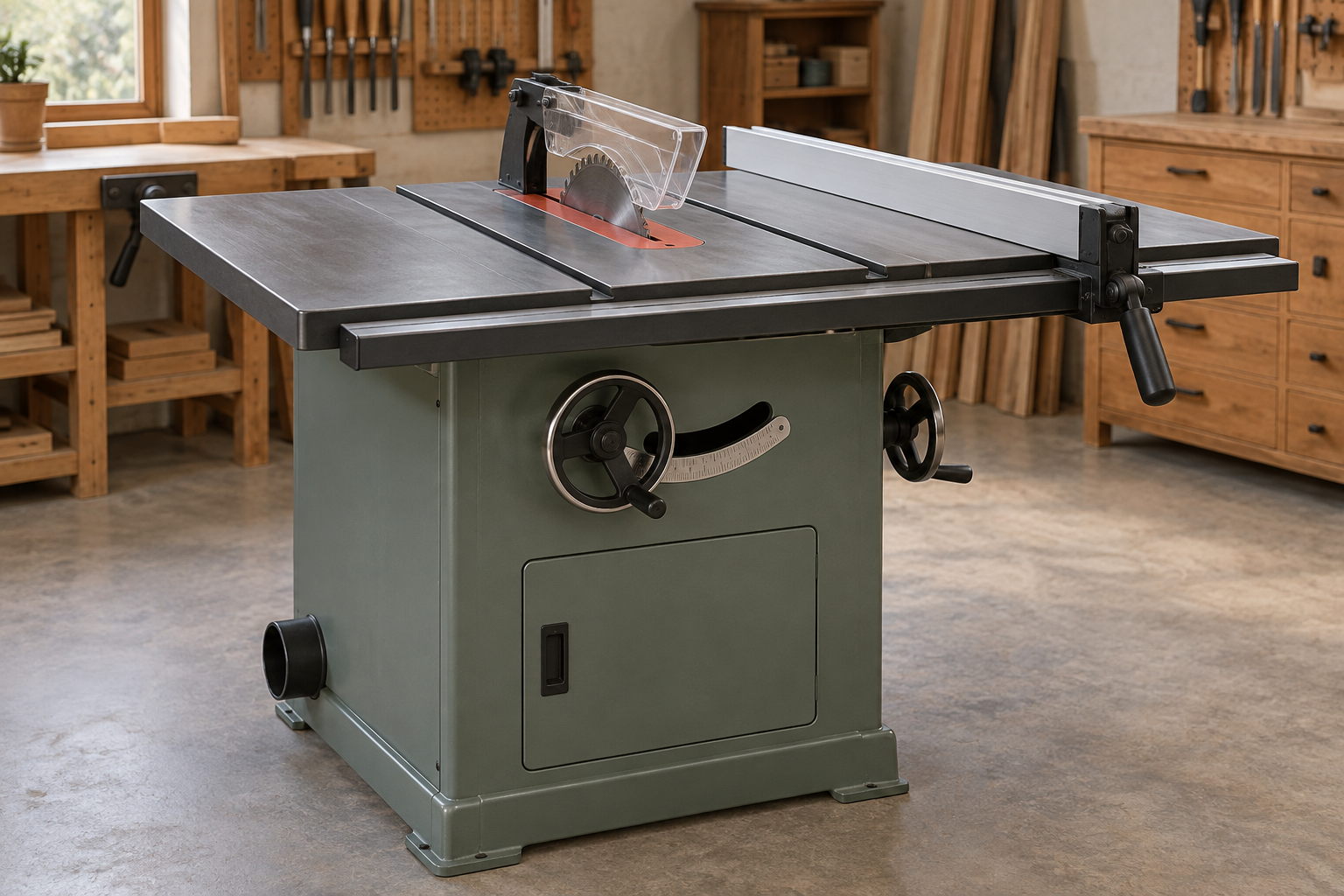
| Cabinet saw | Frequent stair building and production work | 3 hp power, rigid trunnions, strong fences, excellent dust collection | Heavy, expensive, and permanently shop-oriented |
| Sliding table saw | Wide panels, repeated crosscuts, and high-volume work | Excellent support and controlled crosscutting | Large footprint and high cost; unnecessary for many one-off stair projects |
Which saw makes sense
For a homeowner or small shop making one staircase, a good hybrid or contractor-style saw is usually the sensible choice. Pair it with a sturdy outfeed table and side support rather than spending the entire budget on horsepower. A saw with a 30-inch rip fence is enough for most tread and riser work, while 50-inch capacity is useful for wide skirt boards and large panels.
When the saw will cut hardwood every week, step up to a 3 hp cabinet table saw. Cabinet saws generally have heavier trunnions and better arbor support, so the blade is less likely to wander when feeding dense material. Their enclosed bases also make it easier to connect a 4-inch dust hose, which matters when routing or sanding stair parts in the same shop.
A contractor saw is fine when the stock is already milled, the cuts are intermittent, and the workpiece is not wider than the available support. The cheaper option becomes frustrating when you must rip several 8-foot boards, because a lightweight stand can shift and the smaller table leaves the board hanging off the side. Add a solid outfeed table and roller or folding support before blaming the saw.
If you build stairs on site or need to move the machine, consider a 10-inch contractor table saw with a rolling stand. It is a compromise: convenient and capable, but less stable than a cabinet saw. Check that the stand locks firmly and that the saw does not rock when pushing a board through.
Blade and setup choices
Use a sharp 40-tooth or 50-tooth combination blade for general stair work. A 24-tooth rip blade feeds faster through thick hardwood but leaves a rougher edge. A 60-tooth crosscut blade can produce a cleaner riser end, but it feeds more slowly and loads the motor during long rips. For the best result, rip with a quality combination or rip blade, then crosscut with a sled or miter gauge fitted with a suitable blade.
Before cutting finished stock, align the blade to the miter slot and set the fence parallel to the blade. Raise the blade so the gullets sit just above the top of the material—typically about 1/8 inch to 1/4 inch. Too much exposed blade increases hazard without improving the cut. Install the riving knife whenever the cut allows it, and use a push block for narrow pieces.
Stair treads can be 10-1/2 to 11-1/2 inches deep, so they may exceed the safe support area of a small saw. Use an attached outfeed table at least level with the saw table and side support that does not interfere with the fence. Do not balance a long tread on a loose roller stand; it can tip or steer the board into the blade.
Common failures and how to prevent them
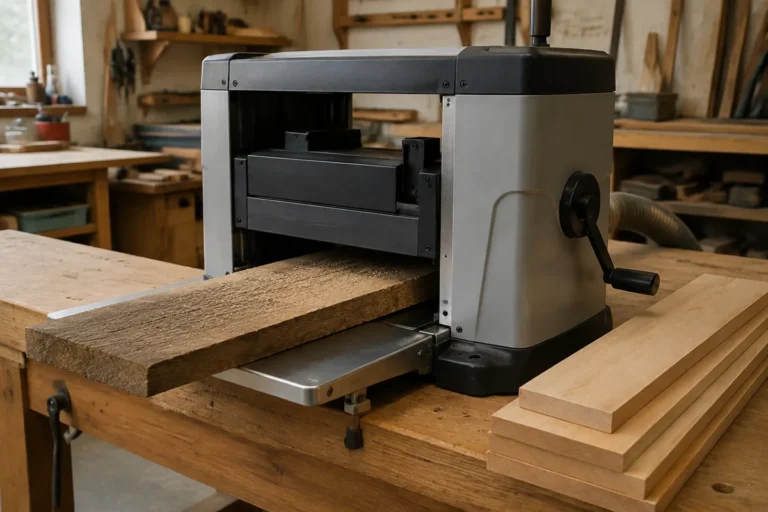
Burn marks usually indicate a dull blade, slow inconsistent feeding, fence misalignment, or an underpowered saw. Stop and correct the cause rather than pushing harder. A bowed board can pinch the blade even when the fence is aligned, so flatten one face and joint one edge first. A jointer and planer are often more important than upgrading from 2 hp to 3 hp if the lumber is rough.
For repeated stair parts, make a test cut and measure both ends with calipers or a reliable rule. A 1/32-inch error repeated across a flight can create visible problems at the nosing or skirt. Use a stop block for crosscuts, but never trap the offcut between the blade and the fence; use the miter gauge, sled, or a stop positioned ahead of the blade.
For a compact shop, a 10-inch hybrid table saw is the middle ground I would choose. For frequent commercial stair work, buy the cabinet saw. For a single project, spend first on a sharp blade, solid support, dust collection, and accurate stock preparation. Those upgrades prevent more failed stair parts than extra horsepower alone.