Best Table Saws for Accurate Sliding Dovetail Cuts
What's inside
As an Amazon Associate I earn from qualifying purchases. This post may contain affiliate links at no extra cost to you.
Sliding dovetails are usually cut with a router, but a table saw can be a useful choice when you want straight, repeatable work on long parts. The saw is especially practical for cutting the matching tail on a rail or divider, provided you use a stable jig and accept that the setup takes more care than a standard dado cut.
The important distinction is accuracy. A sliding dovetail needs a consistent angle, flat-bottomed shoulders, and a controlled fit along its full length. A table saw with a loose arbor, a fence that moves under pressure, or a miter slot with excessive play will produce a joint that starts tight and ends loose. For this work, the best saw is not necessarily the one with the largest motor. It is the one that holds settings reliably.
Contents
What to Look for in a Table Saw
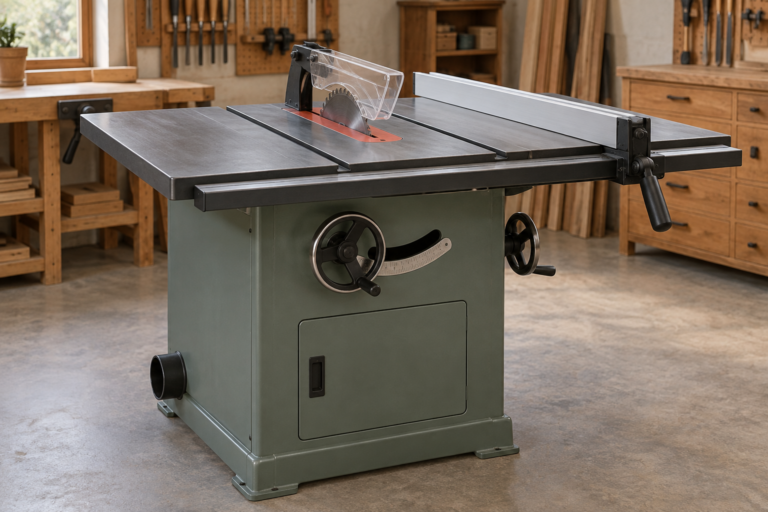
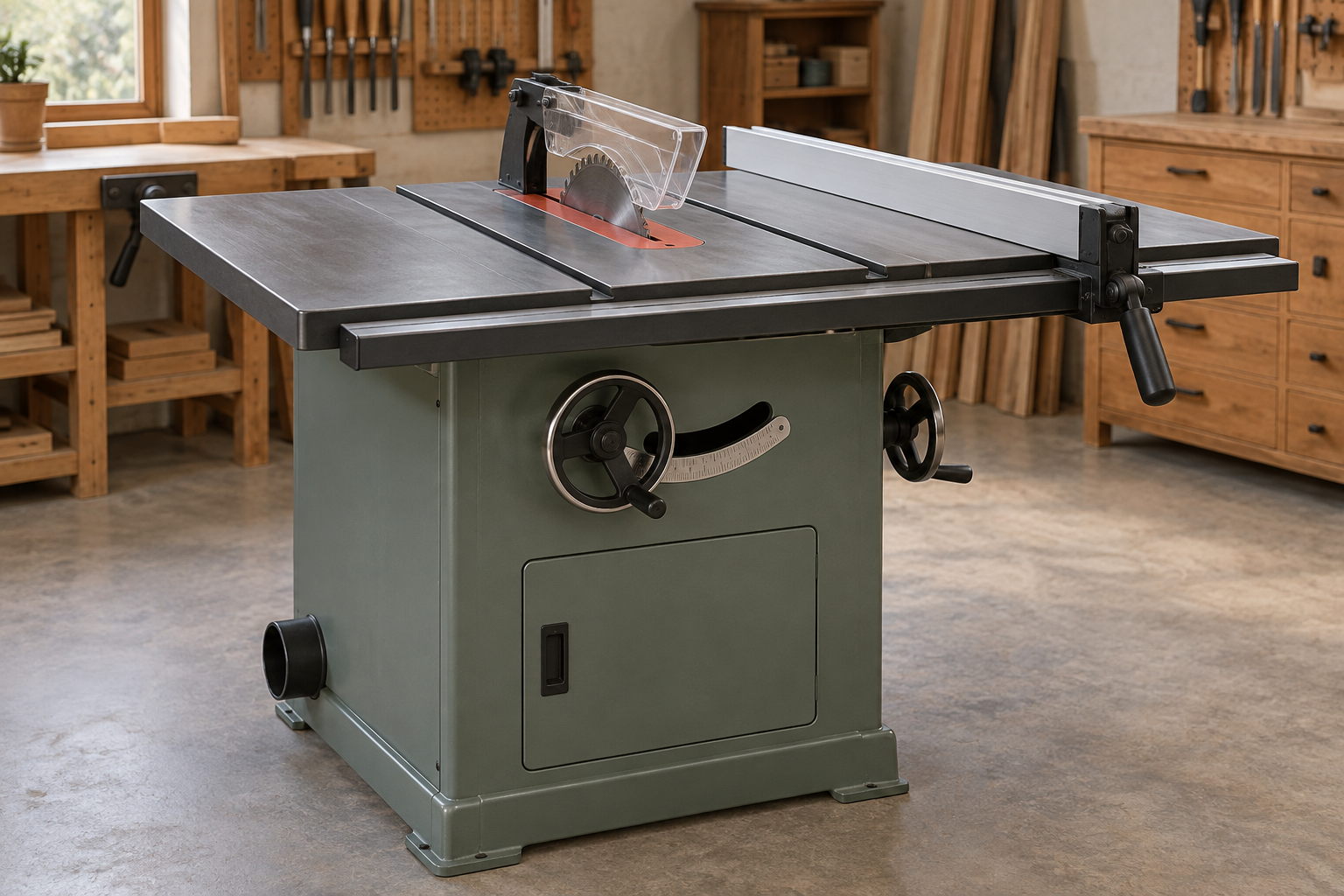
A cabinet saw is the strongest option for frequent sliding-dovetail work. Its heavier trunnions and cast-iron table resist movement when a workpiece is guided through a jig. A good contractor-style saw can also do the job, particularly for short furniture parts, but check the fence and arbor carefully before buying.
- Low arbor runout: Aim for roughly 0.002 inch or less at the blade. More runout can make the cut wider than intended and leave a ridged surface.
- Rigid fence: The fence should lock without shifting at the far end. A movement of 0.010 inch is enough to create a visible gap in a sliding joint.
- Accurate miter slots: A jig must slide without side-to-side play. A sloppy slot makes the angle change during the cut.
- Fine blade-height adjustment: The vertical position controls the shoulder depth. A wheel with backlash makes test fitting frustrating.
- Dust collection: Dovetail cuts throw chips sideways and downward. A fully enclosed cabinet and a 4-inch dust port keep the cut line clearer.
- Dado compatibility: This is not essential for the dovetail itself, but it makes the saw more useful for rabbets, dados, and casework.
For a first serious purchase, compare cabinet table saws with rigid fences rather than focusing only on horsepower. A 1-3/4 or 2 hp saw on 120 volts is adequate for most hardwood parts. Three horsepower is helpful for thick stock and continuous production, but it does not compensate for poor alignment.
Best Table Saw Types for the Job
| Table saw type | Best use | Main advantage | Main limitation |
|---|---|---|---|
| Cabinet saw | Frequent furniture work and long parts | Rigid table, trunnions, and smooth adjustments | Higher cost and permanent footprint |
| Hybrid saw | Serious hobby shop | Good accuracy at a moderate price | Fence and trunnion quality vary widely |
| Contractor saw | Occasional dovetails and general work | Lower cost and easier mobility | More vibration and less robust alignment |
| Jobsite saw | Portable or temporary shops | Compact and inexpensive | Small table, flexible stands, and limited jig support |
A hybrid saw is often the sensible cheaper option. If you make a few drawers or shelves each year, a well-aligned hybrid with a decent aftermarket fence can produce accurate joints. Spend the savings on a precision miter bar, a sharp blade, and test stock. A jobsite saw is fine for rough dados and small trim pieces, but its compact table and lightweight fence make long sliding dovetails unnecessarily difficult.
How to Cut Sliding Dovetails on a Table Saw
Use a dedicated dovetail blade or a purpose-built angled cutting setup, not an improvised stack of ordinary blades. Confirm the blade and arbor specifications, and follow the manufacturer’s instructions for guard, riving-knife, and throat-plate use. Some dovetail operations require a specialized jig or expose more blade than normal; if the setup cannot retain safe workpiece control, use a router instead.
Make the groove first. A common furniture size is about 3/8 inch wide at the opening, with a 1:6 or similar dovetail angle. Cut the center of the groove with a straight blade or dado setup, leaving the angled shoulders to be removed in controlled passes. Then tilt the blade or use the approved dovetail cutter arrangement to cut one side, flip or reposition the workpiece, and cut the other side. Keep the fence position fixed when possible; changing both fence and blade settings multiplies the opportunities for error.
Use a sacrificial fence when the blade or jig needs to run close to the fence. A featherboard or hold-down can help keep thin stock against the table, but it must not push the part sideways into a tilted blade. For narrow parts, a carrier sled is usually safer and more accurate than holding the workpiece directly.
Cut the mating tail on scrap from the same batch of wood. Sneak up on the fit in increments of 0.002 to 0.005 inch. The joint should enter with firm hand pressure and stop before the shoulder closes. If it becomes tight halfway along its length, look for a tapered part, a bowed workpiece, or a fence and miter-slot alignment problem rather than simply widening the cut.
Blade and Jig Choices
A sharp, fine-tooth blade leaves a cleaner shoulder, but tooth count alone does not determine the result. The blade must be flat, have minimal side runout, and match the material. For repeated work, a table saw dovetail blade can save setup time, though it costs more and is less versatile than a standard combination blade.
A sliding jig should use a long, straight runner that fits the miter slot closely without binding. Add a tall, square fence and a replaceable zero-clearance face. Before cutting useful stock, verify that the jig travels parallel to the blade over its full stroke. A dial indicator is helpful: roughly 0.003 inch of angular error over 24 inches is a reasonable target for furniture work.
For most shops, the best buying decision is a rigid hybrid or cabinet saw, followed by a reliable jig and measuring routine. If you need only one or two sliding dovetails, the cheaper contractor saw may be entirely adequate. If the joint must be nearly invisible across many parts, a router table with a dedicated dovetail bit is generally faster to dial in. The table saw earns its place when you already use it for casework and value long, straight, repeatable cuts.
Before shopping, measure your available space and electrical supply, then compare hybrid table saws with precision fences. A saw that remains aligned after a week of use will outperform a more powerful machine that needs recalibration after every setup.