Table Saw vs Band Saw for Cutting Hardwood Dovetail Blanks
What's inside
As an Amazon Associate I earn from qualifying purchases. This post may contain affiliate links at no extra cost to you.
Contents
Table Saw vs Band Saw for Cutting Hardwood Dovetail Blanks
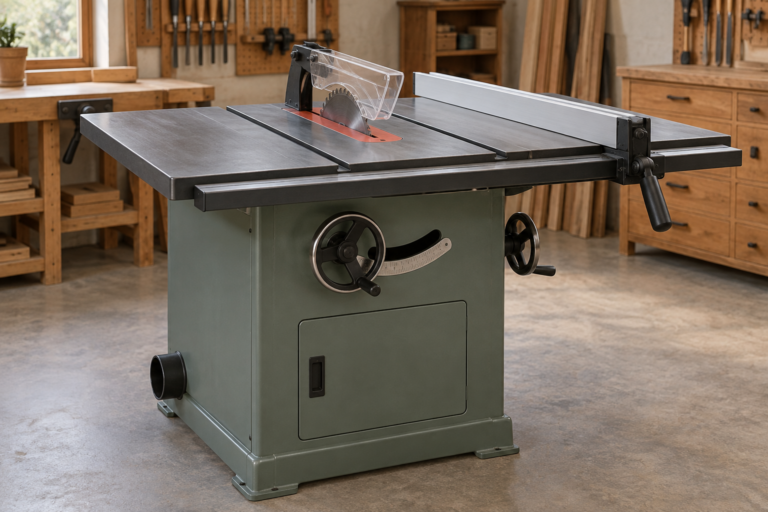
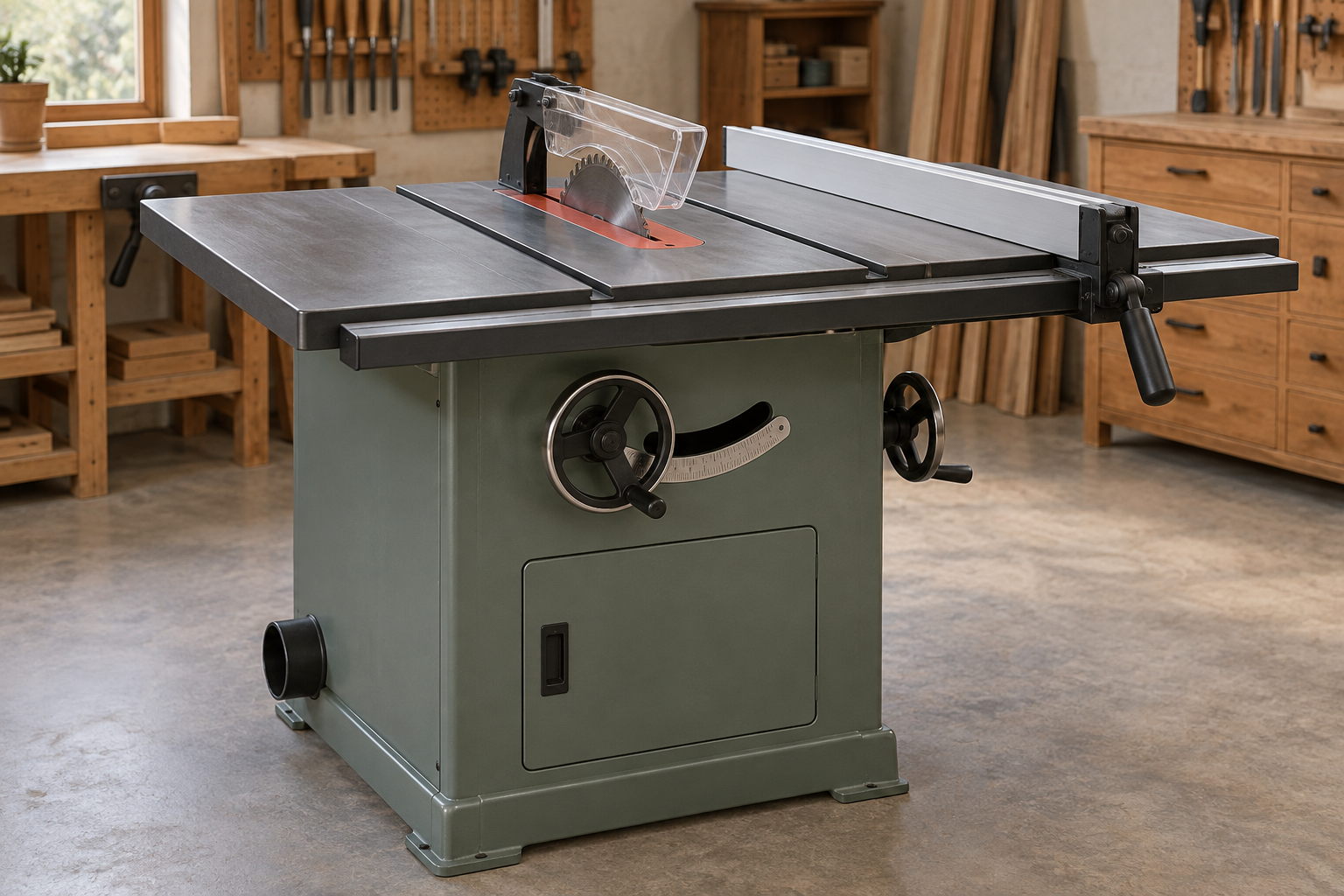
For making hardwood dovetail blanks, a table saw is usually the better first choice when you need straight, repeatable stock. A band saw becomes more useful when the blanks are thick, wide, unusually shaped, or cut from expensive boards where minimizing waste matters more than perfect edge finish.
The job is simple in principle: cut a hardwood board into consistent rectangular pieces that will later be milled into dovetail parts, boxes, drawer components, or test joints. In practice, the saw must produce parallel edges without burning, wandering, or throwing short workpieces back at the operator.
As an Amazon Associate we earn from qualifying purchases at no extra cost to you.


What Makes a Good Dovetail Blank?
A dovetail blank should be square, flat, and slightly oversize. For small drawer parts, leaving 1/32 inch to 1/16 inch for final planing or jointing is sensible. If the board is 3/4 inch thick, a blank might be cut to roughly 3/4 by 4 inches before final sizing, depending on the design.
Short pieces are harder to cut safely than long boards. A 6-inch blank has less support against the fence and less room for your hands than a 4-foot board. Hardwood also exposes setup problems quickly. A dull blade, misaligned fence, or pinched kerf can create burn marks and edges that are no longer parallel.
Where the Table Saw Wins
A table saw is the most efficient machine for ripping straight strips from hardwood. With a properly aligned fence and a sharp, appropriate blade, it produces a straight cut in one pass. A thin-kerf blade removes about 3/32 inch, while a standard kerf blade usually removes about 1/8 inch. That difference adds up when cutting many blanks from an expensive board.
For this work, use a sharp 40-tooth or 50-tooth combination blade, or a dedicated rip blade with a suitable tooth count. A blade with too many teeth can cut slowly and generate heat in dense species such as hard maple, beech, or ipe. If you see dark streaks on the edge, stop and check blade sharpness, fence alignment, and feed rate rather than simply pushing harder.
The table saw is also better for repeated dimensions. A solid fence, an outfeed table, and a stop system let you produce a batch of blanks with minimal variation. For anyone making drawers or multiple boxes, a woodworking table saw is generally the more useful investment.
Its main weakness is short stock. A narrow or short blank can fall into the throat opening, twist between the blade and fence, or become trapped against the fence after the cut. Never use the rip fence as a length stop for crosscutting. Use a sled, miter gauge, or separate stop that prevents the cutoff from binding.
Where the Band Saw Wins
A band saw is more forgiving when cutting thick hardwood or resawing a board into thinner blanks. The blade removes only about 1/16 inch to 3/32 inch, so it wastes less material than a table saw. That matters when turning a 1-inch-thick board into two thinner pieces or when working with costly figured lumber.
The blade also cuts without trapping a cutoff between the blade and a fence in the same way a table saw can. This makes the band saw useful for irregular blanks, curved parts, and rough stock that will be cleaned up later. A 14-inch saw with at least 6 inches of resaw capacity is a practical size for many small-shop projects, though capacity alone does not guarantee good results.
Band saw cuts are rarely as straight or clean as table saw cuts. A narrow blade can wander in dense hardwood, especially if the blade is dull, under-tensioned, or poorly guided. A wide, sharp blade with three or four teeth per inch is usually a better choice for straight ripping than a narrow scroll-cutting blade. The fence must be aligned to the blade’s natural drift, not blindly set parallel to the table slot.
A 14-inch woodworking band saw makes sense if you also resaw boards, cut curves, or work with stock too thick for your table saw. It is less compelling if your only task is making straight 3/4-inch or 1-inch strips.
Direct Comparison
| Factor | Table saw | Band saw |
|---|---|---|
| Straightness | Excellent with a rigid fence and sharp blade | Good when tuned, but more prone to drift |
| Cut speed | Fast for repeated rips | Slower, especially in dense hardwood |
| Kerf waste | About 3/32 to 1/8 inch | About 1/16 to 3/32 inch |
| Thick stock | Limited by blade height and safe control | Better for thick boards and resawing |
| Short blanks | Requires careful support and safe procedures | Generally easier to control, but still needs a push device |
| Best use | Repeatable straight blanks | Rough blanks, curves, and material-saving cuts |
A Reliable Workflow
Start by flattening one face and jointing one edge, or buy stock that is already surfaced. Mark the usable face and keep it against the table saw fence. Cut long strips first, then crosscut them to length with a crosscut sled or a well-supported miter gauge.
For small blanks, use a push block or push shoe and keep your hands at least 6 inches from the blade. A featherboard can help hold long stock against the fence, but it should not force a short cutoff into the blade. Support the outfeed side so the board cannot drop and lift into the blade.
On a band saw, install the widest practical blade, set the guides just above the work, and use a fence for straight cuts. Feed steadily without forcing the board. If the blade starts leaving a curved edge, stop and correct the setup; trying to steer aggressively usually creates a tapered blank.
Which Saw Should You Buy?
Choose the table saw if your primary goal is accurate, repeatable dovetail blanks from ordinary hardwood. It is faster, easier to dimension consistently, and useful for many other stationary-shop tasks. A table saw push block and featherboard set is a more worthwhile safety purchase than a collection of specialty blades.
Choose the band saw if you regularly resaw, cut curves, process thick stock, or want to preserve every possible fraction of an expensive board. If straightness is critical, plan to joint or plane the cut edges afterward. The cheaper option is fine when your blanks are small, straight-grained, and made from inexpensive stock. For occasional work, either saw can succeed; the table saw simply requires less cleanup when the final parts must be square and uniform.